Ecclesia

Ademen om les te geven

Posted on October 22, 2012. Filed under: Bijbel Studie en Bijbel Lezing, Christen zijn en Christus volgen, Dienst, Ecclesia, Geloven en Geloof, Heilige Schrift, Heiliging, Jehovah יהוה YHWH JHVH God Elohim Yahweh Jahweh, Jezus Christus Jesus, Jeshua, Jahushua de Messias, Kerkplanting, Leven en Dood, Opvoeding en Onderwijs, Vergaderen, Verkondigen en Verkondiging | Tags: , , , , , , , , , , , , , , , , , , , , , , , , , , , , , , , , , , , , , , , , , , , , , , , , , , , , |

Les geven of onderwijzen lijkt voor velen slecht een minderwaardige job voor diegenen die in de bedrijfswereld niet aan hun trekken komen. Maar hier hebben wij het niet over de gewone lesgevers of leraren. Maar kijken wij naar diegenen die anderen materiaal bij brengen waarmee zij anders niet in contact zouden komen.

De rondtrekkende Leermeester

Jezus heeft ons levensadem gegeven. Hij had slechts een klein drie jaar openbaar leven waarbij hij rond ging , in een toch tamelijk groot gebied. Daar waar hij kon komen rond zijn habitat, trok hij bijna dag in dag uit van de ene plek naar de andere. Niet voor sightseeing, maar om te praten. Hij legde afstanden af welke in zijn tijd vele uren in beslag namen. Vandaag kunnen we ergens ver weg gaan in een paar minuten of een paar uur. Voor de apostelen duurde het dagen om ergens heen te gaan, terwijl zulke afstanden voor ons vandaag slechts een paar uur vergen. Maar vandaag horen we meer excuses dan in Jezus tijd over het geen tijd hebben om anderen over het Koninkrijk van God te onderwijzen of anderen over de Bijbel te leren.

Niet veraf te zoeken

Om anderen meer te  weten te laten komen over de Bijbel moeten wij echter niet ver gaan. Dicht bij ons, rondom ons, zijn er voldoende mensen die weinig of niets van de Bijbel, het Boek der boeken afweten. Zelfs om mensen te bereiken die ver af wonen hoeven wij vandaag niet altijd uit huis gaan om hen te bereiken. We kunnen contacten leggen vanuit ons eigen huis. We hebben prachtige toestellen die ons heel gemakkelijk veel verder dan de anderen tot hun hun deur brengen. Jehovah Getuigen, voor een lange tijd, namen het voor lief dat de beste manier om mensen te bereiken was hen op elk moment van de dag lastig te vallen door aan te bellen en een gesprek proberen aan te gaan voor de deur. Maar het lijkt erop dat de Getuigen van Jehovah  vandaag ook, de moderne middelen van de computer en internet hebben gevonden. Op het internet lijken ze zich nu te hebben opengesteld en presenteren zij er meer literatuur aan het grote publiek. En dat is mooi, want ze hebben ook een zeer goede literatuur, die veel meer mensen tot God kan brengen.

Wij kunnen veel van hun lectuur aanraden, ook al zijn er toch nog wezenlijke verschillen met wat wij leren. Maar volgens ons is het niet slecht dat mensen verschillende meningen te horen krijgen en meerdere beschouwingen lezen.

Koninkrijkszaal

Maar we mogen hen ook niet al het werk laten doen en ze de mensen naar hun Koninkrijkszaal laten trekken, terwijl wij andere gedachten hebben waarvan we er zeker van zijn dat ze zij ook waardevol voor de mensen zijn en daarbij deze ook meer vrijheid laten voor elk individu. De religieuze vergaderplaats voor Jehova’s getuigen waar een of meerdere gemeenten vergaderen geeft de leden de kans om samen aan de Wachttoren studie deel te nemen. Wij vinden het echter belangrijker om samen de Bijbel te bestuderen. Bij de vergaderingen van de Getuigen hoopt men dat iedereen de lijnen van de Watchtower Society opvolgt. En de opleiding van verkondigers loopt volgens de strikte regels van die organisatie in Brooklyn.
Bij ons is elke persoon en elke gemeenschap zelf verantwoordelijk voor de vorming van verkondigers en van de wijze waarop men dienst wil houden. Iedereen hoort namelijk zijn eigen ademruimte te hebben en wij laten het toe dat wegens de individuele verschillen en verscheidenheid van karakters de mensen ook verschillende meningen kunnen hebben of graag op een of andere manier anders willen doen dan een ander. Wij moeten meer bewust zijn dat wij ook veel te bieden hebben aan de ongelovigen en mensen op zoek naar de Waarheid kunnen helpen. Wij horen aan zoveel mogelijk mensen de Waarheid aan te bieden. Om anderen die Waarheid te leren kennen kan men echter niet stilletjes lekker gezellig in ons kleine cocon van onze leunstoel thuis blijven zitten. We moeten ons achterste optillen en iets doen.

Het is meer dan de hoogste tijd dat meer mensen uit hun huis zouden komen en de taak opnemen welke Jezus gegeven heeft.

Wereldse en geestelijke werken

In de kleine drie jaar dat Jezus predikte bestede hij veel adem om mensen op het belang te wijzen om een juist beeld te krijgen van zijn Vader, Jehovah God. Jeshua of Jezus heeft ook veel woorden besteed aan verkondigen van het evangelie of het Goede Nieuws van het komende Koninkrijk van God. In zijn tijd kon hij veel mensen vinden die geïnteresseerd in hem en zijn wonderen waren. Nooit beweerde Jezus uit eigen naam te spreken of wonderen te doen, maar verwees steeds naar zijn Vader die groter was dan hij.

“De Vader is groter dan mij.” (Johannes 14:28)

Toegegeven, het is waar dat onze wereldse werken op hun eigen ons niet ver zullen brengen en het is niet alleen door de werken der wet, dat wij geheiligd zullen worden. Genade  is tot ons gekomen door het aanbod dat Jezus bracht naar zijn Vader en naar de wereld toe. Deze man uit Nazareth, uit een eenvoudig arbeiders gezin, maar toch uit de stam van koning David, was bereid zijn adem voor God en de mens te gebruiken, tot hij zijn laatste adem uitblies aan de martelpaal.

Al heel vroeg in de mensheid hebben mensen hun adem aan veel nodeloze dingen verspild. Maar de Nazareen Jezus, wiens naam eigenlijk Jeshua was, heeft zich aangeboden om de verdorven mensenlucht te zuiveren en hen van hun zuchten te ontdoen. Ter zuivering van de mensheid heeft  Jezus zijn lichaam en bloed gegeven als een offerlam tot zijn Vader, opdat wij gereinigd zullen worden door Zijn bloed. Maar zijn dood op de martelpaal geeft niet zomaar ons een vrijgeleide, zoals vele christenen wel eens durven denken. Zijn zoenoffer brengt ons wel genade, maar geeft ons niet de toestemming om er zo maar op los te leven zoals we willen. Het gaat niet op om een frivool en zondig leven te leiden nadat men gedoopt is.  Door onze doop zijn we gereinigd en krijgen wij, als deelgenoten van het Nieuwe Verbond, een nieuwe start. Maar we moeten het waarmaken. Vanuit onze transformatie en doop moeten we spreken en handelen als mensen die zullen worden beoordeeld door de Thora van de vrijheid.

Afstamming, gehoorzaamheid en Wet

Zelfs al zouden joods we van geboorte zijn, geen zondaars uit andere etnische achtergronden, zouden we weten dat mensen niet rechtvaardig worden verklaard door te gehoorzamen aan sektarische wet, maar door het geloof in Jeshua Messias. Al degenen die zich christen noemen moeten niet alleen geloven in Jeshua, die ze meestal Jezus Christus noemen. Ze moeten weten dat om te worden rechtvaardig verklaard door het geloof in de Messias, en niet door sektarische wet, dat ze ook dienovereenkomstig horen te leven naar de wil en de wet van God.

Jezus heeft vele malen gesproken over die  rechtvaardiging en wetten van God. Hij gebruikte veel gelijkenissen of parabels om mensen te vertellen wat er kan gebeuren als we ons niet aan de Wetten van God houden. Hoewel, geen mens zal worden rechtvaardig verklaard door te gehoorzamen aan sektarische wet, als wij, terwijl het proberen om rechtvaardig verklaard te worden door de Messias, zullen wij ook als zondaars gevonden worden, maar dat betekent niet dat Jeshua Messias uit de zonde is.

Al diegenen die zich christen noemen, moeten ervoor zorgen om te sterven onder de Thora, zodat hij kan leven voor JHWH de Elohim Jehovah God. Zonde in voor ons met Jezus  de Messias aan de paal genageld en te niet gedaan. Vanaf nu zijn wij het niet meer die leven, maar de Messias die in ons leeft, en het sterfelijke leven dat we hebben geleefd voordat we christen werden kan nog steeds een levenseinde  ondergaan in deze wereld. De meesten van ons zullen vermoedelijk wel mensen levend achter laten, terwijl zij de dood tegemoet moeten zien. Maar het moet een leven vol van hoop zijn dat zij nu al kunnen leven, door het geloof in de zoon van God, die ons heeft liefgehad en zich voor ons heeft opgeofferd. We mogen de compassie van Jehovah niet negeren. Want indien de rechtvaardigheid haalbaar is door middel van sektarische wet, dan is de Messias voor niets gestorven.

Maar zoals er zovelen uit de werken van de Thora onder de vloek zijn, want er staat geschreven: “Vervloekt is een iegelijk, die niet in alles blijft doen wat er is geschreven in het boek van de Thora.” En dat niemand rechtvaardig wordt verklaard door Thora vóór Elohim is duidelijk, want “de rechtvaardige zal leven door geloof.” En de Thora is niet van geloof, maar “De man die ze {deze dingen } doet, zal daardoor leven.” Messias heeft ons vrijgekocht van de vloek van de Thora, een vloek wordend voor ons – want er staat geschreven: “Vervloekt is een iegelijk, die hangt aan een boom {aan het hout }.” {1 } – {Voetnoot: 1 #De 21:23). } Opdat de zegen van Abmight {Abraham } over de volken zou komen in de Messias יהושע {Jeshua }, om de belofte van de Geest te ontvangen door het geloof. (Galaten 3:10-14 De Geschriften 1998 +)

En we weten dat wat de Thora zegt, zij dat spreekt tot degenen die in de Thora zijn, opdat elke mond kan worden gestopt en de gehele wereld onder het oordeel komt voor Elohim. Daarom zal uit de werken van de Thora geen vlees rechtvaardig worden verklaard vlak voor Hem, want door de Thora is de kennis van zonde.{1 } {Voetnoot: 1 (#Ex 20:20; Ro 4:15; Ro 7:7). } Maar nu, afgezien van de Thora, is een rechtvaardigheid van Elohim geopenbaard, getuigenis geweest zijnde van de Thora en de Profeten, en de gerechtigheid van Elohim is door het geloof in יהושע {Jeshua } Messias voor iedereen en op allen die geloven. Want er is geen onderscheid, want allen hebben gezondigd en derven de achting van Elohim, rechtvaardig verklaard wordend, zonder te betalen, door Zijn gunst, door de verlossing die in Christus יהושע {Jeshua } is, die Elohim aangewezen {of voorbestemd } heeft als een verzoening {zoenoffer }, door middel van geloof in zijn bloed, om zijn rechtvaardigheid te tonen, daar in Zijn verdraagzaamheid Elohim over de zonden die hadden plaatsgevonden ervóór voorbijzag, om op dit moment Zijn gerechtigheid aan te tonen, dat Hij rechtvaardig is en degene rechtvaardig verklaart die het geloof in יהושע {Jeshua } beoefent. (3:19-26 Romeinen De Geschriften 1998 +)

“Wij, van Yehudby {Joodse} natuur, en niet die van de heidenen, zondaars, wetende dat de mens niet rechtvaardig verklaard wordt door werken van de Thora, maar door het geloof in יהושע {Jeshua} Messias, zelfs al hebben wij ook in de Messias יהושע {Jeshua} gelooft, om rechtvaardig te worden verklaard door geloof in de Messias en niet door de werken van de Thora, want door de werken van de Thora zal geen vlees rechtvaardig worden verklaard. “En als, tijdens het zoeken om rechtvaardig te  worden verklaard door Messias, ook wijzelf zondaars worden bevonden, is Messias dan een dienaar der zonde? Laat het niet waar zijn! “Want als ik weer opbouw wat ik ooit omverwierp, bevestig {betoon} ik me zelf tot een overtreder. “Want door Thora stierf ik om Thora, {1} om te leven tot Elohim. {Voetnoot: 1 Zie Rom. 7} “Ik ben gespietst {doorstoken/vastgepind} met Messias, en ik leef niet meer, maar Christus leeft in mij. {1} En dat geen ik nu in het vlees leef, leef ik door het geloof in de zoon van Elohim, die mij heeft liefgehad en zich voor mij heeft gegeven. {Voetnoot: 1 Rom. 8:10, 2 Kor. 6:16, 2 Kor. 13:5, Ef. 3:17, Col 1:27, 1 Johannes 4:4.} “Ik zet de gunst van  Elohim niet ter zijde, want indien de rechtvaardigheid is door middel van Thora, dan stierf de Messias voor niets.” (Galaten 2:15-21 De Geschriften 1998 +)

Naam eervol te dragen

We mogen de eervolle naam die we dragen niet lasteren  en dat kunnen we alleen maar doen als we voldoen aan de Thora van Jehovah, de enige Ware God, de Allerhoogste. En om ons te helpen heeft God Zijn Woord in de Heilige Schrift laten overleveren aan meerdere generaties. Van generatie tot generaties  zijn de Woorden van God herhaald geworden, mondeling en schriftelijk. Oneindig veel keren zijn de geschriften gekopieerd geworden. En daarbij is het bijzondere dat deze minutieus blijken gekopieerd te zijn zodat er bij de kopieën bijna geen fouten op te merken vallen. Vandaag zijn er ook in meerdere talen kopieën te verkrijgen van Het Woord van God: de Bijbel. Deze moet dan ook gelezen worden. Al mag hij de Bestseller aller tijden zijn, zijn er nog veel te veel mensen die dat voorname boek werkelijk kennen. Zij weten wel van het bestaan af, maar echt weten wat er in staat weten slechts weinigen.

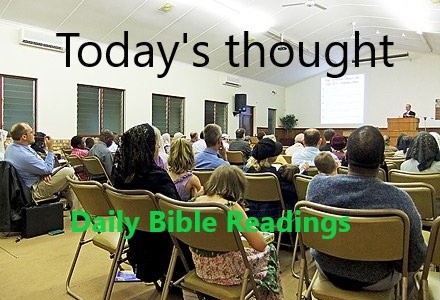
Binnenkant van een Koninkrijkszaal van de Getuigen van Jehovah waar men vergaderingen of bijeenkomsten houdt en o.a. de Wachttoren studies in de dienst gebruikt.

Veel christenen lijken te vergeten dat er in de Heilige Schrift, de Bijbel die we beschouwen als het geïnspireerde en onfeilbare Woord van God, staat geschreven dat wie de hele Thora gehoorzaamt, toch op één punt faalt, schuldig is aan het overtreden van de hele Thora! Ja, het klinkt hard, maar het is de realiteit.

Een realiteit die vele christenen niet onder ogen willen zien en daarom vasthouden aan de valse leerstelling dat men eens en voor altijd gered is. Maar de Heilige Schrift is duidelijk dat geloof zonder werken dood is.

Wat is het nut, Vrienden, als een man zegt: “Ik geloof”, maar hij heeft geen werken? Kan zijn geloof  hem weer tot leven wekken?

Indien je echt er in slaagt het soevereine recht te bereiken op basis van de Schrift: “Gij zult uw naaste liefhebben als uzelf, ‘ dan doe je goed , maar als je partijdigheid toont, bega je zonde, wordt je schuldig bevonden door de Thora als overtreder. Want wie ook maar de gehele Thora onderhoudt, en toch op één punt struikelt, is schuldig geworden aan alle. Want Hij die zei: “Pleeg geen overspel, heeft ook gezegd:” Pleeg geen moord. “Nu als je geen overspel, maar wel doodslag pleegt, zijt gij toch een overtreder van de Thora. Daarom, Spreekt zo en handelt zo als mensen die moeten worden beoordeeld worden door een Thora {of Wet} van vrijheid. {1} {Voetnoot: 1 Zie 1:25, en Johannes 8:32-36).} Want het oordeel is zonder mededogen aan degene die geen mededogen heeft getoond. En mededogen heeft meer dan oordeel. Mijn broers, wat voor nut heeft het voor iedereen om te zeggen dat hij gelooft, maar geen werken heeft ? Dit geloof is niet in staat om hem te redden. (Jakobus 2:8-14 De Geschriften 1998 +)

Veel mensen toen zij Jezus en zijn apostelen zagen herkenden hen. Dus de mensen haastten zich over land, vanuit alle omliggende steden, om Jezus te kunnen zien en om er zeker van te zijn dat ze een goed plaatsje konden bemachtigen om dicht bij hem te zijn en alles wat hij te vertellen had goed te kunnen horen. Overal waar Jezus kwam begon hij de mensen te vertellen over wat zijn Vader de wereld wenste te leren kennen. Jezus onderwees de leer van zijn Vader. Hij leerde hun vele dingen door analogieën.

En hij begon weer te onderwijzen bij de zee, en een grote menigte werd verzameld tot hem, zodat hij in een boot ging, om te zitten in de zee. En al de menigte was op het land aan de zee. En hij leerde hun veel in gelijkenissen, (Marcus 4:1-2 De Geschriften 1998 +)

En Hij ging weg van daar en kwam naar zijn eigen land, en zijn aangeleerden volgden hem. En sabbat geworden, begon hij les te geven in de gemeente. En velen die hem hoorden, waren verbaasd en zeiden: “Waar heeft hij dit allemaal gekregen? {waar heeft hij dit alles vandaan?} En wat wijsheid is dit, die hem gegeven is, dat zulke wonderen worden gedaan door middel van zijn handen? (Marcus 6:1-2 De Geschriften 1998 +)

En uitgegaan zijnde, zag יהושע {Jeshua} een grote menigte en werd met ontferming over hen {met compassie voor hen} bewogen , omdat zij als schapen waren, die geen herder hebben. En hij begon hen veel zaken te leren . (Marcus 6:34 De Gechriften 1998 +)

Jezus had alles van zijn Vader geleerd. Wij kunnen ook veel leren van deze Vader, want zoals Jezus de Thora las en deze heel goed kende, kunnen wij ook de Thora en de verdere Heilige Schrift lezen, bestuderen, en proberen deze te begrijpen. Goed luisteren naar alle woorden in de Heilige Schrift zal ons in staat stellen om de stem van God te horen. De Bijbel schrijvers werkten voor de allerhoogste auteur, de Elohim Hashem, wiens naam Jehovah is en de God der goden. Jezus is zijn zoon die  ons de weg toonde en verzocht deze te volgen. We moeten daarom ook proberen om alles wat Jezus te vertellen heeft te horen. Christus zijn woorden zijn opgeschreven in het Nieuwe Testament. Die Bijbel gedeelte is beschikbaar in vele talen, dus we mogen geen excuus naar voor brengen dat het niet  in een taal voorradig zou zijn die we niet kunnen proberen te begrijpen.

Bereidheid te luisteren naar Christus

Getuigen van deur tot deur

Als we bereid zijn om te luisteren naar Christus en Gods Woord, zullen we hun adem voelen over ons leven. We zullen het gevoel hebben dat ze met ons willen zijn  en als we bereid zijn om onze geest open te stellen voor wat het Woord van God zegt dat we duidelijker zullen horen wat die woorden werkelijk bedoelden in hun tijd en wat ze betekenen in onze tijd.

Het horen van de oproep van Jezus om uit te gaan om te prediken zal er voor zorgen dat wij ook het graag zouden willen willen hebben en er aan meewerken dat het Woord van God  over de hele wereld meer gekend zal geraken. Hiervoor moeten we ons bewust zijn van deze belangrijke taak en stappen ondernemen om dit te doen, en dit niet alleen over te laten aan de Jehovah Getuigen.
Terwijl zij de wereld hun liefde voor het Woord van God laten zien, moeten alle christenen dat doen. Door het woord met anderen te delen zullen wij in de liefde van Christus kunnen blijven groeien met precieze kennis en geestelijk inzicht, maar zullen wij als anderen juist moeten reageren volgens de kennis die we ontvangen. Door het regelmatig bestuderen van  het Woord van God, de Bijbel, zal de lezer kunnen herkennen wat echt is, en zuiver en onberispelijk zijn in de Dag van de Messias, vervuld met de vrucht van gerechtigheid, die door Jeshua Messias, tot eer en glorie, de pracht en lof van Jehovah.

Een Adem tot verzoening

Het lezen van de Bijbel  moet de lezer het gevoel van Gods Adem geven en er voor zorgen dat hij en omstaanders kunnen worden vervuld door de Heilige Geest om door deze te worden gedreven om verder het Goede Nieuws kenbaar te maken en bereid te zijn om het met zoveel mogelijk mensen te delen. Vrienden in de dienst van onze Meester moeten moed hebben om uit te gaan en om Gods Boodschap zonder vrees te spreken zelfs brutaler dan ooit.

Sommigen kunnen misschien hun stem harder laten klinken dan anderen door afgunst en rivaliteit, maar anderen doen het van uit goede wil en in de liefde van de Messias, in de wetenschap dat Jezus en zijn apostelen zijn aangesteld om het Goede Nieuws te verdedigen. Maar degenen die de Messias aankondigen vanuit de motieven van rivaliteit en zelfzuchtige ambitie proberen meestal angst te veroorzaken. Hoe dan ook, hetzij door valse of ware motieven, wordt de Messias aangekondigd en dat is wat christenen moeten dragen op hun hart.

Wij die graag eerlijke christenen willen zijn en door het leven gaan als broeders en zusters in Christus, moeten het werk voor de Heer lief hebben en verwachten dat er nooit een broer of zus zich ooit zullen hoeven te schamen. Maar met vastberaden moed zullen wij nu verder, zoals altijd, om ofwel de Messias in ons lichaam verheffen, door onze eigen of door onze gezamenlijke dood. Want voor ons, moet het leven voor de Messias zijn, en als we sterven, zullen we nog steeds ‘winnen’.

Jezus in Delft

Jezus in Delft (Photo credit: Gerard Stolk ( vers la Toussaint ))

“Ga terug naar uw huis, en vertel wat Elohim voor je gedaan heeft.” En hij ging weg verkondigend door de hele stad wat יהושע {Jeshua} voor hem deed. (Lukas 8:39 De Geschriften 1998 +)

Want zo dikwijls als gij dit brood eet en deze beker drinkt, verkondigt u de dood van de Meester totdat hij komt. (1 Korinthiërs 11:26 De Geschriften 1998 +)

En dit bid ik, dat uw liefde meer en meer in erkentenis en alle gevoelen zou mogen uit breiden, zodat u de zaken die verschillen zou onderzoeken, om zo oprecht te zijn, en niet te struikelen, tot op de dag van de Messias, vervuld van de vrucht van gerechtigheid, {1} tot en met יהושע {Jeshua} Messias, om de achting en lof {tot eer en glorie} van Elohim. {Voetnoot: 1 mt. 3:8-10, Rom. 6:22, Rom. 14:17, 2 Kor. 9:10, Ef. 5:9, Gal. 5:22, Col 1:10, Hebr. 12:11, Jam. 3:18.} En ik wens dat je weet, broeders, dat wat mij is overkomen, bleek voor de vooruitgang van het Goede Nieuws te zijn, zodat het bekend is geworden aan de gehele paleiswacht, en aan al de anderen, dat mijn kettingen in de Messias zijn; en de meeste van de broers, vertrouwend op de Meester vanwege mijn kettingen, zijn veel meer dapperder om onbevreesd het woord te spreken. Sommige inderdaad verkondigen Messias zelfs uit nijd en twist, maar sommigen ook uit plezier – de eersten verkondigen Messias uit zelfzuchtige ambitie, niet zuiver, er aan denkend ongemak toe te voegen aan mijn kettingen, maar de laatsten uit liefde, in de wetenschap dat ik benoemd ben voor de verdediging van het Goede Nieuws. Wat dan? Alleen dat in alle opzichten, hetzij onder een voorwendssel of in waarheid, is de Messias aangekondigd. En daarin verblijd ik mij, in feite, zal ik juichen. Want ik weet, dat dit voor mijn bevrijding zal blijken door uw gebed en de levering van de Geest van יהושע {Jeshua} Messias, volgens mijn intense verlangen en verwachting dat ik totaal niet zal beschaamd worden, maar dat met alle vrijmoedigheid, zoals altijd, dus nu ook Messias groot zal worden gemaakt in mijn lichaam, hetzij bij het leven of de dood. Want voor mij, te leven is Messias, en is het sterven gewin. (1:9-21 Filippenzen De Geschriften 1998 +)

Geen Uitstel

Gelieve niet wachten tot morgen. Stel niet uit.

U kunt een werkgroep vormen, zodat u er niet alleen voor staat en u ook langdurige christelijke vriendschappen kan ontwikkelen. U kunt  Bijbelstudies hosten op je blog, Twitter, Facebook, enz. Het is ook niet slecht om devoties op een blog te schrijven, dat van u of voor een ander blog, of zelfs een ebook met een verzameling van devoties te schrijven.
Als je niet weet waar ze te plaatsen of geen eigen blog wilt beginnen, probeer ze dan te delen op blogs van anderen, zodat de blog een groter platform kan worden, waar gelijkgestemde mensen elkaar kunnen ontmoeten en anderen meer informatie kunnen  vinden en meer onder de indruk van het Woord van God kunnen geraken.

Er zijn ook verschillende manieren om online een klas of workshop te organiseren. Voor degenen die wel al werken in de gemeenschap, is het slechts een kleine moeite om de voorbereidende werkzaamheden te delen met anderen op het net. Maar je moet ook kunnen overwegen van het voeren van een klas om lessen te leren op het net, net als zondagsschool. U kunt mensen uitnodigen tot uw virtuele klas en hen in staat stellen om zo te communiceren, hand-outs te geven, en zelfs uw les op te nemen.

Prediking over de gehele wereld

Allen die zich christenen noemen moet proberen te doen wat Jezus deed. Zij moeten proberen om de boodschap over te brengen door middel van geschriften, getuigenissen, gebeden, liedjes, video’s en ga zo maar door.

Opgroeien in de liefde van Christus, zou je het gevoel moeten geven dat zijn adem je inspireert en aanmoedigt. Met de groeiende jaren van bijbelstudie zou je voldoende kennis moeten krijgen om genoeg te weten om te kunnen delen, ook al was het een minimum aan kennis. Degenen die een gave van schrijven en / of onderwijzen hebben moeten die gaven gebruiken om te verlichten en anderen om hen heen, in hun gemeenschap, parochie, dorp, stad, aan het werk op hun blog of webpagina’s, aan te moedigen.

Dus, aarzel dan niet en gebruik je adem om Christus Jezus te verkondigen en de wereld te laten zien hoe het rustiger en vreedzamer kan worden, en hoe mensen die God liefhebben een beter leven kunnen vinden in de toekomst.

Christus en het Goede Nieuws van het Evangelie moet gepredikt worden over de hele wereld en dan zal het einde kan komen. Wij allen moeten getuigen zijn tot Jezus, zoals de apostelen dit moesten zijn, zowel in Jeruzalem als in geheel Judea en Samaria, en tot aan het uiterste der aarde.

“Maar gij zult kracht ontvangen, wanneer de apartgeplaatste Geest over u komt, en gij zult mijn getuigen zijn in Jeruzalem, en in geheel Yehudand Shomeron, en tot aan het einde van de aarde.” (Handelingen 1:8 De Geschriften 1998 + )

“Je weet wat woord kwam te zijn in alle Yehuḏah, beginnende van Galil {Galilea} na de onderdompeling die Yoḥanan proclameerde {verklaarde, verkondigde}: hoe Elohim  יהושע {Jeshua} van Natsareth zalfde deed met de apart geplaatste Geest en met kracht, die is rondgegaan, weldoende en allen genezende, die werden onderdrukt door de duivel, want Elohim was met hem. “En wij zijn getuigen van alles wat hij deed, zowel in het land van de Yehudand in Yerushalayim, die hem zelfs doden door ophanging aan een stuk hout. “Elohim wekte deze ene op de derde dag, en liet hem zien, niet tot al het volk, maar aan de getuigen, die al eerder gekozen waren door Elohim – voor ons, die aten en dronken met hem nadat hij uit de dood was opgestaan. “En hij gebood ons te verkondigen aan de mensen, en te getuigen dat hij het is, die werd benoemd door Elohim tot rechter over levenden en de doden. {1 Voetnoot: 1 Zie 17:31, Johannes 5:29, Ps. 96:13, Ps. 98:9, Openbaring 19:11.} “Om deze ene dragen al de profeten getuigenis, dat door zijn naam, iedereen die gelooft in hem vergeving van zonden ontvangt.” (Handelingen 10:37-43 De Geschriften 1998 +)

“En hij zei: ‘De Elohim van onze vaderen heeft u aangesteld om Zijn verlangen te kennen en de Rechtvaardige te zien, en om de stem te horen uit zijn mond. ‘Omdat gij Zijn getuigen zult zijn voor alle mensen, van hetgeen gij gezien en gehoord hebt. ‘En nu, waarom zou je uitstellen? Sta op, wordt ondergedompeld, en was uw zonden af, onder aanroeping van de Naam van יהוה {Jehovah}. “(Handelingen 22:14-16 De Geschriften 1998 +)

“{Maar wie zal hebben doorstaan ​​tot het einde zal gered worden.} Maar hij die tot het einde het zal doorstaan hebben zal gered worden. {Maar degene die volhardt tot het einde zal worden gered} {1 Voetnoot 1 Zie Mattheus 10:22}: “En dit goede nieuws van het koninkrijk zal worden verkondigd in de gehele wereld als een getuigenis voor alle volken, en dan zal het einde komen. (Mattheüs 24:13-14 De Geschrift en1998 +)

+

  1. Lees ook:
  2. Bestseller aller tijden
  3. Boek der boeken de Bijbel
  4. Fundament in de Schrift
  5. Reden voor het lezen van de Heilige Schrift
  6. Geloof in Jezus Christus
  7. Geloof in slechts één God
  8. Geloof voor God aanvaardbaar
  9. God, Jezus Christus en de Heilige Geest
  10. Bijbelstudie
  11. Goedheid en liefde openbaar gemaakt
  12. Bestemming getrouwen en rechtvaardigen
  13. Één met Christus
  14. Christelijke hoop op eeuwig leven
  15. Christelijk leven
  16. Christen genoemd
  17. Christen mensen met ons geloof
  18. Christus toebehorenden
  19. Broers en broeders
  20. Christadelphian mens
  21. Dankbaar voor verkregen offer
  22. Doop + Doopsel
  23. God komt ons ten goede
  24. Gods hoop en onze hoop
  25. Gods redding
  26. Het zoenoffer
  27. Hoop op een man
  28. Hoop voor de toekomst
  29. Kleine kudde en beleidvolle slaaf
  30. Koninkrijk Gods
  31. Koninkrijk van God
  32. Lam van God
  33. Levenslessen
  34. Liefdemaaltijden
  35. Menselijke natuur
  36. Op wie hoop stellen
  37. Organisatie der broeders in Christus
  38. Organisatie gemeenschap
  39. Persoonlijkheid
  40. Rechtvaardigen
  41. Redding
  42. Redding door volharding
  43. Redding verliezen
  44. Redenen om gedoopt te worden
  45. Relatie tot Christus
  46. Relatie tot God
  47. Relatie tot medemens
  48. Sleepnet
  49. Uitvaren
  50. Verandering door de Bijbel
  51. Verkondigen
  52. Verwachtingen
  53. Volgens eerste eeuw patronen
  54. Volharding & Bijbelstudenten
  55. Vrije wil
  56. Wat is Gods doel met de aarde?
  57. Wat is wedergeboorte
  58. Wat te vinden in de Bijbel
  59. Werking van de hoop
  60. Wie, wat & hoe Christadelphians
  61. Woord van God
  62. Zijn kruis dragen
  63. Zoenoffer

++

  1. Belangrijkheid van de Heilige Schrift
  2. Schijnbaar onmogelijke opdracht
  3. Samen werken aan een Open Gemeenschap
  4. Redding, vertrouwen en actie in Jezus #6 Samenhoren
  5. Redding, vertrouwen en actie in Jezus #7 Adverteren
  6. Redding, vertrouwen en actie in Jezus #9 Omgang met anderen
  7. Kleine huiskring ook mogelijke ecclesia
  8. Door verkondiging ook geruster
  9. Getuigen van Jehovah, Data en Waarheid
  10. Getuige of Broeder
Read Full Post | Make a Comment ( 2 so far )

Breathing and growing with no heir

Posted on October 9, 2012. Filed under: Being Christian, following Jesus Christ, Churchplanning, Ecclesia, Manners and Association, Meeting | Tags: , , , , , , , , , , , , , , , , , |

God gives us a lot of answers. We may be happy He is willing to guide us. He also sheds light unto that what we do have to know.

We do have to have a vision and show others what we do believe. We have to share our faith.

File:Climate camp in the city - happy people.JPG

A happy carnival atmosphere at the climate camp in the city 2009

We do have to be concerned about others and have to care more about our people than anyone else, because we are called by Jesus to love people. It is not just because we do have to love others that we do take care of them. No, it is because we want to share the love of God with them. When people are cared for, they care for the things you care for, even more so than you ever could. We have a lot of different encounters in life good, bad, awkward, but there’s nothing better in life than what happens as a result of a God encounter. And we should make use of that, to meet others and show them the result of our experiences with God.

We live in a time where people are not interested in God as such, but many are looking for something they do not know or do not understand. The meaning of life is still something what brings a lot of minds working and questioning.  It are the searching souls that we can bring into action to look for a God encounter. There is no better time to pick up our cross and our burden for the city.

Some may think we aren’t called to just preach. Jesus has given the major task to his followers to go out in the world and to let the Good News be known wherever they go. We also as followers of Christ Jesus should let others know that marvellous Good News. Faith is also about doing what God has called you to do. He called Jesus to have the Name of the Creator be known all over the world. And Jesus, willing to preach to every one who wanted to listen, called those listeners to the same task. As such we as Christians follow up the work Jesus has done nearly two thousand years ago.

It takes faith in order to speak with others about the faith, to give them more information about the Word of God and about the Kingdom of God. Talking to others about God, His Laws, His son we can expand the ministry.

God doesn’t give us the perfect people for a perfect team. He gives us people to build up. And we should be happy that we with our shortages can create an appetite to bring all the flaws together to make a pleasant dish. Though it might be difficult we should allow our selves to be humble and to get discipled by our brothers and sisters in the community. All together should make ‘one unit’ in Christ.

Meeting with each other trying to make ‘church’ we should understand that everything needs time and that we have to be patient enough to let everything grow and fall into its right place. When the moment comes to make choices for who is going to do what, everybody should be prepared to be humble enough and to be willing to give all his or her power to build up the community. Just as Paul had Timothy come alongside and help in ministry we should do the same. The person who thinks he is in charge should not think he is  losing his job by delegating. It means he begins to train and equip those around him.

To build up the ecclesia all have to form one team. Choices shall have to be made, like looking for the person who has the right capacity, the character and who has the talents.

Ministry is much more than pulpit time. It is all about doing life together, that’s where discipleship happens. In life. When a person is picked or an action is proposed it should also be possible to ask others what they say about them.

Talent never trumps character when picking an heir. Leaders that live out their walk 24/7 have to be raise up. We have to have a shallow leadership pool, one that anyone can dive into. By constructing our ecclesia we do have to be willing also to construct an ark. Remembering that we might be amateurs, but willing to be under the leadership of a Masterbuilder. Day in day out looking for the hand of God on our students. It’s not their talents that will get them anywhere,  it is the hand of God.

We always should be enjoying what we are doing. We don’t quit we win. Our job is to fish, not to catch. It is not up to us to change people. God makes it grow.

Whatever we try to build we must believe in what we want to do in the name of God and not in our name. The ecclesia, the event, the group should always be built on faith and prayer. In our construction-work we should continuously evangelize, and encourage our students to evangelize. Their must discipleship and everybody should be wiling to ‘pasrot’ or shepherd them.

Together we should try to grow and inspire each other. It is all about doing life together, that’s where discipleship happens. In life. and for that life we should open our minds and be ready to jump in the life of many, trying to be with them and helping them forwards.

We do know that it was terrible what happened to Christ Jesus, but his willing to die for our sins gives us hope. God showed His love to the world by giving His son. And God’s son showed his love to the world by giving his body. We should share that love and give our spirit and enthusiasm. Love will always be greater than fear, therefore we do not prefer to teach fear but the bright promise God has made of the Kingdom of God.

We do not find the need for preaching fear and do not want to instil fear. We prefer to instil love so that fear has no chance to exist. We who respect and love Jesus look further than sin. When you are so in love with Jesus, you forget to sin. Repentance is not remorse, or resolution. Our faith shall work in us by keeping up the works of faith. Jesus died and rose again so sin would have to stay in the grave. We do not mind showing the world that we now have a life hidden with Christ in God. Christ releases us to live with him and to be accepted to come before his Father as children of God, and as brothers and sisters in Christ.

Read Full Post | Make a Comment ( 2 so far )

Dag van de kanker en lopen tegen kanker

Posted on September 13, 2012. Filed under: Aankondiging, Ecclesia, Gezondheid en welzijn, Leven en Dood, Omgang | Tags: , , , , , , , , , |

Vandaag, donderdag 13 september 2012 vindt de dertiende editie plaats van de Dag tegen Kanker.

Op deze dag kunnen wij onze solidariteit met kankerpatiënten betonen. Echter zou het niet die ene dag van het jaar zijn dat wij daar mee moeten begaan zijn. De verwoestende ziekte kanker velt nog veel te veel mensen.

Ook al kennen veel mensen wel iemand in hun omgeving die geplaagd wordt door deze ziekte, is het ook een ziekte waar uiteindelijk blijkt dat veel mensen er niet mee geconfronteerd willen worden of er niets over willen weten.

Zij die voor het eerst zelf persoonlijk met kanker te maken krijgen, weten dan nauwelijks wat van die ziekte. Zoals bij elke ziekte wordt er in de behandeling met zeer veel technische termen gezwaaid en zal men de zieke wegwijs moeten maken in de veelvoud van variaties van kanker. En alsof dat nog niet voldoende is, voor vele woorden bestaan er wel twee of drie synoniemen. Het kan best gebeuren dat als men met drie artsen over dezelfde ziekte praat, men toch drie verschillende woorden zal horen. Terwijl het lijkt alsof ze allemaal andere en meer onheilspellende berichten hebben, is het best mogelijk dat ze het allemaal over hetzelfde hebben.

Kennis is dan wel belangrijk om zich niet overdreven te laten beangstigen. Maar ook de mogelijkheid om er over te praten zal een help kunnen zijn om de ziekte mee te overwinnen.

Nederlands: Delen van het lichaam waar brachyt...

Nederlands: Delen van het lichaam waar brachytherapie kan worden gebruikt om kanker te behandelen (Photo credit: Wikipedia)

Om de mensen meer bewust te maken van het mysterie en de mist die rond deze meer voorkomende ziekte zweemt is er onder meer de Dag van de Kanker.

Vandaag zal u meerdere mensen een geel lintje zien dragen, waarbij zij te kennen geven dat zij bekommert of bezig zijn met de ziekte Kanker.

105 ziekenhuizen en campussen nemen deel aan deze solidariteitsactie. Vlaamse Liga tegen Kanker-vrijwilligers nodigen zo ook alle ziekenhuisbezoekers uit om een geel lintje op te spelden. Dat lintje staat symbool voor verbondenheid en medeleven met alle kankerpatiënten. Kankerpatiënten worden op de Dag tegen Kanker verwend met een hapje en een drankje, een voet- of handmassage, een schoonheidsverzorging, een uurtje relaxatie of een attentie.

Kanker komt vaker voor bij mannen (32.508 in 2008) dan bij vrouwen (27.488). Ongeveer één man op de drie en één vrouw op de vier lopen het risico om kanker te krijgen voor hun 75ste verjaardag. Jongeren ontsnappen er ook niet aan en in 2008 waren er zo 319 kinderen waarbij deze ziekte werd vastgesteld. In 2008 stierven 26.647 Belgen van kanker, 15.095 mannen en 11.552 vrouwen. De belangrijkste doodsoorzaak bij mannen is longkanker, bij vrouwen borstkanker. De meest voorkomende tumor bij mannen is prostaatkanker, gevolgd door longkanker en kanker van de dikkedarm. Bij vrouwen is borstkanker de meest voorkomende kanker (meer dan een derde van alle kankergevallen bij vrouwen), gevolgd door dikkedarmkanker en longkanker (bron: Cancer Incidence in Belgium 2008).

Mits kankerpatiënten dikwijls een zeer onaangename behandeling moeten doorstaan kan het wel fijn zijn dat zij in hun omgeving terecht kunnen voor wat steun en toeverlaat.

Op de Dag van de kanker willen wij zeker geen  ‘kankerdag’ hebben.  Wel willen wij dan ook speciaal deze ziekte onder de aandacht brengen maar daarnaast wensen wij familieleden die getroffen worden door deze ziekte ook de kansen geven om zich te uiten en samen dit te verwerken.

Sinds 2005 zijn er wereldwijd meerdere ecclesiae en Christadelphian jeugdgroepen die jaarlijkse deelnemen aan een dag van gebed, gevolgd door een 5 KM ‘Fun Run / Walk’ of een  ‘Plezier wandel/Loopdag’. In dat weekend, zodat meerdere mensen daar aanwezig kunnen zijn, richten de broeders en zusters zich in het bijzonder op het bidden voor onze broeders en zusters maar ook voor hun familie, vrienden en buren, die worstelen met kanker of andere moeilijke ziekten.

Voor het jaarlijkse evenement kiezen ze de laatste zaterdag in november. Zo kan men ook deze gebeurtenis steeds makkelijk inplannen in de jaarkalender.

Nadenkend over onze dringende noodzaak voor de genezende kracht van God in ons leven, en de enige ware en blijvende hoop – de wederkomst van Christus als Koning in Jeruzalem, komen we samen met een gevoel van eenheid over de hele wereld. Maar deze dag concentreren we op degenen die zijn getroffen door de ongecontroleerde groei van abnormale cellen in het lichaam.

We willen ook aandacht schenken aan het minimaliseren van de gevolgen van kanker door middel van openbaar onderwijs, screening, patiënt, financiële bijstand, onderzoek en belangenbehartiging. Door de angst en het niet willen weten komen er nog steeds gevallen voor waar mensen vlugger hadden kunnen geholpen en zelfs gered van de dood, terwijl sommigen nu te laat bij de dokter komen. Daarom is het zo belangrijk om deze ziekte, die zo veel invloed heeft op de persoon maar ook op de omgeving er van, in beeld te brengen.

Zo’n wandeling waarbij iedereen lekker kan keuvelen of voor hen die willen doorstappen of hard lopen geeft de Loopdag tegen kanker een gelegenheid om geestesgenoten te vinden maar ook om de mogelijkheid te vinden meer informatie te vergaren en om het hart eens te luchten. Op die Loopdag bieden de verschillende ecclesiae forums, lezingen en campagnes om het publiek voor te lichten over kankerpreventie en -bestrijding.

De loop kan gewoon worden gedaan voor de lol of voor je passie voor sport welke dan kan worden gekanaliseerd in een zinvolle poging om levens te redden door één van onze Charity Atleten te worden.

Wijd uw deelname aan sportevenementen om onze strijd tegen kanker en je zal de minder bedeelden een kans geven om te leven.
Sommigen nemen deel aan deze viering van het overleven van een kanker ervaring. Anderen nemen deel wegens hun herinnering aan een geliefde of om hoop te geven aan een kanker-vrije toekomst.

Ook op 23 september kan er samen gelopen worden tegen kanker, op “de Brusselse”. “De Brusselse” is er voor iedereen! Jouw kinderen (en die van anderen) kunnen daar terecht en zullen er een universum van spelletjes, gezondheid en andere leuke dingen kunnen vinden. die zondag 23 september zal men een hele reeks mensen en organisaties actief in de sport samen kunnen vinden om kennis mee te maken en/of aan te spreken.

De gezonds – en de welzijn sector in de ruime betekenis van het woord zal er ter beschikking staan van de bezoekers. Een mooie gelegenheid om kennis te maken met deze vrijwilligers die zich belangeloos inzetten voor een betere wereld.

Wil u die dag 3km , 6 of 9 km lopen dan kan u zich daar op voorhand voor inschrijven.

* Inscription en ligne – La Bruxelloise 2012

Dimanche 23 septembre 2012 Départ à 10h30 Place Flagey à 1050 Brussels

Meer informatie over de Kankerloop “De Brusselse” > De Brusselse – La Bruxelloise

of voor de Kankerloop van het laatste weekend van november:

* Run for the Everlasting Cure

To add your friends, family and ecclesial members to the prayer list posted online, or for further information, write to bible@christadelphia.org.

You can also join the facebook group Run for the Everlasting Cure to correspond with other run organizers and participants around the world.
Make this your year to participate too!

+

  1. Vlaamse Liga tegen Kanker
    Koningsstraat 217
    1210 Brussel
    Telefoon: 02/227.69.69
    Fax: 02/223.22.00
  2. Stichting tegen Kankerbestrijding
  3. Lijst met Linken naar allerlei soorten kankers/ Links to articles about all sorts of cancers
    Tegen kanker links / Against Cancer Links
  4. A to Z List of Cancers

++

Donderdag dertiende editie Dag tegen Kanker
Op donderdag 13 september organiseert de VLK de dertiende editie van de Dag tegen Kanker. Dit jaar nemen 105 ziekenhuizen en campussen deel aan deze actie en leggen ze hun kankerpatiënten extra in de watten. In alle Vlaamse provincies staat er heel wat op de agenda. VLK-voorzitter professor Jean-Jacques Cassiman bezoekt het AZ Vesalius in Tongeren en toekomstig VLK-directeur Marc Michils (Saatchi & Saatchi) bezoekt het H.Hart-Ziekenhuis in Lier.
Meer lezen

VLK vraagt minister Monica De Coninck knelpunten rond werken na kanker op te lossen
‘Wie na kanker opnieuw aan het werk gaat, loopt het risico om ontslagen te worden’. Dat is een van de opmerkelijke conclusies die de Vlaamse Liga tegen Kanker (VLK) trekt uit de vele reacties van (ex-)patiënten die ze kreeg op haar campagne ‘Werken na Kanker’. De VLK overhandigde minister van Werk Monica De Coninck vandaag een dossier op basis van die getuigenissen en vroeg om de knelpunten rond werken na kanker op te lossen. De minister engageerde zich om een rondetafelconferentie samen te roepen met alle betrokken instanties die voor een vlottere werkhervatting kunnen zorgen.
Meer lezen

Nauwkeurig meten voor snelle diagnose

Steeds meer ziekenhuislaboratoria proberen de microvesicles te meten. Dit gebeurt echter in elk laboratorium op een andere manier, waardoor de meetwaarden niet onderling te vergelijken zijn.
Het nationale standaardenlaboratorium VSL onderzoekt op dit moment de mogelijkheden om de meetmethodes te standaardiseren. Op die manier kunnen gevonden gegevens beter met elkaar vergeleken worden. In de toekomst kan deze informatie gebruikt worden voor het stellen van diagnoses.
Meer informatie over het onderzoek is te lezen in het persbericht van VSL.
Read Full Post | Make a Comment ( None so far )

Run for the Everlasting Cure

Posted on September 12, 2012. Filed under: Announcement, Ecclesia, Health, Life and Death | Tags: , , , , , , , , , |

Since 2005, ecclesias and youth groups all over the world have participated in a yearly day of prayer, followed by a 5 KM fun Run/Walk, particularly focused on praying for our brothers and sisters (and extended family, friends and neighbours) who are struggling with cancer or other difficult diseases.

For the yearly event they choose the last Saturday in November.

Reflecting on our urgent need for the healing power of God in our lives, and the only true and lasting hope – the return of Christ as King in Jerusalem, we do come together with a feeling of unity all over the world. But this day we concentrate on those who are affected by the uncontrolled growth of abnormal cells in the body.

We also want to be dedicated to minimizing the impact of cancer through public education, screening, patient services, financial assistance, research and advocacy, and therefore bring this disease which affects so many in the picture. Such a walk or run can offer forums, talks and campaigns to educate the public on cancer prevention and control.

The run can be done just for fun or your passion for sports can be channelled into a meaningful effort to save lives by becoming our Charity Athlete. Dedicate your participation in sporting events to our fight against cancer and you will give the less fortunate a chance to live.
Some take part in this celebration of surviving a cancer experience. Others take part in memory of a loved one or to give hope to a cancer-free future.

All can come together and share experiences. A cancer diagnosis is difficult to cope with. It is important, however, that you discuss the type, size, and location of the cancer with your doctor when you are diagnosed. You also will want to ask about treatment options, along with their benefits and risks. But next to this you often find yourself prisoned in your own body and would like to exchange some thoughts about this ‘thing’ where you do seem to be not able to do something against it. Talking about it can help. Sharing an activity together shall make it easier to talk about all sorts of things which go into you mind running like mad.

We all want to “walk it out of our body”. The importance of it for many is to feel healthy and to be around people that support them plus letting others see and feel how supportive other people can be for them.

Join our worldwide community in prayer for our friends and family in the faith who are struggling with debilitating and terrible illnesses – particularly cancer.

To add your friends, family and ecclesial members to the prayer list posted online, or for further information, write to bible@christadelphia.org.

You can also join the facebook group Run for the Everlasting Cure to correspond with other run organizers and participants around the world.
Make this your year to participate too!

The more who participate, the better!! This event has many positive sides to it. It unites us world-wide, it makes us more aware of the needs of our community, it brings us together in prayer, it includes our Father in heaven in our thoughts and prayers, it strengthens the bonds of our community locally and world-wide. It is a biblical principle put into practice to ask God’s healing (James 5:14-16) and shows those who suffer in our community that we care about them and want to support them. It allows for us to interact ecclesially in a healthy and positive way, outside enjoying God’s creation and thinking about someone other than ourselves. It fosters relationships with all age-groups within our community.

Be there in one of the participating ecclesiae: November 24, 2012

More info > The 2012 Run for the Everlasting Cure

**

"Cancer - Early Diagnosis Would Save 50,0...

“Cancer – Early Diagnosis Would Save 50,000 Lives Every Year” – NARA – 514027 (Photo credit: Wikipedia)

For those who want to be only under women, “Running for fitness and against cancer” shall have her 4th Women’s Run– on the 23rd of September, at 10:30around the ponds of Ixelles. the run shall be in aid of the “Friends of Institute Bordet” which assembles many experts in the quest against breast cancer.

By choosing a distance which is manageable by everyone, « La Bruxelloise » or “De Brusselse” stimulates desire, taste, curiosity and pride in all who have not yet dreamt of facing this challenge themselves.  Everyone at her own rhythm, the only thing that counts is participation – the distances are 3, 6 or 9 km!  More information on http://www.la-bruxelloise.be/

+

En regardant la vidéo de 2011 vous ne pourrez que vous remémorer des souvenirs énormes et si vous n y étiez pas rejoignez-nous en 2012.

De resultaten van de uitgave 2011 zijn on-line u kunt ze raadplegen door deze link te volgen!

Buiten de wedstrijden word je verwacht in de Welcome Village, waar gezelligheid troef is:

++

crowd-waving-hands-2-210x292Race for Life

Special Report: Outrunning Cancer

The 2012 Run for the Everlasting Cure

Cancer Carcinoma; Malignant tumor

+++

Aflac Childhood Cancer Awareness Banner

Aflac Childhood Cancer Awareness Banner (Photo credit: cbucky)

  • October is Breast Cancer Awareness Month: How to Get Involved (amsterdamprinting.com)
    Many lives have been touched by breast cancer. Whether it’s a dear friend, a relative or yourself, many of us are “aware” of the threat it causes 365 days a year. But in October, National Breast Cancer Awareness Month, we all come together to show our support for those affected, to show that we care, and to unite together to fight it.

In the coming weeks, you’ll begin hearing about the local events, such as walks or runs, which benefit and raise awareness about breast cancer.  Participation in any of these events will help cancer research and awareness organizations greatly.  Awareness is the most significant factor in finding and treating any kind of cancer.

Participants walked or ran a 5k course through the park, starting at the American Museum of Natural History and ending at the Bandshell.

The race also included a special shortened course for the disabled, elderly and those undergoing cancer treatment.

  • Pink-clad pooches battle breast cancer (gazette.com)
    With outfits including pink feather boas, pink fairy wings, pink shirts and pink bandanas, the dogs were all dressed for the Pooches in Pink event to support the cancer-fighting charity. A few dogs strutted in pink fur or pink tutus.

“Everybody has been immediately touched by cancer,” said Maura Houston, 55. She attended Pooches in Pink with her husband and their dog, Reno.

“We just have to do something about it,” said Connie Lakin with Veronica’s Daughter.

Approximately 21,000 people took part in Sunday’s race. Every one of them is walking for a reason. Veronica Schalk comes every year. At the age of 99, she has lost five sisters to breast cancer.
+

The Pink Promise Garden holds row after row of flowers for those who have lost the battle against cancer. Breast cancer runs in Karyn Booker’s family. Her mother and aunt died from the disease several years ago. Now, Karyn is five years cancer free.

“It’s a battle but you can get through it if you have three things: God, family and friends,” Booker said.

Strangers in the crowd became fast friends on Sunday. The sisterhood that binds them together is survival and the hope for a cure to their common enemy.

  • Chemo worsens Cancer (biosil.wordpress.com)
    Study Finds Chemotherapy Makes Cancer Far Worse
  • Lip Cancer Treatment & Symptoms (cancercenter.com)
    The most common form of oral cancer is lip cancer. The occurrence of oral cancer is more common in climates that receive a great deal of sun. In many cases, damage caused by the sun can often turn into lip cancer. If you have lip cancer or feel that you are at risk, it is imperative that you visit a doctor.
  • Race for the Cure Evansville, IN I will be there will You? (solavei1.wordpress.com)
    My wife Andrea challenged me to enter the Run for the Cure with her this year. I just started my weight loss journey a week ago and participating in a 5K run was not at the top of my list but I need to start somewhere. And I am one who does not turn away from a challenge.
  • Sebastian’s Run/Walk in Mt Laurel on Sept. 15 will fight childhood cancer (al.com)
    The fight against childhood cancer will continue Saturday, Sept. 15, at Sebastian’s RunWalk For a Cure in the Town of Mt Laurel.Proceeds from the event, which began in 2009, will benefit the Alabama Center for Childhood Cancer and Blood Disorders at Children’s of Alabama.
  • Cancer Birthday (holistifymelexi.wordpress.com)
    Five days ago, just before her 55th birthday, my mom Sherry, was diagnosed with breast cancer.
    Suddenly my world is changed. Will my mom, my best friend, soon be a weak, nauseous, wig-wearing woman? Will she be around to see my kids be born and married? Then my nurse instincts kicked in and I got to work. I never pictured my life without her being a huge part of it, and I don’t plan on that changing.
  • Thousands Battle Breast Cancer in Race for the Cure (fox4kc.com)
    The fight against breast cancer brings thousands of people from across the metro together every year.
Read Full Post | Make a Comment ( 3 so far )

Worship and worshipping

Posted on August 11, 2012. Filed under: Breaking of the Bread, Ecclesia, Faith, Housechurch, Religion | Tags: , , , , , , , , , , , , , , , , , , , , , , , , , , , , , , , , , , , |

Under the Tags “Worship” and “Worshipping” you shall be able to find articles concerning adoration paid to a person a god or God as well as about the religious service of a person or community of persons.

The worship can be a profound admiration and affection, an act of revering or adoring, to glorify, a dignity,reputation, high standing.

The word “Worship” is derived from the Old English worthscipe, meaning worthiness or worth-ship — to give, at its simplest, worth to something, for example, Christian worship

Paying high honours to some one or something, but also the act of performing acts of adoration or bringing honour, offerings  and prayers to something or some one.

But in particular we shall talk here about the adoration to the Only One God and the religious service we can bring to Him to show our love, affection and adoration.

Each individual can give expression of his adoration or veneration for some one or something. He can react on his feeling and express himself accordingly on his own (solo) or in group. Often when the act of worship is not performed individually, in an informal or formal group, or by a designated leader, there is taken some order to do it or some people taking charge of the ‘service’.

A modern Western worship team leading a contem...

A modern Western worship team leading a contemporary worship session. (Photo credit: Wikipedia)

Many religious traditions place an emphasis upon regular worship at frequent intervals, often daily or weekly. Expressions of worship vary but typically include one or more of the following:

Prayer, meditation, ritual, scripture, sacraments, sacrifice, sermons, chanting, music or devotional song, dance, religious holidays, festivals, pilgrimage, dining, fasting, temples or shrines, idols, or simply private individual acts of devotion.

The worshipping or act of bringing worship can be done in different forms, which shall be spoken of in different articles. It can be done in the house by a private person or member of the community or in a special built or purpose-built place of worship,  like a church or meeting room, or in a public place or in the open. In the Christadelphian community we mostly call the Meeting Hall “Ecclesia House”, “Ecclesia building” or simply “Ecclesia”.

Under Worship we can find:

worship or keep service in honour
the veneration of a saint or higher rank: venerate, adore, veneration, adoration
the esteem and love: adore
Worship / adore a god or God

perpetual adoration
to kneel in adoration: Kneel in worship
Adoration of the Lamb
respectful admiration: worship, reverence

Veneration

Catholicism and Eastern Orthodoxy distinguish between adoration or latria (Latin adoratio, Greek latreia, [λατρεια]), which is due to God alone, and veneration or dulia (Latin veneratio, Greek douleia [δουλεια]), which may be lawfully offered to the saints. The external acts of veneration resemble those of worship, but differ in their object and intent. Protestant Christians question whether such a distinction is always maintained in actual devotional practice, especially at the level of folk religion.

Orthodox Judaism and orthodox Sunni Islam hold that for all practical purposes veneration should be considered the same as prayer; Orthodox Judaism (arguably with the exception of some Chasidic practices), orthodox Sunni Islam, and most kinds of Protestantism forbid veneration of saints or angels, classifying these actions as akin to idolatry.

Worship manifestation of Godliness

So under this “Tag” or the “label” of “Adoration” and “Worship” we will mainly focus on piety, and the exercise of that piety. It will mainly deal with the devout and pious by which a religious attitude is assumed to be faithfulness and submitting  to God, Godloving, exalting, glorifying, idolizing and to extol a superior being.

It will essentially to be about God having in mind, to be submissive and to put Him high, treasuring Him, to serve God, awards, praise and bless.
These words will be eligible:

piety, “piety, fervor, unction, devotion, piety, religion, faith, god, community, communion, grace position, probation, resignation, resignation, quietism, spirituality, mysticism, mysticism, apologetics, religious fervor, zeal, though, zealotism, congregation, bigotry , bigotry, tartufferie.

godly, pious, iconoduul, holy, work saint, mystic, zealot, laborer, congreganist, faith hero, hero, church patron, zealot, zelator, zelatrice, church pillar, a saint, bigot.

Prayer

Under the tag  “Prayer” we shall look at different form of words said to bring the adoration to something or some one.  It is one part of the worship to bring devotion and which can be done in different ways.

Under the “Prayer” tag you may encounter:

prayer, church attendance, prostration, knee prayer,  actus fidei, vocal prayer, meditation, consideration, praise, adoration, thanksgiving,  intercession, invocation, lost prayer, routine prayer, morning prayer, evening prayer, night prayer, home exercise, table blessing , table prayer, church attendance, prayer cross, pilgrimage, shrine shipping,  closing prayer, Triduum, novena, retreats, prayer series, answer to prayer, penance, prayer choir, psalmody.

prayer time, prayer meeting, prayer church time, matins time, praying, prayer place of worship, prayer house, retreat house, oratorio, pilgrimage, pilgrimage, grace place, place of grace, church, ecclesia

Under this tag we could discuss:

form prayer, prayer, cross, prayer, intercession, prayer for, exchange prayer, litany, deed, morning prayer, morning prayer, evening prayer, table prayer, grace, gratias, sigh, short prayer, the Lord’s Prayer, the Our Father, the Lord’s Prayer, the rosary, the Hail Mary, the Ave, the Rosary,  prayer beads, the psaltery Mary, the Angelus, the Salve Regina, the Regina Caeli, the Stabat Mater, Magnificat, Te Deum, Tantum ergo, the Itinerarium, year prayer.
liturgical prayer, church prayer, H. Mass.

A picture of a Lutheran pastor elevating the E...

A picture of a Lutheran pastor elevating the Eucharistic Host. (Photo credit: Wikipedia)

Breviary prayer, tides, matins, nocturne, lesson, the Laudes, Daily times, the hours, horce, prime, tertiary, sixths, ninths, Vespers, Compline, completorium, psalm, Vesper psalm, thank Psalm, penitential psalm, plaintive psalm, weeping psalm, the Miserere, De Profundis, the 15 Trap Psalms, hymns, church hymns, Cantica, invitatorium , antiphoon, responsorium, doxology, Gloria Patri, final chapter, the Hosanna, Alleluia, the great Hallelujah, Amen, the Libera.

It can be possible we shall look at:

prayer book, prayer book, Bible, church, communion book, communion plate, Hours, choir book, matins book, Breviary, prayer book, hymn book, psalter, psaltery, diurnal, anti phone book, antiphonarium, kyriale.

sacramentals, scapular, rosary, Beier,  rosary bead, rosary cross, holy water, holy bread, Hubert bread, napkin, virtue rose, golden rose, palm, relic, shrine, pledge, gift, sacrifice image , votivefstone/tabel/gift.

Worship

For the term “Worship” we will look at carrying out the devotion and subservience to the exercise of prayer and work towards a superior, with particularity to God.

The worship or service to keep the worship of a god or Supreme Being in the Divine. It is the practice of religion.

That worship can exert a religious service or a keeping or holding church.

service provision, church keep reading church keep ministering, practice, or honour

Encloses a liturgical worship ritual.

liturgical, ritual.

And one can have:
worship, religion, cult, Mary Service, Mary worship, honouring saints, dulia, liturgy, ritual, rite, section, liturgic, ritualism, ritual, cart table, cart table list, church language.

religious practice, practice, service, church, ceremony, religious ceremony, church ceremony, religious use, church use, form of religion, church, Sunday worship service, Sabbath service, early service, matins, morning church. Morning, morning church, mette, morning service, lunch service, lunch church – afternoon service, evening service, Mass

evening worship, evening church, praise, foot washing, routine religion, psalm singing, sacrament hymns, Christmas songs,  Easter songs, passover worship, passover sacrifice, last supper celebration, memorial celebration, remembrance meal, remembrance celebration

Protestant / Catholic worship, children’s church, reading church, covenant meal, dinner (s) celebration, dinner, supper celebration, night time, adoption service, supper bowl, supper wine supper table, linked table, communion bread, supper bread, communion wine, night-time singing, night song, breaking of bread, taking the symbols, remembrance meal, memorial, memorial worship

worshiper, dinner-goer,  night time goer, minister atonement, sacrificial servant, mass celebrator, Eucharist keeper, memory keeper, Mass-goer,  churchgoer

In worship we will proceed to the saying of prayers and spiritual texts usually recited or chanted. Many communities bring in their worship different variations and music and hold offerings in different ways.

A typical altar in a Latin Rite Catholic church — High altar of the Kapucijnenkerk; Ostend, Belgium.

For the Holy Mass or commonly called the Mass the Roman Catholics do have an Eucharistic celebration in the Latin liturgical rites or in more up todate modern liturgical rites of the Roman Catholic Church. The term is used also of similar celebrations in Old Catholic Churches, in the Anglo-Catholic tradition of Anglicanism, in Western Rite Orthodox Churches, in Lutheran churches, and in a small number of High Church Methodist parishes.
For the celebration of the Eucharist in Eastern Churches, including those in full communion with the Holy See, other terms such as the Divine Liturgy, the Holy Qurbana and the Badarak are normally used.
Most Western denominations not in full communion with the Catholic Church also usually prefer terms other than Mass.

For information on the theology of the Eucharist and on the Eucharistic liturgy of other Christian denominations, see “Eucharist” and “Eucharistic theology“.

For information on history see Eucharist and Origin of the Eucharist, and with specific regard to the Roman Rite Mass, Pre-Tridentine Mass and Tridentine Mass.

The term “Mass” is derived from the Late Latin word missa (dismissal), a word used in the concluding formula of Mass in Latin: “Ite, missa est” (“Go; it is the dismissal”). “In antiquity, missa simply meant ‘dismissal’. In Christian usage, however, it gradually took on a deeper meaning. The word ‘dismissal’ has come to imply a ‘mission’. These few words succinctly express the missionary nature of the Church” (Pope Benedict XVI, Sacramentum caritatis, 51)

Sacrifice or Offering

In the worship or service the offer is to present an act of devotion, homage, charity, etc. to express willingness, to hold out for acceptance or rejection.

To lay before one, to present to the mind.

To give, to pay, to perform.

The offering is the act of making an offer. That which is offered.

In the worship or sacrifice among the faith communities of the various religions can be found:

altar ministry, altar service, love food, agape, sacrifice, sacrifice, altar, church sacrifice, temple sacrifice, altar secret, oblation, atonement, reconciliation, sin offering, guilt offering, peace offering, victorious sacrifice, libation, sacrifice of praise, supplication sacrifice, blood sacrifice , bloodplenging, victim, hecatomb, meat sacrifice, animal sacrifice, bull offering, unbloody sacrifice, oblation, smoke sacrifice, incense, commemorative sacrifice,  money sacrifice,  libation feast, drink offering,   prayer, sacrifice time, dinner, remembrance celebration, remembrance celebration, evening meal, remembrance meal, breaking of the bread.

To gather

To do the worship several religious groups do come together at a certain place. Worshipping should show your faith but also your connection: your connection with your god and with your fellow believers.

In several Christian communities we notice the members coming together.

regularly. The community coming together is part of the succession of

Jesus reminder to regularly get together and meet. The Christadelphians also do come together, either in private homes like the first Christians in what some today call a house-church. These meetings happen in the community of believers or at someone’s home

or in a custom or a public building that can serve as a ‘community

church’ or ‘Ecclesia’. The union of believers who would like to serve God is called

“the ecclesia” and the worship is simply called the “service” or when the

Supper is commemorated “the Lord’s Supper” or “Breaking of the Bread.”

That service can be simple or gloriously with songs. Yearly at the 14th Nisan or Pascha there is a special Memorial Meeting to remember the day Jesus had his last evening meal with his disciples and some close friends to commemorate the pass-over. At that remembrance day Jesus installed the New Covenant, before he was going to die for our sins.

The Religious part of the “Meeting” or coming together to honour and to praise God, and to build each other up more spiritual  by the perusal of the Holy Scripture and by discussing the Scriptures, where in the service a lecture is given, a prepared text or ‘admonition’ or ‘reading’ for the instruction of the faith community is called “exhortation” .

In Christian communities there are also feasts of charity or agape meals. In worship sometimes bloodless sacrifices or animal sacrifices are offered.

Further under the tag “Worship” and related tags you shall be able to find articles on:

sacrifice,  atoning sacrifice, sacrifices, smoking sacrifice, wine shed, burn incense, frankincense, (gum)thus, thurification,  Celebrating holy mass (do, read, sing, celebrate), officers, combine and assist, consecrate, serve Mass, go to Mass, hear Mass.

altar ministry, altar service, love food,  sacrifice, altar, sacrifice, temple sacrifice, altar secret, oblation, atonement, reconciliation, sacrifice, sin offering, guilt offering, peace offering, victorious sacrifice, libation, sacrifice of praise, supplication sacrifice, blood sacrifice , bloodplenging, victim, hecatomb, meat sacrifice, animal sacrifice, bull offering, unbloody sacrifice, oblation, smoke sacrifice, incense, commemorative sacrifice, libation, money, sacrifice, libatie, plengfeest, sacrifice, prayer, sacrifice time, dinner, remembrance celebration, remembrance celebration, fraternal meeting.

Note: in the Dutch articles you shall be able to find much more different words, which do have in certain instances also small or bigger differences, but have no equivalent word in English, or are not able to be found in translation dictionaries. Often also many words are very typical for certain Christian denominations, and are not used by the other denominations and often not know by the other denominations. They are part of the typical church language, which is quite common in Holland and Belgium.

+

Dutch readers please do find:

Aanbidden, Aanbidding, Eredienst en Gebed

In the Categories: Breken van het Brood, Dienst, Ecclesia, Religie, Vergaderen | Tags: , , , , , , , , , , , , , , , , , , , , , , , , , , , , , , , , , , , , , , , , , , ,

++

Please do find also:

  1. Mass in the Roman Catholic Church
  2. Christian worship
  3. Anglican devotions
  4. Catholic devotions
  5. Church service
  6. Worship in different religions

+++

  • True Worship by Mark D. Roberts (trinityspeaks.wordpress.com)
    If I were to ask you to envision Christian worship, I expect you would imagine your church gathered for Sunday services, or something like that. Indeed, when God’s people assemble to offer praise and thanks to God, this is an essential element of true worship. But it’s just the beginning!
  • Have We Excluded Something Important From Worship? (samuelatgilgal.wordpress.com)
    Old Testament worship involved all five senses.
  • Christian Idol Worshippers (rosemichels.wordpress.com)
    The very people who cling so tightly to their God-given commandments are often the very ones to break the first one.  “Thou shalt have no other gods before thee.” Exodus 20:3 KJV
    +
    What may make the situation of ‘following’ even more dangerous in our Christian walk is what we’re doing to those very Christian people we follow.  As their popularity grows exponentially, so does their difficulty in dealing with something thrust upon them in what, oftentimes, seems to happen overnight.  Just like us ‘regular’ people, they’re to maintain the balance of being in the world but not of the world.
  • Mystery Worship Eleven: A Missed Opportunity (barefootpreachr.org)
    Traditional church bulletins are littered with headings like “prelude, doxology, Gloria Patri, benediction.”  We toss around buzz words such as Sacrament, liturgy, soteriology, ecclesiology, sanctification, salvation, atonement, justification, pre-lapsarianism
    +
    While worship must not be about our own comfort, it also takes place within a community. Often, but not always, powerful worship takes place as part of a connection of people who know each other, care for each other, push one another to greater godliness, and actively work together to serve the world
  • Enthusiastic Worship for All! (pastorjonev.typepad.com)
    One Sunday morning, at roughly 10:12 am, during the middle of the second song, a person on the worship team began to sing and “move” with more enthusiasm than usual. This caused quite a commotion amongst the little girls in the front row. But I’m pretty sure that the outward commotion amongst the little girls was probably multiplied amongst the adults, only they kept it on the inside. This is what happens in a church where little enthusiasm is shown during corporate praise and worship.
    +
    Worship is commanded. So is the physical, emotional act of worship.
  • God is entitled to our praises but Worship is always for our own sake (olungaotieno.wordpress.com)
    Praise and worship is probably the most important aspect of the Christian walk. It is through praise and worship that we as Christians draw near to God. Psalm 100:4 says that we enter into his gates with thanksgiving, and into his courts with praise. Psalms 22 says he that He inhabits the praises of His people.
    +
    Worship is also for our own edification and strength. Worship helps us develop a God-like and Christ-like character. We become likened to those we admire and worship. When we worship God we tend to value what God values and gradually take on the characteristics and qualities of God, but never to His level.
  • Worship Him (achristianmeditation.wordpress.com)
    We pray. We read the scriptures. We try to live for Christ. We serve in various ministries. These are all ways of expressing our level of commitment and love for God. But what God desires more than anything is our worship.
  • The Multi-Cultural History of Prayer Beads (foragingsquirrel.com)
    Over two-thirds of the world’s population employ prayer beads as part of their religious practices. Prayer beads have a variety of forms and meanings, but the basic purpose is the same: to assist the worshiper in reciting and counting specific prayers or incantations. Christianity, Islam, Buddhism, and Hinduism are the major religions that use prayer beads in important ritualistic roles.Beads have long been linked with the act of prayer.
  • Questions About Prayer (graceindallas.wordpress.com)
    Prayer is an interesting thing. As Christians, we say we believe that the Creator of the universe invites us to talk to Him at anytime and in any place. Yet we rarely take time to accept this invitation. There could be numerous reasons why we don’t pray.
  • 5 Things People Want Their Worship Leaders to Know: Week 2 (aaronwilliamsblog.com)
    ”What would you like to say to worship leaders?”  Week one had some insightful and funny answers.  Week two is equally intriguing with more great insight and some outright honesty.
  • Worship Or Playing Church?Many seem to have the wrong concept of worship. After pondering on Worship, worship is not in the music of particular, it does not matter how old, new, fast or slow it is. God has open my heart and understanding that Christian music is a label we give in flesh. If someone was to play music without any words would you be able to tell if it is Christian music? No. God created music and He loves music. He gives each person their gift be it Rock, contemporary, or R&B.

    We are to choose the words that are pleasing to God. He test us to see what we will do with our gifts. Will they be used for good or bad? Is it used to please God, or flesh?

Read Full Post | Make a Comment ( 19 so far )

Aanbidden, Aanbidding, Eredienst en Gebed

Posted on August 11, 2012. Filed under: Breken van het Brood, Dienst, Ecclesia, Religie, Vergaderen | Tags: , , , , , , , , , , , , , , , , , , , , , , , , , , , , , , , , , , , , , , , , , , , |

Onder de Tags of Woordverwijzers zal u onder Aanbidden, Aanbidding, Eredienst en Gebed volgende elementen kunnen vinden:

Het aanbidden kan slaan op het opzien naar iemand of iemand verheerlijken.  Het kan een veruiterlijking zijn van het vurig liefhebben en hoogachten. In de op deze site aanwezige artikelen zal het in hoofdzaak slaan op het goddelijke eer bewijzen.

De aanbidding slaat op de verheerlijking, de verering van een godheid, waarbij die god een opperwezen maar ook elke voornaam geachte persoon kan zijn. Er zijn genoeg mensen die andere mensen, dieren, of voorwerpen verheerlijken waarbij zij een aanbidding brengen naar die goden of vergoddelijkte natuurverschijnselen of schepselen.

In de meeste gevallen zal het hier dus slaan op de in- en uitwendige akte van verering.

Normaal komt enkel God de Schepper van hemel en aarde de opperheerschappij toe en de verheerlijking, maar wij zullen zien dat God Zijn Schepselen hier van afgeweken zijn. Het is zelfs zo ver gekomen dat de meeste mensen niet de Allerhoogste God verheerlijken, maar zich tot andere godheden hebben gewend ofwel helemaal hebben afgezien van enige godheid en religieus leven.

Zo kan men onder de woordverwijzer

Aanbidden vinden:

  1. het aanbidden of erededienst houden: worship
  2. de verering van een heilige of hoger geplaatste: venerate, adore
  3. het hoogachten en liefhebben: adore
  4. God aanbidden: worship/adore God

Aanbidding:

  1. verering als god/God: worship
  2. heilige verering, veneratie: venerration, adoration
  3. gedurige aanbidding: perpetual adoration
  4. in aanbidding neerknielen: kneel in worship
  5. aanbidding van het Lam: adoration of the Lamb
  6. eerbiedige bewondering: worship, reverence

Bij oude en primitieve godsdiensten kan men verscheiden vormen van aanbidding en verering vinden.
In polytheïstische godsdiensten vindt men eveneens vele aanbiddingsvoorwerpen.
In monotheïstische godsdiensten is de aanbidding niet enkel een religieuze handeling maar vormt ze meestal een religieuze manier van leven die gericht is op slechts één god, die als de ‘enige ware’ wordt beschouwd.

In vroegere vormen vond men ook de aanbidding of adoratio van hoger geplaatsten zoals de Paus: Adoratio Papae.

In het Katholicisme en de Oost-orthodoxie wordt er onderscheid gemaakt  tussen aanbidding of latria (Latijn adoratio, Grieks latreia, [λατρεια]), die enkel op God gericht is , al hoewel bij de Katholieken daar onder een Drie-enige God wordt onder verstaan. Zij houden dan een latreutische eredienst voor die godheden.

Daarnaast hebben zij de verering of dulia (Cultus Dulia: Latijn veneratio, Grieks douleia [δουλεια]), die rechtmatig kan worden aangeboden aan de heiligen (volgens hen), maar ook aan voorwerpen wordt aangeboden. De externe daden van verering lijken op die van aanbidding, maar verschillen in doel en opzet. Ook al is er in het Oude Testament de waarschuwing gegeven om geen afbeeldingen van God te maken, vereren de Katholieken Jezus ook als God en maken er wel afbeeldingen van die zij zelfs vereren om niet te zeggen aanbidden. Naast kruisbeelden bidden zij ook voor Maria en heiligen beelden, maar ook tot relieken waarin God en Jezus Christus indirect worden vereerd.

In de Katholieke strekkingen zijn er wel die er hun gelovigen op wijzen dat de verering geen aanbidding mag worden of zijn, maar daar is het voor de gelovigen niet duidelijk wat het verschil mag zijn of is.

Voor Protestantse christenen is zulk een verering van beelden of andere voorwerpen vroeger aanschouwd geworden als heilig schennis, maar na de tweede wereld oorlog kwamen in verscheiden protestantse kerken ook meer voorwerpen naar voor die werden vereerd. Oorspronkelijk werd in bepaalde protestantse kerken met de Bijbel een rondgang gemaakt voor de dienst. Later werden ook andere voorwerpen op verhogen geplaatst of werd er voor de voorwerpen gebeden.

Meerdere Protestantse Christenen stellen echter nog vragen bij zulke handelingen en vragen zich ook af of een dergelijk onderscheid altijd in stand wordt gehouden in de werkelijke devotionele praktijk, vooral op het niveau van de volksreligie.

Het Orthodoxe jodendom of Orthodox Judaïsme en de orthodoxe soennitische islam houden voor dat alle verering moet worden beschouwd als hetzelfde als gebed; orthodoxe jodendom (misschien wel met uitzondering van enkele Chassidische praktijken), orthodoxe soennitische islam, en de meeste vormen van protestantisme verbieden verering van heiligen of engelen, deze acties classificerend als verwant aan afgoderij.

Verering of adoratie wordt voor hen aanschouwd als een vorm van aanbidding.

Om tot aanbidding van God te komen hoort er een zekere vroomheid te zijn en godsvrucht.

Aanbidding veruiterlijking van Godsvrucht

Dus onder deze “Tag” of onder het “Etiket” van “Aanbidding” zal het hoofdzakelijk over de Godsvrucht gaan en de uitoefening van die Godsvrucht. Het zal hoofdzakelijk gaan over het godvruchtig en godvrezend zijn waarbij een godsdienstige houding wordt aangenomen om in godgetrouwheid godgevallig te zijn, godgezind, godminnend, godlievend, godverheerlijkend.
Het zal hoofdzakelijk gaan over het God voor ogen hebben, onderdanig zijn en hoogschatten, het God dienen, prijzen, verheerlijken, zegenen, loven, erkennen, en praktikeren.

Hierbij zullen volgende woorden in aanmerking komen:

vroomheid,’ vromigheid, innigheid, zalving, devotie, piëteit, religie, geloofsvertrouwen, godsgemeenschap, gemeenschapsoefening, genadestand, genadetijd, gelatenheid, godgelatenheid, resignatie, quiëtisme, spiritualiteit, mysticisme, mystiek, geloofsverdediging, godsdienstijver, geloofsijver, zelotisme, congregatie, kwezelarij, bigotterie, tartufferie.

godvruchtige, vrome, godskind, beeldenvereerder, iconoduul, heilige, werkheilige, mysticus, ijveraar, arbeider, congreganist, geloofsheld, held, kerkpatroon, zeloot, zelateur, zelatrice, kerkpilaar, een heilig boontje, kwezelaar, kwezel, dibbe (zn.).

Gebed

Voor de aanbidding kunen er gebeden gebruikt worden, liederen gezongen worden of bewegingen uitgevoerd worden en aanroepingen geuit worden.

De Aanroeping wordt aanschouwd als een smeekbede of smeekgebed tot God om zijn hulp te verkrijgen, of (bij de Katholieken) het inroepen van de voorspraak van heiligen bij God.

Naar het “Gebed” toe, zal het gaan over het figuurlijk spreken tot de hoger geachte, en de vorm van godsdienstbeoefening.

In de Katholieke middens zal men zo onder “Gebed” het bidden en lezen van gebeden kunnen vinden. Plus: de godsdienst beoefenen, kerken, kerk houden, tempelen, zich recueilleren, tot God gaan, God genaken, tot God roepen, neerknielen, zijn devotie doen, zijn hoofd in den devotiehoek dragen, een kruis slaan (maken), het teken van het kruis maken, zich kruisen, zich bekruisen, de handen vouwen, de armen omhoog (ten hemel) heffen, gebeden opzeggen (uitspreken, uitstorten, zeggen, prevelen, afprevelen, opzenden, ten hemel zenden), de lippen roeren, een goed woord spreken, aanbidden, adoreren, danken, de gratie zeggen (zn.), smeken, iets van boven afsmeken, een ramp afsmeken, rampen afbidden, aflezen (zn.), den naam des Heeren aanroepen, mediteren, overwegen, zijn rozenkrans afbidden, de kruisweg bidden, beevaarden, beewegen, zich Gode aanbevelen, zijn leven stellen in Gods hand, toewijden aan God, heiligen, iem. in zijn gebeden indachtig zijn (gedenken), iem. in een gebed sluiten, voorbidden, toebidden, uitbidden, zijn tijd verbidden, kwezelen, het koor zingen, psalmodieëren, psalleren, psalmzingen, anticiperen.

Zo zal men ook het volgende onder het “Gebed” kunnen aantreffen:

gebed, bede, kerkgang, knieling, kniegebed, prostratie, prosternatie, actus fidei, mondgebed, meditatie, overweging, aanbidding, adoratie, dankgebed, dankzegging, smeekgebed, aanroep, toewensing, boetgebed, sleurgebed, morgenbede, avondgebed, nachtgebed, huisoefening, tafelzegening, tafelgebed, kerkbezoek, kruisgebed, bedevaart, heiligdomsvaart, bidweg, beeweg, slotgebed, triduum, novene, retraite, gebedenreeks, gebedsverhoring, boetvaardigheid, koorgebed, psalmodie.

biddag, bededag, devotiedag, gebedsuur, biduur, bidstond, bedestond, kerktijd, mettentijd, bidplaats, bedeplaats, bedehuis, gebedenhuisje, retraitehuis, oratorium, bedevaartplaats, bedevaartsoord, genadeplaats, genadeoord, kerk

gebedsformulier, gebed, kruis, bede, voorbede, voorgebed, wisselgebed, litanie, akte, morgengebed, ochtendgebed, avondgebed, avondbe’de, tafelgebed, gratie, gratias. verzuchting, schietgebed, het gebed des Heeren, het Vaderons, het Onze Vader, het Paternoster, het Weesgegroet, het Ave, de Rozenkrans, het Rosarium, een paternoster, het psalterium Maria’s, rozenhoedje, een tientje, het Angelus, de bede, het Salve Regina, het Regina Cceli, het Stabat Mater, het Magnificat, het Te Deum, Tantum ergo, het Itinerarium, jaargebed.
liturgisch gebed, kerkgebed, de H. Mis, breviergebed, getijden, de metten, nocturne, les, de laudes, daggetijden. de uren, horce, prime, tertia, sexten, nonen, vespers, completen, completorium, psalm, vesperpsalm, dankpsalm, boetpsalm, klaagpsalm, treurpsalm, het Miserere, het De Profundis, de 15 Trappsalmen, hymne, kerkhymne, cantica, invitatorium, antiphoon, responsorium, doxologie, het Gloria Patri, slotkapittel, het Hosanna, het Alleluia, het groote Halleluia, Amen, het Libera.

Español: Te Deum Ecuménico realizado en la Cat...

Español: Te Deum Ecuménico realizado en la Catedral Metropolitana de Santiago, durante la celebración de las Fiestas Patrias 2009. (Photo credit: Wikipedia)

gebedenboek, kerkboek, kerkbijbel, communieboek, communieplaatje, getijdenboek, koorboek, mettenboek, breviarium, brevier, psalmboek, psalter, psalterium, diurnaal, antiphonenboek, antiphonarium, kyriale.

sacramentaliën, schapulier, rozenkrans, bidsnoer, paternoster, beiër (zn.), paternosterbol, paternosterkraal, paternosterkruis, wijwater, wijbrood, Hubertusbrood, zweetdoek, deugdroos, gouden roos, palmtak, aschkruisje, reliquie, reliek, heiligdom, geloftegift, votiefgeschenk, offerbeeld, votiefsteen, votieftafel.

Eredienst

Onder “Eredienst” zullen wij het uitvoeren van de devotie en onderdanigheid met het uitoefenen van werken en gebeden tegenover de hoger geplaatste, met in bijzonderheid God.

De eredienst houdt de dienst ter verering van een god of het Goddelijk Opperwezen in. Het is de godsdienstoefening.

Die eredienst kan het uitoefenen van een kerkdienst zijn of van een kerk houden.

kerkdienst verrichten, kerk houden, leeskerk houden, ministreren, oefenen, of[eren

De eredienst omsluit een liturgisch ritueel.

liturgisch, ritueel.

Men kan zo hebben:
eredienst, godsdienst, cultus, Mariadienst, Mariavereering, heiligenvereering, dulia, liturgie, rituaal, ritus, rite, rubriek, liturgiek, ritualisme, ritueel, cartabel, cartabellist, kerktaal.

godsdienstbeoefening, oefening, dienst, kerkdienst, ceremonie, godsdienstplechtigheid, kerkplechtIgheid, godsdienstgebruik, kerkgebruik, godsdienstvorm, kerk, zondagsdienst, sabbatsdienst, vroegdienst, morgendienst, morgenkerk. ochtenddienst, ochtendkerk, vroegmette, voormiddagdienst, middagdienst, middagkerk,- namiddagdienst, avonddienst, hoogmis

avondgodsdienstoefening, avondkerk, lof, voetwassing, sleurgodsdienst, psalmgezang, sacramentshymne, kerstgezang, kerstlied, paasgezang, paaslied, paschaverering, pascha offering, laatste avondmaal viering, memorialviering, herinneringsmaaltijd, herinneringsviering

protestantse/katholieke eredienst, kinderkerk, leeskerk, verbondsmaal, avondmaal(s)viering, avondmaal, nachtmaalsviering, nachtmaal, aannemingsdienst, nachtmaalsbeker, nachtsmaalswijn, nachtsmaalstafel, verbondstafel, avondmaalsbrood, nachtmaalsbrood, avondmaalswijn, nachtmaalszang, nagezang, breken van het brood, nemen van de symbolen, herinneringsmaaltijd, gedachtenisviering

aanbidder, avondmaalganger, avondmaalsganger, nachtmaalsganger, zoenofferdienaar, offerdienaar, misvierder, eucharistievierder, gedachtenisvierder, eucharistieganger, misganger, kerkganger

In de eredienst zal men over gaan tot het zeggen van gebeden en worden meestal ook geestelijke teksten voorgedragen of gereciteerd. Alsook brengen vele gemeenschappen in hun eredienst offers en wordt er aan altaarbediening of altaardienst gedaan.

Offer

In christelijke gemeenschappen worden er ook liefdemaaltijden of agape maaltijden, agapen gebracht. In de eredienst worden soms ook onbloedige offers gebracht of dierenoffers,

offeren, opofferen, sacrificeeren, sacrifieeren, zoenofferen, slachtofferen, rooken, wijn plengen, wierooken, bewierooken, berooken, de H. Mis opdragen (doen, lezen, zingen, celebreeren), officieren, bineren, assisteren, consacreren, de Mis dienen, dienen, naar de Mis gaan, Mis horen, maandstond houden.

In de eredienst of offerdienst kan men onder de geloofsgemeenschappen van de verscheidene religies vinden:

altaarbediening, altaardienst, liefdemaaltijden, agapen, offering, offer, offerdienst, offerplechtigheid, altaaroffer, tempeloffer, offerande, sacrificie, altaargeheim, hefoffer, brandoffer, zoenoffer, verzoeningsoffer, zondeoffer, schuldoffer, vredeoffer, zegeoffer, plengoffer, dankoffer, smeekoffer, bloedig offer, bloedplenging, slachtoffer, hecatombe, vleesoffer, dierenoffer, stierenoffer, onbloedig offer, spijsoffer, rookoffer, reukoffer, gedenkoffer, drankoffer, geldoffer, libatie, plengfeest, offergebed, offermaal, avondmaal, herinneringsviering, gedachtenisviering.

Vergaderen

Bij de Christadelphians maakt de Eredienst deel uit van het “Vergaderen” of het samen komen om God te eren en te loven en elkaar verder geestelijk op te bouwen door het doornemen van de Heilige Schrift en het bespreken van de Bijbelteksten, waarbij in de dienst een onderrichtingstekst of ‘vermaning’ of ‘lezing’ wordt gegeven ter instructie van de geloofsgemeenschap, “exhortatie” genoemd.

Het in gemeenschap samenkomen is een onderdeel van de opvolging van Jezus aanmaning om regelmatig samen te komen en te vergaderen. Die bijeenkomsten gebeuren in de gemeenschap van gelovigen ofwel bij iemand thuis of in een aangepast of in een openbaar gebouw dat dan dienst doet als ‘kerkgemeenschapshuis’ of ‘Ecclesia’. De samengang van gelovigen die God willen dienen noemt men de ecclesia en de eredienst wordt eenvoudig de ‘dienst’ genoemd of wanneer het Avondmaal wordt herdacht “de avondmaalsviering” of het “Breken van het Brood”. Die dienst kan eenvoudig of luisterrijk met liederen gebeuren.

Read Full Post | Make a Comment ( 9 so far )

Ecclesiastic scene undergoing rapid upheaval

Posted on April 26, 2012. Filed under: Ecclesia, News and Politics, World | Tags: , , , , , , , , , , |

All over the world there are political problems, whether the civil war looming in Sudan with its ramifications involving Germany, the UN and China or the Egyptian elections which will again effect Israel.

We have really neglected the ecological global catastrophe, but the internet is full of examples where in many parts of our world the lifestyle is drastically changing for many whose habitat is now temperate where it once was Arctic. Animals as well as humans are affected by this drastic and dramatic climate change. Each country is affected in some way.

The ecclesiastic scene is also undergoing rapid upheaval, especially the relationship of the Russian Orthodox Church with the Roman Catholic Vatican. Note the following:
Patriarch Kirill is a theological conservative in the mould of Pope Benedict. Both see religion as the wellspring of culture. Both understand that Europe cannot escape a final capitulation to tyranny if it does not rediscover its Christian roots.”

Russian Orthodox church

Russian Orthodox church (Photo credit: bdearth)

Since his enthronement, Patriarch Kirill has offered his voice of clarity and authority to the growing Catholic and Orthodox critique of the decline of moral values and the hostility of the contemporary culture toward the Church. He openly decries the growing rejection of Christian influence throughout the world. He warns of the dangers that such a rejection present to civilization and authentic freedom.

Patriarch Kirill has repeatedly called upon Orthodox Christians to be actively involved in reclaiming the culture with the values informed by the ancient faith. Shortly after his selection, the Patriarch noted that, “in the Vatican and not only in the Vatican but all over the world, Catholics understand that Orthodox (people) are their allies. And Orthodox (people) are more and more coming to understand that Catholics are their allies in the face of hostile and non-religious secularism.”

There is a growing recognition that there is more that joins theologically faithful Catholics and theologically faithful Orthodox than that which separates us. The urgency of the cultural decline compels our collaboration in Christ. It is also leading us to a growing mutual respect which may pave the way toward some form of restored communion.  Catholic Online 24-Apr-12]

While the European and Russian churches are forming an allegiance, Russia has a long-time plan to re-establish affiliations with Kazakhstan and the Ukraine.

For Russia, the recreation of a union is a strategic necessity. As Putin put it, the fall of the Soviet Union was a geopolitical catastrophe. Russia needs the economic integration, particularly given the new economic strategy of post-Soviet Russia, which is the export of raw materials, particularly energy.
Aligning with states such as Kazakhstan in energy and Ukraine in grain provides Moscow with leverage in the rest of the world, particularly in Europe. As important, it provides strategic depth.
The rest of the world knows that an invasion of Russia is inconceivable. The Russians can conceive of it. They remember that Germany in 1932 was crippled. By 1938 it was overwhelmingly powerful. Six years is not very long, and while such an evolution is unlikely now, from the Russian point of view, it must be taken seriously in the long run — planning for the worst and hoping for the best.

Therefore, the heart of Russian strategy, after resurrecting state power in Russia, is to create a system of relationships within the former Soviet Union that will provide economic alignment and strategic depth but not give Russia an unsustainable obligation to underwrite the other nations’ domestic policies. Unlike the Russian Empire or Soviet Union, Putin’s strategy is to take advantage of relationships on a roughly mutual basis without undertaking responsibility for the other nations.  [Stratfor 24-Apr-12]

We can see that, with the discovery of large quantities of oil by Israel in the Mediterranean and shale oil in Israel itself, allowing Israel to plan for the supply of vast amounts of energy to Europe, Russia will do all it can to suppress such a plan.

The immediate future will be ‘interesting.’ The long-term could be catastrophic for those unaware of the Plan of God for this world – with Israel in particular.

“You also be patient. Establish your hearts, for the coming of the Lord is at hand.” [James 5:8]

In our Master’s service,

Art Wright

“Surely the Lord GOD will do nothing, but he revealeth his secret unto his servants the prophets.”  Amos 3:7

+++

  • Forbes Publishes Anti-Russian Screed by Snotty Greek-American Harvard Prince… Here It Is… Read It for Yourself… What a Buncha Maroons! (02varvara.wordpress.com)
    After an outcry from conservative Orthodox believers and clergy, particularly after the politically-influential Patriarch Kirill weighed in with an angry and rather un-Christian denunciation of their conduct, three members of Pussy Riot were arrested and charged with “hooliganism”, which carries a maximum prison sentence of seven years.
    +
    President-elect Vladimir Putin saw fit to apologise to churchgoers and priests for what Pussy Riot perpetrated. His apology appeared neutrally worded, but the two detained women remain in jail pending trial despite the fact that they both have small children. A poll of 1,633 Russians in 130 cities, taken by the Levada Centre in mid-March, showed that 46 percent of those who had heard of the “punk service” believed two to seven years in prison to be a proper punishment for the women. Only 35 percent considered it too harsh.
  • Orthodox Church under attack-Russian Patriarch (dailystar.com.lb)
    The head of the Russian Orthodox Church warned tens of thousands of believers on Sunday they were “under attack by persecutors” on a nationwide day of prayer intended to heal divisions over a protest at the altar by a women’s punk band.

    Russian Orthodox Patriarch Kirill, top right, addresses to believers outside the Christ the Savior Cathedral in Moscow, Russia, Sunday, April 22, 2012. (AP Photo/Ivan Sekretarev)

    Russian Orthodox Patriarch Kirill, top right, addresses to believers outside the Christ the Savior Cathedral in Moscow, Russia, Sunday, April 22, 2012. (AP Photo/Ivan Sekretarev)

    At least 40,000 people came to hear Patriarch Kirill lead them in prayer at Christ the Saviour Cathedral in Moscow, where Pussy Riot performed a “punk prayer” on Feb. 21 deriding the Church’s close relationship with President-elect Vladimir Putin.

  • First Among Estates (latitude.blogs.nytimes.com)
    As many as 65,000 people gathered in front of the Cathedral of Christ the Savior in Moscow on Sunday. Judging by the large number of buses parked nearby, they’d been brought in from various parts of Russia. This was not another anti-Putin protest; it was not even a protest: it was a huge communal prayer. Some of the participants were members of the clergy, dressed in gaudy gold-on-red church garb. But most appeared to be ordinary churchgoers who’d heeded the clergy’s call to come pray in defense of the church. Its leaders say it is under attack.
  • Russians rally support for Orthodox church over Pussy Riot controversy (guardian.co.uk)
    The church maintains that desecration of icons and other acts of vandalism have become more frequent since the punk protest. As the patriarch led a procession around the cathedral, priests carried a crucifix and an icon that had been damaged in attacks elsewhere in Russia this spring.
  • Naval Cathedral, St. Nicholas of Kronstadt, reopened! (russianreport.wordpress.com)
    The Naval Cathedral of Saint Nicholas in Kronstadt is the main temple of the Russian Navy, founded in 1902 by decree of Emperor Nicholas II in honour of the 200th anniversary of the Russian Navy by Peter the Great. In 1929 the Cathedral was closed and desecrated by the Communists.

    In 2009 a board of trustees was established to restore the cathedral which is expected to be fully restored in time for the 100th anniversary of its first consecration, which will be celebrated in 2013.

  • Thousands show support for under-fire Orthodox Church (scotsman.com)
    “This series of acts of vandalism … it’s because the Church now backs the state very strongly and this wave is mostly against the current authorities,” said Anastasia Pavlukhova, 20, a theology student, who made an 800-mile journey to the event from the southern city of Pyatigorsk by bus with her parish.”
    +
    Alexei Makarkin, of the Moscow Centre for Political Technologies, said: “Within the Church itself, opinion has been divided over what was worse: The ‘punk prayer’ or the Church’s reaction to it.”
  • 22 April 2012. You Can’t Make Shit Like This Up Department: “Aiding and Abetting the Moscow Patriarchate” by “Bishop” Paul Peter Jesep (02varvara.wordpress.com)
    Ukrainians don’t need someone else’s permission to have their own Church. I’ve said it. I’ve written it. And now I’m repeating it for the umpteenth time. Metropolitan Yurij of the Ukrainian Orthodox Church in Canada is aiding and abetting the Moscow Patriarchate. His inhospitable attitude toward the visit of Patriarch Filaret of the Ukrainian Orthodox Church Kyiv Patriarchate is misguided. Independent of the lack of Christian hospitality, it gives the Moscow Patriarchate legitimacy and greater leverage to interject itself in the social, political, and religious life of Ukraine.
  • You Stink at Photoshop (ronscoffeeandchocolates.wordpress.com)
    Russian bloggers are incensed with how extremely wealthy the Russian Orthodox Church with its ties to the Russian government has become.  With all the corruption in the Russian government you don’t often hear of the official church making any comment about it.
  • Russian Patriarch Calls Putin Era a ‘Miracle From God’ (disclose.tv)
    Russian Orthodox Patriarch Kirill has made no secret of his support for Putin, whom he regards as the guarantor of the country’s stability. “You have played an enormous personal role to set the course of history in our country,” Kirill told Putin last month during a meeting with other religious leaders. “I would like to thank you.”

  • Russian Patriarch Calls Priests Who Opposed Prayer Service ‘Traitors’ (eurasiareview.com)
    The cathedral, built by former Moscow mayor Yuri Luzhkov after being destroyed by Stalin, has become a symbol of that relationship.

The head of the Russian Orthodox Church warned tens of thousands of believers on Sunday they were “under attack by persecutors” on a nationwide day of prayer intended to heal divisions over a protest at the altar by a women’s punk band.

At least 40,000 people came to hear Patriarch Kirill lead them in prayer at Christ the Saviour Cathedral in Moscow, where Pussy Riot performed a “punk prayer” on Feb. 21 deriding the Church’s close relationship with President-elect Vladimir Putin.

Read Full Post | Make a Comment ( None so far )

Filippenzen 1 – 2

Posted on April 23, 2012. Filed under: Christen zijn en Christus volgen, Ecclesia, Jehovah יהוה YHWH JHVH God Elohim Yahweh Jahweh, Jezus Christus Jesus, Jeshua, Jahushua de Messias | Tags: , , , , , , , , , , , , , , , , , , |

StPaul ElGreco

De dienaar en apostel Paulus voorgesteld door El Greco rond 1608-1614

Het grootste deel van de Nieuwe Testament brieven (of epistels)van Paulus beginnen met zijn introductie van zichzelf als “Paulus, een apostel van Jezus Christus“.
Door te verwijzen naar zichzelf als een “apostel” onderlijnt hij het gezag waarmee hij schrijft – hij zegt dat hij een status heeft die door Jezus zelf aan hem is toegewezen. De brief aan de Filippenzen legt zo geen nadruk op zijn positie van autoriteit: hier stelt hij zich, naast Timothy als “slaven van Jezus Christus”. Slaven (dat is wat het woord “dienaars” of “dientknechten” in de praktijk betekent) waren in werkelijkheid aan de andere kant van het spectrum van de menselijke status van “apostelen”. Dus, voor mensen met een ernstige, onderzoekende geest, rijst de vraag waarom Paulusdeze beschrijving van zichzelf gebruikt in deze brief. En het is de inhoud van de brief die het antwoord levert op die vraag.

De brief is gericht aan een ecclesia (of ‘kerk‘ zo u wilt – het Nieuwe Testament verwijst altijd naar kerken en gemeenten van de gelovigen, en niet naar de gebouwen waar zij bijeenkwamen), die werd opgericht door Paulus (de vroegere Saul van Tarsus) tijdens zijn eerste bezoek aan ‘Europa’ zoals beschreven in Handelingen hoofdstuk 16. En het is heel duidelijk dat die ecclesia een speciale plaats in Paulus ‘genegenheid had – lees  maar Filippenzen 4:13-18 om te ontdekken hoeveel hij hun praktische steun voor hem op prijs stelde, toen hij vertrokken was en verder ging naar Thessalonica. Ze waren een liefdevolle groep mensen, en natuurlijk hield hij ze hoog in aanzien. Maar alles was niet goed, en eerder in hoofdstuk 4 horen we over 2 van de vrouwelijke leden van de ecclesia, die niet steeds goed met elkaar konden opschieten- duidelijk was er iets gebeurd dat resulteerde in het niet meer met elkaar omgaan. Hij dringt er bij hen op aan om “van dezelfde geest in de Heer” te zijn – een eenvoudig oproep, maar één die een taal gebruikt die ons terugbrengt naar het eerste deel van de brief.

In het eerste of openende hoofdstuk is de nadruk die Paulus hecht aan hen als een verenigde groep mensen of congregatie, het vermeldenswaard – merk het aantal keren dat hij het woordje “alle” gebruikt ; 6 keer in dat 1ste hoofdstuk. Onvermijdelijk waren er verschillen die die eenheid uitdaagden zoals we al zagen in hoofdstuk 4, maar hij begint door het benadrukken van het ideaal. En dan in hoofdstuk 2 zal hij voor hen en voor ons de basis waarop eenheid van doel en actie kan worden bereikt definiëren  – door zich individueel verenigd te hebben met Jezus Christus. Kijk naar vers 2:

“Voldoe aan mijn vreugde door als gelijkgezinden te zijn, met dezelfde liefde, die van één akkoord, één van geest”. of: “maakt dan mijn vreugde volkomen door eensgezind te zijn, de onderlinge liefde te bewaren, en eenstemmig hetzelfde na te streven;” (Filippenzen 2:2 CANIS)

Gelijkgezinden of eensgezinden zijn zij die van een gelijkaardig denken zijn of een eenheid van denken hebben.

“maakt dan mijn blijdschap volkomen door hetzelfde te bedenken, terwijl u dezelfde liefde hebt, eenstemmig bent, het ene bedenkt.” (Filippenzen 2:2 TELOSNT)

“maakt dan mijn vreugde volkomen door uw eenheid van denken, uw eenheid in de liefde, uw saamhorigheid en eensgezindheid.” (Filippenzen 2:2 WV78)/“maak mijn vreugde dan volledig door uw eenheid van denken, uw eenheid in de liefde, uw saamhorigheid en eensgezindheid.” (Filippenzen 2:2 WV95)

Die eenheid van denken haakt terug in op de aanhaling in hoofdstuk 4, maar zal ook terug naar boven komen in hoofdstuk 2 vers 5: “Die gezindheid moet onder u heersen die ook in Christus Jezus was:” (Filippenzen 2:5 WV95) / “d Laat daarom die gezindheid in u zijn, die ook in Christus Jezus was, {d #Mt 11:29 Joh 13:15 1Pe 2:21 1Jo 2:6}” (Filippenzen 2:5 HSVNTPS)

Een geestesgesteldheid, gezindheid of gevoelen die gemeenschappelijk is, maar eveneens in Christus Jezus.

Laten we nu zien wat Paul ons zal zeggen over de “geest” van Christus = zijn houding / opvatting/zienswijze/visie/ karakter. Hij vertelt ons dat Jezus “in de gestalte van God” was. Voor de meerderheid van de christenen wordt hierin de bevestiging gezien dat Jezus en God één zijn in persoon en wezen of substantie – de alom geloofde of wijdverspreide leer van de Drie-eenheid. Maar deze tekst zegt niet dat Jezus God was – alleen dat hij in de vorm van God was en daarna werd geopenbaard in “de vorm van een dienstknecht” (v7).

“heeft Hij toch er Zich van ontdaan, door de gestalte aan te nemen van een slaaf en gelijk te worden aan de mensen.” (Filippenzen 2:7 CANIS)

In feite ontkent het expliciet de fundering van de Drie-eenheid of Heilige Drievuldigheid, omdat het zegt dat Jezus niet ‘greep naar gelijkheid met God’. Hij kwam om mannen en vrouwen te laten zien hoe God is  – neem bijvoorbeeld Johannes 14:8-9 – waar hij expliciet stelt dat zijn Vader groter is dan hij.

“Gij hebt gehoord, dat Ik u zeide: Ik ga heen, maar Ik kom tot u terug. Zo gij Mij liefhad, zoudt gij u verheugen, dat Ik naar den Vader ga; want de Vader is groter dan Ik. —” (Johannes 14:28 CANIS)

(Merk ook dat hij niet zegt dat hij terug gaat naar waar hij vroeger was om terug zijn plaats als Vader in te nemen, maar dat hij terug naar die persoon, die Vader is, gaat.)

Jezus ‘missie was om een dienst uit te voeren voor het menselijk ras, die alleen zou kunnen worden gedaan door iemand die volledig zou kunnen geïdentificeerd worden met de mensheid in alle opzichten. Lees Mattheüs 20:25-28 voor de bevestiging van hoe Jezus zijn eigen rol begreep. En zie hoe die houding van de dienst wordt toegelicht in het incident opgenomen in Johannes 13:1-10 waar Jezus  de voeten wast van zijn leerlingen – een taak normaal gesproken gedaan door de slaaf van het huishouden!

“Maar Jesus riep hen naar Zich toe, en sprak: Gij weet, dat de vorsten over de volkeren heersen, en dat de rijksgroten ze hun macht laten voelen. Zo moet het niet zijn onder u; maar wie onder u groot wil worden, moet uw dienaar zijn; en wie onder u de eerste wil wezen, moet uw knecht zijn. Ook de Mensenzoon is niet gekomen om gediend te worden, maar om te dienen, en zijn leven te geven tot losprijs voor velen.” (Mattheüs 20:25-28 CANIS)

“Het was nu daags voor het paasfeest. Jesus wist, dat zijn uur was gekomen, om uit deze wereld naar den Vader te gaan. Had Hij de zijnen liefgehad, die in de wereld waren, thans had Hij hen lief ten einde toe. Het avondmaal was begonnen; en reeds had de duivel Judas, zoon van Simon Iskáriot, het plan ingeblazen, om Hem te verraden. Hoewel Jesus wist, dat de Vader Hem alles in handen gesteld had, en dat Hij van God was uitgegaan en tot God zou wederkeren, stond Hij toch van tafel op, legde zijn klederen af, nam een linnen doek, en omgordde Zich daarmee. Dan goot Hij water in het bekken, en begon de voeten der leerlingen te wassen en af te drogen met de linnen doek, waarmee Hij omgord was. Zo kwam Hij ook bij Simon Petrus. Maar deze zeide tot Hem: Gij Heer; wast Gij mij de voeten? Jesus antwoordde hem: Wat Ik doe, begrijpt ge nu nog niet; maar later zult ge het inzien. Petrus zeide Hem: Nooit in der eeuwigheid zult Gij me de voeten wassen. Jesus antwoordde hem: Zo Ik u niet was, hebt ge geen gemeenschap met Mij. Simon Petrus zei Hem: Heer, dan niet mijn voeten alleen, maar ook mijn handen en mijn hoofd. Jesus sprak tot hem: Wie een bad heeft genomen, behoeft zich niet te wassen, maar hij is rein geheel en al. Ook gij zijt rein, maar niet allen.” (Johannes 13:1-10 CANIS)

Er is een interessant incident opgenomen in Mattheüs 12:15-21, waar Jezus, die wonderen van genezing had verricht vervolgens de begunstigden verzoekt dat van zijn helende aanraking niet publiekelijk zal bekend gemaakt worden. Daarna volgt een uitgebreid citaat uit Jesaja 42, waar God  profetisch verwijst naar de werkzaamheden die moeten worden uitgevoerd door Jezus als ‘dienaar van God’, hij was zijn unieke status als de Zoon van God niet te staan te schreeuwen vanop de daken, maar moest rustig verder gaan over zijn werk van de prediking van het evangelie – het goede nieuws over het koninkrijk van God beschikbaar voor zowel Joden als heidenen (= niet-joden). Dat was het werk van Gods “dienaar“. En wat Jezus heeft bereikt, is:

Overwinning over de zonde – hij werd verleid om te zondigen, zoals wij, maar hij gaf nooit toe aan de verleiding – hij was zonder zonde (Hebreeuwen 4:15)

“Want we hebben geen Hogepriester, die onze zwakheden niet meevoelen kan, maar Eén, die bekoord werd geheel op dezelfde wijze als wij, behoudens de zonde.” (Hebreeën 4:15 CANIS)

Overwinning op de dood – hij stierf zonder de dood te verdienen, waardoor hij het recht verwierf te worden opgewekt uit de doden, en een hoop te creëren van  van de opstanding uit de dood voor anderen, met hem verbonden (Handelingen 2:22-24, 1 Kor 15:20-23)

“Mannen van Israël, hoort deze woorden: Jesus van Názaret, een man, voor wien God bij u heeft getuigd door krachten en wonderen en tekenen, welke God, zo gij weet, door Hem in uw midden verrichtte: Hem hebt gij overgeleverd naar het vaste raadsbesluit en de voorkennis Gods, en door de hand van heidenen aan het kruis geslagen en gedood. Maar God heeft Hem opgewekt, en verbroken de strikken van de dood; daar het niet mogelijk was, dat deze Hem vasthield.” (Handelingen 2:22-24 CANIS)

“Maar neen, Christus is van de doden verrezen, als Eersteling onder hen, die ontslapen zijn. Want omdat door een mens de dood is gekomen, daarom ook is door een Mens de opstanding der doden. Zoals allen immers sterven door hun gemeenschap met Adam, zo zullen ook allen door hun gemeenschap met Christus herleven. Maar iedereen naar eigen rang. Christus als Eersteling; dan zij, die Christus toebehoren bij zijn komst.” (1 Corinthiërs 15:20-23 CANIS)

Filippenzen 2 wordt een overzicht van alles wat Jezus bereikt heeft, niet door te wijzen op zijn legitieme status als de Zoon van God, maar door het maken van zijn leven tot een uitgebreide daad van dienstbaarheid. Hij “werd gehoorzaam tot in de dood, ja de dood van het kruis”. De enige andere plaats in het Nieuwe Testament waar de gehoorzaamheid van Jezus wordt genoemd is Hebreeën 5:8 die, weer zijn titulaire aanspraken terzijde schuift om zijn prestaties te benadrukken: “Al was hij een zoon, heeft hij gehoorzaamheid geleerd door de dingen die hij heeft geleden”.

“ofschoon Hij bovendien zelfs de Zoon was, heeft Hij toch door zijn lijden de gehoorzaamheid geleerd,” (Hebreeën 5:8 CANIS)

“Filippus zei Hem: Heer, laat ons den Vader zien; dan zijn we tevreden.” (Johannes 14:8 CANIS)

Iemand die co-gelijk en mede-eeuwig is met God kan niet ‘gehoorzaamheid leren ‘ – alleen iemand die volledig het ervaren van de dagelijkse realiteit van de menselijke natuur ondergaat. Hetzelfde punt wordt gemaakt in de manier waarop de passage in Filippenzen 2 concludeert: omdat Jezus de rol aanvaardde gedefinieerd voor hem door God als een dienaar:

Ut in nomine Jesu Gesu Rome

Cartel met het opschrift "Ut In Nomine Jesu omne genu flectatur coelestium, terrestrium et infernorum" ("opdat in de naam van Jezus elke knie zich zal buigen, van dingen in de hemel en die op de aarde en die onder de aarde" Filippenzen 2: 10) door Antonio Raggi en Leonardo Retti naar een ontwerp van il Baciccio. Vault van de Kerk van Gesù, Rome.

“Maar daarom dan ook heeft God Hem verheven en Hem de Naam gegeven hoog boven alle namen, opdat in de Naam van Jesus iedere knie zich zou buigen in de hemel, op aarde en onder de aarde,” (Filippenzen 2:9-10 CANIS)

Jezus kon niet verheven worden door God, als hij al gebruik maakte van de status van de co-gelijkheid met God. (Als God zijnde zou hij trouwens al de meest verheven persoon zijn en behoorde alles reeds aan hem toe en zou het hem toe blijven behoren.) De Vader is altijd groter geweest dan de Zoon, en zal altijd zo zijn (zie 1 Korintiërs 15:28).

“Zodra dus alles aan Hem onderworpen is, zal ook de Zoon Zichzelf onderwerpen aan Dengene, die alles aan Hem onderwierp, opdat God zij: Alles in allen.” (1 Corinthiërs 15:28 CANIS)

Jezus heeft nu op een prachtige status verworven door zijn vrijwillige onderwerping aan de wil van zijn Vader: hij is aan de rechterkant van zijn Vader aan het wachten op instructies om naar de aarde terug te keren en het te verfraaien door deze te vullen met de kennis van Gods heerlijkheid (Num 14: 21, Jesaja 11:9, Habakuk 2:14, 2 Korintiërs 4:6), of in de woorden van Filippenzen 2:11:

“en alle tong zal belijden: Jezus Christus is Heer!, tot glorie van God de Vader.” (Filippenzen 2:11 NB)

“niettemin, zowaar ik leef en glorie van de ENE al het land vervult:” (Numeri 14:21 NB)
“Ze zullen geen kwaad doen en geen verderf stichten op heel de berg van mijn heiligdom,- want vervuld zal het land zijn van kennis van de ENE, zoals wateren die de zee overdekken. •” (Jesaja 11:9 NB)
“Want de aarde moet worden vervuld van kennis van glorie van de ENE,- zoals wateren de zee overdekken. ••” (Habakuk 2:14 NB)
“Want de God die gezegd heeft ‘uit het duister zal licht schijnen’, {#Ge 1:3} is het die heeft geschenen in onze harten,- tot verlichting met de kennis van Gods heerlijkheid in het aangezicht van Christus.” (2 Corinthiërs 4:6 NB)

Geen verrassing, dan dat Paulus zichzelf moet introduceren als een dienstknecht van Jezus Christus - het delen in het werk van de dienstverlening aan hen die God wil redden. En we kunnen nu goed voorstellen dat de 2 dames in Filippi, die ‘moeders mooiste niet waren’ nu begrijpen dat als ze beide proberen om de geest van Christus te ontwikkelen en te manifesteren dat zij dan onvermijdelijk moeten worden verzoend met elkaar om deel te nemen in het werk van de kerkelijke dienst.

“De genade van de Heer Jezus Christus zij met u allen.” (Filippenzen 4:23)

Steve Weston

Origineel: Philippians 1 – 2

vertaling en additionele nota’s door Marcus Ampe

Aansluitend op:  Zalving van Christus als profetische repetitie van de begrafenisrituelen  Dienaar van zijn Vader, Slaaf voor mens en God & Een Messias om te Sterven

Franse versie / Version Française: Philippiens 1 – 2

+

U kan verder artikelen vinden over volgende onderwerpen uit dit artikel:

Over Éénheid van God en Christus:

  1. Monothelitism
  2. Rond God de Allerhoogste
  3. Eigenheden aan God toegeschreven
  4. Geloof in slechts één God
  5. Rond Jezus
  6. Eigenheden aan Jezus toegeschreven
  7. Jezus zoon van de Allerhoogste God
  8. Geloof in Jezus Christus
  9. God, Jezus Christus en de Heilige Geest
  10. Heilige Drievuldigheid of Drie-Eenheid
  11. Is God Drie-eenheid
  12. God versus goden
  13. 95 stellingen Wittenberg Maarten Luther #3:14-25 Wie God in zijn Eenheid wil loven, moet mediteren over zijn Drieheid.
  14. 95 stellingen Wittenberg Maarten Luther #8:64-75
  15. 95 stellingen Wittenberg Maarten Luther #11: 86-95
  16. 95 stellingen Wittenberg Maarten Luther #12 Om te herinneren #1 God de Vader Men heeft een hiërarchie in de hemel. Wie God liefheeft, moet de Drie-eenheid opgeven, of als eerste aanzet, vraagtekens durven plaatsen.
  17. 95 stellingen Wittenberg Maarten Luther #12 Om te herinneren #3 Betreft Jezus C Jezus is niet God. God redt door middel van zijn in Maria verwekte zoon.
  18. Niet goddelijkheid van Christus toch
  19. Reflectie van God
  20. De rol van de Vader en zijn Zoon
  21. Wie zijt Gij, Here?
  22. Geest van aanneming waarbij wij roepen Abba, Vader
  23. Jezus doet het goede werk via Zijn Vader
  24. God versus goden
  25. Redenen dat Jezus niet God is
  26. Bedenkingen Beeld van God
  27. Bedenkingen Het Begin Joh 1
  28. Bedenkingen Verwarring tussen Jezus en God
  29. Bedenkingen Wie was er bij de Schepping
  30. Gods hoop en onze hoop
  31. Jezus Bemiddelaar tussen God en Mens
  32. Hij is de Zoon van God
  33. Hij die zit aan de rechterhand van zijn Vader
  34. Afstraling van God’s Heerlijkheid of Afstraling van Gods heerlijkheid
  35. Reflectie van God
  36. Geloof voor God aanvaardbaar
  37. Wat te vinden in de Bijbel

Over Jezus de Zoon en Knecht van God en de Knecht der mensen:

  1. Een man die de geschiedenis van het mensdom veranderde
  2. Jezus Christus is in het vlees gekomen
  3. Yahushua, Yehoshua, Yeshua, Jehoshua of Jeshua
  4. Heer, Yahuwah, Yeshua of Yahushua
  5. Jezus Christus, Messias, Heer, maar niet God
  6. Hij die gezonden is naar de aarde
  7. Christus verwekt door de Kracht van de Heilige Geest
  8. Man van Nazareth
  9. Jezus zoon van God
  10. Christus Jezus: de Zoon van God
  11. Christelijke Overdenking: Jezus zoon van God
  12. Jezus had het nodig om gezegende woorden van zijn Vader te horen
  13. Het begin van Jezus #12 Gezalfd na Johannes de Doper

  14. Johannes 1:18 wat zegt de Bijbel: Niemand heeft ooit God gezien; de eniggeboren Zoon, die in de schoot des Vaders is, Hij heeft Hem doen kennen.
  15. Is Jezus of Yeshua de beloofde Verlosser, de Messias?
  16. Jezus van Nazareth #1 Jezus Geboorte
  17. Met wie kan je hem vergelijken
  18. Jezus’ mirakelen voldoende om zijn identiteit te bewijzen
  19. Christus kennen is zin geven aan het leven
  20. De Knecht des Heren #1 De Bevrijder
  21. De Knecht des Heren #2 Gods zwaard en pijl
  22. De Knecht des Heren #3 De Gewillige leerling
  23. De Knecht des Heren #4 De Verlosser
  24. De Knecht des Heren #5 De Gezalfde gezant
  25. Jezus van Nazareth #2 De zoon van Maria
  26. Jezus van Nazareth #3 De Zoon van God
  27. Jezus van Nazareth #4 Die geen zonde gedaan heeft
  28. Jezus van Nazareth #5 Zijn Unieke persoonlijkheid
  29. Jezus van Nazareth #6 Zijn unieke macht
  30. Jezus van Nazareth #7 Zijn Leven van gebed
  31. Voormenselijk bestaan Jezus: goddelijkheid
  32. Voormenselijk bestaan Jezus #2: waar Hij tevoren was
  33. Voormenselijk bestaan Jezus #3 gekomen uit de hemel
  34. De Onschuldige
  35. Het Beschreven Lam
  36. Lam van God #3a Schristus stierf als onschuldig Lam
  37. Lam van God #3c Christus stierf als onschuldig Lam NT teksten
  38. De Leidsman van geloof
  39. Toewijding van Jezus
  40. Lezen wat er staat geschreven
  41. Vrijheid in Christus #1 Onder de Wet
  42. Vrijheid in Christus #2 Hij die kwam
  43. Jezus de zondaar Jesus a sinner
  44. Gewond voor onze fouten
  45. Achtergelaten aan een paal tot in de dood
  46. Hoe heeft Jezus zulk een plezier voor God gedaan
  47. Zeggingskracht van beelden in de Bijbel #5 Voorafschaduwing
  48. Wees niet bang, er is goed nieuws want een redder is geboren
  49. Christus koning
  50. Geheime of publieke terugkeer van Jezus
  51. Christus wederkomst
  52. Priesterschap van Christus

Omtrent Dienen & Dienstbaarheid:

  1. Dienaar in de gegeven genade
  2. Kies niet onjuist te zijn, omwille van verschillend te wezen
  3. Probeer vooruit te rijden in plaats van achteruit
  4. Laat mij anderen van harte dienen
  5. De Kern van God dienen
  6. 1Korinthiërs 3:6-7 God die Wasdom geeft #2 Paulus en andere dienaars.
  7. Kleine kudde en beleidvolle slaaf

Als Christus worden:

  1. Toewijding van ons
  2. Christus niet bezitten
  3. Focussen op Christus
  4. Relatie tot Christus
  5. Relatie tot God
  6. Relatie tot medemens
  7. Zorg dragen om als Christus te worden
  8. Mannelijke en vrouwelijke rol in Christus
  9. Hoe ons te gedragen
  10. Niet houden van dat soort Christenen
  11. Liefde voor Jezus Christus
  12. Laat mij kiezen voor eerste-belang-dingen
  13. Christus winnen, Jehovah vertrouwen
  14. Zij die Christus willen nadoen
  15. Werking van de hoop
  16. Slag om waardigheid in zuivere natuur
  17. De Wet van de Liefde, basis van alle instructies
  18. Christus kennen is zin geven aan het leven
  19. De Bijbel onze Gids #3 de Toekomst van de Rechtvaardigen #1
  20. Eén met Christus, één met elkaar
  21. Eén met Christus, verschillend met of van elkaar
  22. Studiedag: Gods indringende boodschap #3 Met Christus gestorven en opgewekt
  23. Halfslachtig leerlingschap
  24. Niet allen zullen het Koninkrijk beërven
  25. To belong to Christ= Christus toebehoren

Lees omtrent de vereniging van Christenen of de Gemeenschap van Christenen:

  1. God navolgen of de wereld?
  2. Hoop eerste christenen
  3. Christus toebehorenden
  4. Toebehoren
  5. Één met Christus
  6. Eén met Christus, één met elkaar
  7. Vrijwilligheid van het Christen zijn
  8. Christen worden iets anders dan lid worden van een kerk.
  9. Zuivering voor allen
  10. Verlossing voor Gods volk
  11. Gericht op God
  12. Gericht op Jezus
  13. Al of niet verenigen
  14. Verenigen
  15. Eenheid is heelheid
  16. Eenheid in Jezus en Jezus in ons en God in hem
  17. Theologen over toekomst Christelijke Eenheid
  18. Leden in het lichaam van Christus
  19. Welk deel van het lichaam ben jij
  20. Eén wereld één belofte
  21. Broers en broeders
  22. In elkaar zijn
  23. Munt u uit in het Werk van de Heer
  24. Bedenkingen Jood of Christen zijn
  25. Actualiteit Christelijk enthousiasme kan camouflage zijn
  26. Verenigd door Christus
  27. Bijbelonderzoek Inleiding Navolgers van Christus
  28. Verzamelen of Bijeenkomen & De Ecclesia
  29. Parochie
  30. Congregatie
  31. Een samenkomst of meeting
  32. Christadelphian mens
  33. Christelijk leven
  34. Christen genoemd
  35. Rechtvaardigen
  36. Christen mensen met ons geloof
  37. Koninkrijk Gods
  38. Koninkrijk van God
  39. Mijn Geloof
  40. Opdracht voor christen
  41. Organisatie der broeders in Christus
  42. Organisatie gemeenschap
  43. Sleepnet
  44. Artikelen over het Christen zijn
  45. Te Nemen Stappen
Read Full Post | Make a Comment ( 1 so far )

Philippiens 1 – 2

Posted on April 23, 2012. Filed under: Articles en Français, Ecclesia, Jehovah יהוה YHWH JHVH God Elohim Yahweh Jahweh, Jesus Christ Jeshua the Messiah Jahushua | Tags: , , , , , , , , , , , , , , , , , , , , , , |

La plupart des épîtres de Paul dans le Nouveau Testament commence en lui se présentant comme « Paul l’apôtre de Jésus Christ ». En se référant à lui-même comme un « apôtre », il souligné l’autorité dont il écrit – il dit qu’il a un rang lui conféré par Jésus lui-même. L‘épître aux Philippiens n’a aucun tel accent sur sa position d’autorité : ici il se présente, a côté de Timothée, comme «esclaves de Jésus Christ ». A ce moment les esclaves  étaient en réalité à l’autre extrémité de la gamme  de l’humanité, loin d’un « Apôtre ». Ainsi, pour les personnes avec un esprit sérieux et curieux, la question se pose pourquoi Paul a utilisé cette description particulière de lui-même dans cette épître. Et c’est le contenu de l’épître qui fournira la réponse à cette question.

Paul de tarse rembrandt

Apôtre Paul de Tarse (à l’origine Saul) ou saint Paul – 1633 Rembrandt (1606–1669)

L’épître est adressée à l’ecclésia de Philippes (ou « église » si vous préférez – le Nouveau Testament se réfère toujours aux églises comme assemblées  des croyants plutôt qu’aux bâtiments où ils se réunissent) qui a été fondée par Paul pendant  sa première visite en « Europe » ; nous en lisons  dans les Actes ch 16. Et il est très clair que cette ecclésia avait une place particulière dans les affections de Paul – lire Philippiens 4:13-18 pour découvrir combien il a apprécié leur soutien pratique envers lui quand il les avait quitté pour se rendre à Thessalonique. C’était un groupe affectueux de personnes, et il leur tient évidemment en haute estime. Mais tout n’était pas bien, et plus tôt en chapitre 4, nous lisons (verset 2) concernant 2  des femmes dans l’ecclésia qui ne s’entendaient pas l’une avec l’autre – il est évident que quelque chose est arrivé qui a entraîné leur brouille. Donc il les exhorte à «vivre en plein accord dans le Seigneur » – un appel simple, mais qui se sert du langage dont Paul s’en est déjà servi dans cette épître.

Dans le premier chapitre il est intéressant de noter l’importance que Paul met sur eux comme un groupe uni de personnes – notez combien de fois il se sert du petit mot « tous » ; 6 fois dans ce premier chapitre. Inévitablement, il y a des différences qui a contesté cette unité comme nous l’avons déjà vu dans ch 4, mais il commence par mettre l’accent sur l’idéal. Et puis en chapitre 2 il définira pour eux et pour nous la base sur laquelle l’unité de but et action peut être réalisée – en étant unis individuellement avec Jésus Christ. Regardez le verset 2 :

« Rendez  ma joie parfaite en vivant en plein accord. Ayez un même amour, un même cœur, une unité de pensée».

J’ai souligné exprès les mots  qui relient dans  le texte grec du Nouveau Testament (la langue originale) à la référence en chapitre  4. Mais ce même mot va reparaître dans chapitre 2:5 « que votre attitude soit identique à celle de Jésus-Christ ».

Washing of the Feet

Lavage des pieds de ses disciples – 1308-1311 Duccio (1260–1318)

Voyons maintenant ce que Paul va nous dire sur ce « attitude » du Christ.  Il nous dit que Jésus était « de condition divine ». Pour la majorité des chrétiens voici la confirmation que Jésus et Dieu sont la même personne et de la même substance –  la doctrine de la ‘Trinité’. Mais ce passage ne dit pas que Jésus était Dieu – seulement qu’il est condition divine et puis a « pris la condition d’un esclave » (v7). En fait il nie explicitement la base fondamentale de la Trinité parce qu’il est écrit  que Jésus n’a pas « saisi à l’égalité avec Dieu ». Il est venu pour manifester le caractère de Dieu aux hommes et aux femmes  - voir par exemple Jean 14:8-9 – mais il dit sans ambigu que « mon Père est plus grand que moi » (Jean 14:28). La mission de Jésus était de rendre un service à la race humaine, ce qui ne pouvait être accompli que par quelqu’un qui pouvait s’identifier pleinement avec l’humanité à tous égards. Lire Matthieu20:25-28 pour voir comment  Jésus a compris son propre rôle. Et voir comment cette attitude de service est illustrée par l’incident enregistré dans Jean 13:1-10 où Jésus lave les pieds de ses disciples – un tâche effectué normalement par les esclaves domestiques !

Il y a quelque chose de très intéressant qui se trouve dans Matthieu 12:15-21 où Jésus, ayant effectué des miracles de guérison puis fait la demande que les bénéficiaires de ces guérisons ne propagent pas les nouvelles de ce qu’il a fait. Il suit alors une longue citation d’Ésaïe 42 où Dieu parle prophétiquement concernant le travail effectué par Jésus en tant que« Serviteur de Dieu » ; il ne devait ne pas s’installer sur tous les toits pour annoncer à haute voix concernant son rang unique comme Fils de Dieu, mais il devait aborder discrètement son travail de prêcher l’Évangile, la bonne nouvelle du Royaume de Dieu pour les Juifs et les Gentils (= non Juifs). C’était le travail du « serviteur de Dieu ». Et ce que Jésus a accompli est comme voici :

La victoire sur le péché – il a été tenté comme nous à pécher, mais il n’a jamais soumis à la tentation ; il était sans péché (Hébreux  4:15) ;

La victoire sur la mort – il est mort mais sans mériter la mort, gagnant ainsi le droit d’être ressuscité des morts, d’où vient l’espoir de la résurrection des morts pour les autres associés à lui (Actes 2:22-24, 1 Corinthiens 15:20-23).

Philippiens 2 devient alors un résumé de tout accompli par Jésus, en ne pas attirant l’attention sur son rang légitime comme le fils de Dieu, mais en faisant de sa vie une longue acte de service. Il est « devenu obéissant jusqu’à la mort, même la mort de la croix » (v8). Le seul autre endroit dans le Nouveau Testament où il s’agit de l’obéissance de Jésus se trouve en Hébreux 5:8, et encore une fois il est question de son attitude plutôt que de son rang :

« Ainsi, bien qu’étant  fils, il a appris l’obéissance par ce qu’il a souffert ».

Quelqu’un qui est l’égal de Dieu ne peut pas « apprendre l’obéissance » – seulement quelqu’un qui a éprouvé pleinement  les réalités quotidiennes de la nature humaine. Le même point se trouve dans la manière dont se termine ce passage en Philippiens 2: parce que Jésus a accepté le rôle défini pour lui en tant que serviteur de Dieu :

« Dieu l’a souverainement élevé et lui a donné le nom qui est au-dessus de tout nom, afin qu’au nom de Jésus chacun plie le genou… » (2:9-10). Jésus n’aurait pas pu être exalté par Dieu si il était déjà Son égal. Le Père a été toujours plus grand que le fils et il en sera toujours ainsi (voir 1 Corinthiens 15:28). Jésus a maintenant atteint à un rang merveilleux à cause de sa soumission volontaire à la volonté de son père : il est à la droite de son Père en attendant l’instruction de retourner à la terre pour la  remplir par la connaissance de la gloire de Dieu (Nombres 14:21, Esaïe 11:9, Habacuc 2:14, 2 Corinthiens 4:6). Et d’après le langage de Philippiens 2:11 :

et que toute langue reconnaisse que Jésus Christ est Seigneur, à la gloire de Dieu le Père.

Peu étonnant, alors, que Paul doit s’introduire dans cette épître comme un esclave de Jésus Christ – en participant dans un travail de service à ceux que Dieu veut sauver. Et nous pouvons bien imaginer que les 2 femmes  à Philippes qui se sont brouillées l’une avec l’autre, arrivent maintenant à comprendre que si elles veulent toutes les deux  développer et de manifester l’esprit de Christ, alors elles doivent forcément  se réconcilier afin de participer dans le service de l’ecclésia.

« Que la grâce de notre Seigneur Jésus-Christ soit avec vous tous» (4:23)

Steve Weston

+

Trouvez nôtres articles relevants:

  1. La Bible Guide pour la vie
  2. Dieu de La Bible existe
  3. Dieu est-II une Trinité
  4. Essences de Dieu
  5. Jésus le Roi
  6. Pourquoi Jésus Christ a-t-il-dû mourir
  7. Jésus-Christ revient
  8. Royaume de Dieu
  9. l’Avenir vous réserve
  10. Place des Juifs dans le dessein de Dieu 
  11. Destin des justes
  12. Résurrection et jugement
  13. Nos espérances
  14. La Bonne Nouvelle
  15. Promesses de Dieu
  16. Le plan de Dieu pour le monde
  17. Croyances
  18. Vie chrétienne
  19. Souffrance Pourquoi Dieu la permet-iI
  20. Pourquoi Jésus Christ a-t-il-dû mourir
  21. Que dois-je faire pour être sauvé
  22. Qu’est-ce que la Repentance
  23. Quelle est la part de responsabilité de l’homme?
  24. Le guide pour la vie et le sens de la vie
  25. Vie après la mort
  26. Vérité de la foi
  27. Comment le chrétienne doit-il se comporter
  28. Chrétien, Parole de Dieu et la Foi
  29. Foi et attitude
  30. L’Attitude du chrétienne envers ce monde
  31. Le Message de la Bible notre guide est toujours le même
  32. Ma Foi
  33. Qui sont les Christadelphes?
  34. Ecclesias francophones

Autres articles des autres christadelphes:

  1. Il y a un seul Dieu -  “la trinité” une relique païenneLe Dieu de la Bible
  2. Dieu est-il une Trinité?  Comprendre le rapport entre Dieu et Jésus
  3. Le Père, le Fils, et le Saint-Esprit 
  4. L’esprit saint est le pouvoir de Dieu -  ce n’est pas une personne séparée
  5. La Bible est inspirée et infaillible – c’est suffisante pour nous aujourd’hui
  6. Jésus-Christ est la Bonne Nouvelle
  7. La mortalité d’homme
  8. ‘Les Sept Ecclésias’
  9. La vie chrétienne
  10. La voie de vie
  11. La place des Juifs dans le dessein de Dieu
  12. Juifs, Gentils et le plan de Dieu
  13. Le plan de Dieu pour le monde – et pour vous
  14. Le Royaume de Dieu, sous ses divers aspects

++

Des articles et notes des autres pensée:

* concernant la divinité de Jésus-Christ. La forme (grec morphê) est l’aspect extérieur par lequel une personne ou une chose frappe le regard ; cette forme extérieure peut être le reflet de la nature intérieure qu’elle recouvre. Rien, dans ce passage, n’enseigne que la Parole éternelle, #Jn 1:1 se soit dépouillée de Sa nature divine ou de Ses attributs, mais elle s’est dépouillée uniquement de la manifestation extérieure et visible de la divinité. Dieu peut changer de forme, mais Il ne peut cesser d’être Dieu. En tous temps, Ses attributs divins peuvent s’exprimer conformément à Sa volonté ==> “Jn 1:1″ ==> “Jn 20:28″

* Les adventistes étaient antitrinitaire avant 1931 tout les pionniers fondateurs ont été antitrinitaires et on publier des articles anti-trinitaires dans les journaux adventistes voir l’ouvrage http://etoiledumatin.org/livres/temoins.pdf et http://etoiledumatin.org/livres/fondement.pdf

  1. Jésus : qui était-il ?
  2. Jésus est-il Dieu ?
  3.  Qui est vraiment Jésus Christ ?
  4.  Jésus : ce qu’on a dit de lui
  5. Que voulait dire Jésus?
  6. Jésus est le fils de l’homme
  7. En quel sens Jésus et son Père sont-ils un ?
  8. Qui est Dieu ? +Qui est Dieu ?
  9. Jésus a-t-il prononcé le nom divin,YHWH ?
  10. Qui est Jéhovah selon Révélation 22…
  11. “ Ceux qu’on appelle ‘ dieux ’ ”
  12. Les alliances de Dieu
  13. Dieu, Jéhovah-Dieu, Jaloux, Yahvé ou Jéhovah, quel est Son Nom ?
  14. Qui est quoi ?
  15. Apprendre à connaître Dieu : comment ?
  16. Connaissez-vous Dieu par son nom ?
  17. Croire en Dieu, est-ce bien raisonnable ?
  18. Qu’est-ce que l’Esprit Saint ? (Pdf)
  19. Chronologie de l’antitrinitarisme
  20. Des Raisons de ne pas Croire aux Doctrines des Trinitaires, au Sujet de la Nature de Dieu et de la Personne de Christ.
  21. miracles de Jésus étaient-ils réels ?, Les
  22. Devriez-vous croire aux miracles ?
  23. Faut-il craindre la mort ?
  24. Qu’est-ce que le Royaume de Dieu ?
  25. Royaume de Dieu — Ce qu’il est — Quand il viendra, Le
  26. Quel est le dessein de Dieu pour la terre ?
  27. Comment apprendre à aimer
  28. Comme Jésus, consolez les endeuillés
  29. Le sacrifice
  30. Pourquoi s’intéresser aux questions spirituelles ?
  31. Forme de Dieu = égalité avec Dieu?
  32. Jéhovah dans la Bible
  33. La sagesse
  34. Michel Servet, seul dans sa quête de la vérité
  35. Michel Servet – De trinitatis erroribus (texte anglais partiel)
  36. Servet sur les Actualités unitariennes
  37. J-J-C Chenevière – Du système théologique de la Trinité
  38. Écrits des Témoins de Jéhovah sur Michel Servet
  39. http://labesacedesunitariens.over-blog.com/article-6799412.html
  40. Michel Servet dans les écrits de Charles Taze Russell et des Témoins de Jéhovah
  41. http://labesacedesunitariens.over-blog.com/article-6772315.html
  42. Charles Russell et Michel Servet
  43. http://labesacedesunitariens.over-blog.com/article-6332094.html
  44. Isaac Newton – An historical account of two notable corruptions of scripture
  • Pensée pour ce matin: (jacquesguillard.wordpress.com)
    Le but de notre vie c’est Christ !
    +
    L’important, pour Dieu, c’est que tout notre coeur soit tout entier pour Jésus, et que nous le laissions faire.
  • Pensé pour ce matin : (jacquesguillard.wordpress.com)
    Que Dieu par la puissance de Son Esprit-Saint, nous ouvre les yeux et nous aide à voir et à garder ce que nous avons en Christ, car Son œuvre est merveilleuse, et ce que nous avons en Lui répond à tous nos besoins.
Read Full Post | Make a Comment ( 2 so far )

Philippians 1 – 2

Posted on April 23, 2012. Filed under: Being Christian, following Jesus Christ, Bible Study and Bible Reading, Ecclesia, Jesus Christ Jeshua the Messiah Jahushua | Tags: , , , , , , , , , , , , , , , |

Philippians 1 & 2

Statue of Saint Paul on Duchcov Castle

Statue of Saint Paul on Duchcov Castle

The majority of Paul’s New Testament Epistles begin with him introducing himself as “Paul an Apostle of Jesus Christ”. By referring to himself as an “Apostle” he is underlining the authority with which he is writing – he is saying he has a status conferred on him by Jesus himself. The Epistle to the Philippians has no such emphasis on his position of authority: here he introduces himself, alongside Timothy as “bondservants of Jesus Christ”. Slaves (which is what the word ‘bondservant’ effectively means) were in reality at the opposite end of the spectrum of human status from “Apostles”. So, to people with a serious, enquiring mind, the question arises as to why did Paul use this particular description of himself in this Epistle. And it is the content of the Epistle which will supply the answer to that question.

The Epistle is addressed to an ecclesia (or “church” if you prefer – the New Testament always refers to churches as congregations of believers, and not to the buildings where they meet) which was established by Paul on his first visit to ‘Europe’ as recorded in Acts ch 16. And it is very clear that this ecclesia had a special place in Paul’s affections – just read Philippians 4:13-18 to discover how much he appreciated their practical support for him when he had left them and moved on to Thessalonica. They were a loving group of people, and he obviously held them in high regard. But all was not well, and earlier in ch 4 we hear about 2 of the female members of the ecclesia who were not getting on together – obviously something had happened which resulted in them falling out. So he urges them to “be of the same mind in the Lord” – a simple appeal, but one which is uses language that takes us back to the earlier part of the Epistle.

In the opening chapter it is worth noting the emphasis that Paul places on them as a united group of people – notice the number of times he uses the little word “all”; 6 times in that 1st chapter. Inevitable there were differences which challenged that unity as we’ve already seen in ch 4, but he starts by emphasising the ideal. And then in ch 2 he will define for them and for us the basis on which unity of purpose and action can be achieved  - by being individually united with Jesus Christ. Look at verse 2:

“Fulfil my joy by being like-minded, having the same love, being of one accord, of one mind”.

I’ve deliberately highlighted the word “mind” because it links back to the reference in ch 4. But it will also surface again in ch 2:5    “let this mind be in you which was also in Christ Jesus”.

Let us now see what Paul will say to us about the “mind” of Christ = his attitude/outlook/disposition. He tells us that Jesus was “in the form of God”. For the majority of Christians here is confirmation that Jesus and God are one in person and substance – the widely-believed doctrine of the Trinity. But this passage does not say that Jesus was God – only that he was in the form of God and then became manifest in “the form of a bondservant” (v7). In fact it explicitly denies the foundation-stone of the Trinity because it says that Jesus did not ‘grasp at equality with God’. He came to show men and women what God is like – see for example John 14:8-9 – but he explicitly states that “My Father is greater than I” (John 14:28). Jesus’ mission was to perform a service to the human race, which could only be done by someone fully identifying with humanity in every respect. Read Matthew 20:25-28 for confirmation of how Jesus understood his own rôle. And see how that attitude of service is exemplified in the incident recorded in John 13:1-10 where Jesus washes his disciples’ feet – a job normally done by the household slave!

There is an interesting incident recorded in Matthew 12:15-21 where Jesus, having performed miracles of healing then requests that the beneficiaries of his healing touch do not publicly broadcast what he has done. There then follows an extended quote from Isaiah 42 where God is prophetically referring to the work to be carried out by Jesus as ‘God’s servant’; he was not to stand on the rooftops shouting out his unique status as the Son of God, but was quietly to go about his work of preaching the gospel – the good news about the kingdom of God available to both Jews and Gentiles (=non-Jews). That was the work of God’s “servant”. And what Jesus has achieved is:

Victory over sin – he was tempted like us to sin, but he never gave in to temptation – he was sinless (Heb 4:15)                                                                                                                                                                                Victory over death – he died without deserving death, thereby earning the right to be raised from the dead, and creating a hope of resurrection from death for others associated with him (Acts 2:22-24, 1 Cor 15:20-23)

Philippians 2 becomes a summary of all that Jesus achieved, not by drawing attention to his legitimate status as the Son of God, but by making his life an extended act of service. He “became obedient to death, even the death of the cross”. The only other place in the New Testament where the obedience of Jesus is referred to is Hebrews 5:8 which, again sets aside his titular claims to emphasise his achievement:

Frans Floris - The Sacrifice of Jesus Christ, Son of God, Gathering and Protecting Mankind - WGA7949

A man who suffered, died and brought victory over sin - The Sacrifice of Jesus Christ, Son of God, Gathering and Protecting Mankind - 1562 Frans Floris (1519/1520–1570

“though he was a Son, yet he learned  obedience by the things which he suffered”.

Someone who is co-equal and co-eternal with God cannot ‘learn obedience’ – only someone who is fully experiencing the everyday realities of human nature. The same point is made in the way the passage in Philippians 2 concludes: because Jesus accepted the role defined for him by God as a servant:

“God has highly exalted him and given him the name which is above every name, that at the name of Jesus every knee should bow…” (2:9-10).    Jesus could not have been exalted by God if he were already enjoying the status of co-equality with God. The Father has always been greater than the Son, and will always be so (see 1 Corinthians 15:28). Jesus has now achieved a wonderful status through his voluntary submission to the will of his Father: he is at his Father’s right hand waiting for the instruction to return to the earth and beautify it by filling it with the knowledge of God’s glory (Num 14:21, Isaiah 11:9, Habakkuk 2:14, 2 Corinthians 4:6), or in the words of Philippians 2:11

And every tongue should confess that Jesus Christ is Lord, to the glory of God the Father.

No surprise, then, that Paul should introduce himself as a bondservant of Jesus Christ – sharing in the work of service to those whom God wishes to save.  And we can now well imagine the 2 ladies at Philippi who had fallen out now understanding that if they are both trying to develop and manifest the mind of Christ then they must inevitably be reconciled to each other in order to participate in the work of ecclesial service.

“The grace of our Lord Jesus Christ be with you all” (4:23)

Steve Weston

+

Preceding articles: Anointing of Christ as Prophetic Rehearsal of the Burial ritesServant of his FatherSlave for people and God & A Messiah to die

++

Please do read also:

  1. Paul and Christ
  2. Who was Jesus? Video
  3. Who is Jesus #1 Introduction
  4. Who is Jesus Christ? #1 What does the Bible say
  5. Who is Jesus #2 Jesus Christ, man who died
  6. Who is Jesus #4 Clear statements that our heavenly Father is his “God”
  7. Who is Jesus #6 Jesus prays to God
  8. Who is Jesus #7 Also. Trust in God; trust also in me
  9. Who is Jesus #8 Father greater than Jesus
  10. Who is Jesus #9 100% or not
  11. Who is Jesus #10 Jesus was tempted in every way
  12. Who is Jesus #11 What do famous people say about Him
  13. Who is Jesus #12 Conclusion
  14. Jesus as fully human
  15. Da Vinci Code: Was Jesus Human or Divine?
  16. Jezus, Yeshua, Yahushua
  17. Lord or Yahuwah, Yeshua or Yahushua
  18. Jesus spitting image of his father
  19. God of all Ages a simple book about God (D. Whitehouse)
  20. Jesus three days in hell
  21. Jesus and his God
  22. Jesus son of God
  23. “Son of God” – “God the Son”
  24. Christian thought: acknowledge that Jesus is the Son of God
  25. Was Jesus Religious
  26. Clean Flesh #2 Purity of Jesus
  27. Jesus Christ the same yesterday, today and forever
  28. Yeshua a man with a special personality
  29. How people see Jesus placed in history
  30. Good-News Jesus among the partisans
  31. The Word being a quality or aspect of God Himself
  32. Scriptures That Show That Jesus (Yahshua) Is Not Yahweh (Jehovah)
  33. One Mediator between God and man
  34. Greater love has no one than this, than to lay down one’s life for his friends
  35. Pre-existence of Christ #1 Look #4 Jesus – His Parents #2
  36. Pre-existence of Christ #1 Look #5A Jesus – Had to learn
  37. Pre-existence of Christ #1 Look #5B Jesus – The Creator #1
  38. Pre-existence of Christ #1 Look #5C Jesus – The Creator #2 Wisdom
  39. Can we not do what Jesus did?
  40. Christ entered our world to transform our lives
  41. Life and attitude of a Christian
  42. Practical Principles for my Life in Christ
  43. To belong to Christ= Christus toebehoren
  44. Prefering to be a Christian
  45. Are Christadelphians so Old Fashioned?
  46. Christadelphian people
  47. Concerning gospelfaith
  48. Being prudent – zorgvuldig zijn
  49. Parts of the body of Christ
  50. What part of the Body am I?
  51. Spirit of adoption, whereby we cry, Abba, Father
  52. Every man’s work is always a portrait of himself
  53. How we think shows through in how we act
  54. People should know what you stand for
  55. If you want to go far in life
  56. A Living Faith #3 Faith put into action
  57. A Living Faith #4 Effort
  58. A Living Faith #8 Change
  59. A Living Faith #9 Our Manner of Life
  60. A Living Faith #12 The Love for Jesus
  61. Caring for to become Christ-like
  62. If Christ be in you, the body is dead because of sin; but the Spirit is life be
  63. How us to behave
  64. Followers with deepening
  65. Commitment to Christian unity
  66. Being one in Jesus, Jesus in us and God in Jesus
  67. Clothe yourselves with compassion, kindness, humility, gentleness and patience
  68. A learning process for each of us
  69. Abhor evil. Adhere to goodness
  70. No time for immorality
  71. Our attitude at a difficult task
  72. Choosing your attitudes
  73. Attitude to others important for reaching them
  74. Act as if everything you think, say and do determines your entire life
  75. Remember that who you’re being is just as important as what you’re doing
  76. Not the circumstances in which we are placed constitutes our comfort
  77. Raise a standard to which the wise and honest can repair
  78. Prefering to be a Christian
  79. Efeziërs 2:21-22 Church no longer holds a central place in many Christian lives
  80. Not liking your Christians
  81. To exercise blind-faith you must expel your honesty
  82. You only lose energy when life becomes dull in your mind
  83. Don’t judge each day by the harvest you reap
  84. Determined To Stick With Truth.
  85. I serve
  86. Turn the Other Cheek
  87. There is no such thing as a “Christian politics.”
  88. Only worhsip the Creator of all things
  89. Belief of the things that God has promised
  90. Rebirth and belonging to a church
  91. Ransom for all
  92. This month’s survey question: Why did Jesus have to die on the cross?
  93. Yesterday He died for me
  94. Understanding The Atonement
  95. How is it that Christ pleased God so perfectly?
  96. Suffering redemptive because Jesus redeemed us from sin

+++

  • The Happiest Man in the World (5ptsalt.com)
    Philippians is one of the most personal of all of Paul’s epistles. It shares this characteristic with II Corinthians, I Thessalonians, and Philemon. Nowhere are we brought closer to the real Paul, pouring out his heart to those whom he deeply loves.
  • Philippians 4:19 (faithfulnibbles.wordpress.com)
    God shall supply all our needs, not our wants.
  • The “Mind of Christ” (instrument-rated-theology.com)
    for our purposes we will say that “mind” and “attitude” are fundamentally synonymous.
    +
    The opposite of having the mind of Christ would be to have the mind of the world (3:17-4:1). This is precisely what my first 4 articles were designed to illustrate. We cannot have both the mind of the world and the mind of Christ.
  • Indian River Baptist Church AM Sermon, April 15, 2012 – Jeff Gwilt: Philippians 1:1-5 (thelightheartedcalvinist.com)
  • Paul’s Frame Of Mind (scripturenuggets.wordpress.com)
    Before he was killed, a group of Jews visited Paul to get from him what insight they could. They sought to touch his “frame of mind.” They probably were not prepared for what they found: a frame of mind in line with the Kingdom of God.
    +
    Paul’s Epistle to the Philippians was written while he was a prisoner in Rome. Many times he made use of the word phroneo, which means “to have a certain frame of mind.” We may conclude that in this letter he expounded in greater measure what we have in outline form in Acts 28:22-23 as he responded to the men who wished to hear his thoughts…
  • The goal is Christ! (waltbrite.wordpress.com)
    when we, as pastors make it our goal to build and pastor large congregations; build up our ministries to a certain fame, we may be pursuing the wrong goal. For most of the people I know with this kind of notoriety, they didn’t go looking for it. The glory of God and the salvation of souls has been and still is their number one goal and pursuit.

    Like the apostle Paul,
    our goal should be Christ, how to please him, serve him, become like him and bring others along side of us.
  • Philippians 4:13 Bible Verse for the Day (momsfirstscreenn.wordpress.com)
Read Full Post | Make a Comment ( 5 so far )

Manifests for believers #5 Christian Union

Posted on February 14, 2012. Filed under: Being Christian, following Jesus Christ, Christendom and Christianity, Churchplanning, Ecclesia, Jesus Christ Jeshua the Messiah Jahushua, Meeting, Preaching | Tags: , , , , , , , , , , , , , |

In Manifests for believers #3 Catholic versus Protestant we saw that what was meant as signal, a call to seek together how our church also today could bring over credibly the ‘good news’ of and over Jesus, has now grown out to a severe  debate over how the Catholic Church can, may or must be develop and if it may or may not or must adapt to the time.

These signatories of the manifesto agree that it not simple to face those differences which come to light now. The differences that came onto the surface may have lingered already for many years, though those in charge of the Belgian Church did not want to face them.  It will not be easy to go about with the differences on a sober and evangelic manner.  Plurality becomes quick disunion.  That makes it so difficult in our chaotic world to hold in front the vision of someone else, and  to experience it full of joy.

“Is Christ divided? Was Paul crucified for you? Were you baptised into {Or in; also in verse 15} the name of Paul?” (1 Corinthians 1:13 NIV) asked Paul already at the torn municipality of Corinth.

All ought to yield the courage with each other over these fundamentally different views, to come in dialogue.  With an open mind and without fear for mutual questioning.

The several manifests circulating could give an indication of we who want to call our selves Christian should be more eager to become united with all those who accept Jesus Christ as their Saviour.  In his death we should certainly be united with him because that is the prospect we are also looking for in a resurrection like his.  We know that our old self was crucified with him in order that the body of sin might be brought to nothing, so that we would no longer be enslaved to sin. But we also should not be enslaved to the world, nor to worldly traditions and human dogmas. In the New Testament we can find God giving direction to the apostles how to cope with the difference of living of the heathen becoming a follower of Christ and the Jew following Christ as well. Several Jewish Laws became redundant and why should we as human people than restrict others with newly imposed rules, brought forward by human people at certain times.

For one who has died has been set free from sin, but is also liberated from this world. There is no need for extra rules to become accepted in the Kingdom of God, because if we have died with Christ, we are assured that we will also live with him.

Considering ourselves dead to sin and alive to God in Christ Jesus we should accept and respect all others who have also chosen to follow Christ Jesus. As such taking harsh actions and using not appropriate ‘dirty’ words to other followers of Christ is contrary the Law of Christ, the man of peace, to bring arguments a step further and letting them grow to quarrels. We should not be wranglers but bringers of peace and taking care that no sin would reign in our mortal body, to make us obey its passions.

When we look at Christendom we see many deviations. History, arguments, differences in ideas how to do things, made that we do have different denominations. And in each denomination we do encounter also different characters, which are as different as the different parts which make up our body.   Jesus had learned his apostles that not one is better or higher placed than the other and that we all should help each other to grow in the community of believers.  therefore we should not present our members to sin as instruments for unrighteousness, but present ourselves to God as those who have been brought from death to life, and our members to God as instruments for righteousness.

Choosing for unity

It may be strange that the first call for unity has been started off by the Pentecostals who often oppose so many times other believers and often undertake many aggressive actions against non-Trintiarians, like us.

In the year 2007 the Pinksterbeweging or Pentecostal Movement in the Netherlands celebrated her hundred birthday existence.  On the century celebration in the Olympic Stadium, Bass Plaisier, then scriba of the Protestant Church the Netherlands, said:  ‘What has lately there been spoken with contempt over you sometimes.  There have been talks over you as if you no longer were spiritually healthily.  The enthusiastic expressions of the joy of the belief, the signs of the Holy Spirit in speaking in tongues, prophecy and cure,  sometimes being labelled as a work of the wicked person.  What a dedain, what a contempt.  As if emotion be part of a primitive form of beliefs.  The same as the Muslims now, you were despised by enlightenment thinkers and found backward.  Brothers and sisters, I want to say to you, that I feel ashamed about this.  As we may not despise each other’s deepest belief choices – for such attitude we need pardon.’

From that time some protestants wanted to choose for (more)  unity because Christ is not divided.  Christ has the walls broken that hold men separated.  As Christ has broken walls , we may not set them up .  They choose for unity because Christ had prayed:  ‘So that they are one ‘ (John  17:22).

The “Municipality of Jesus Christ” or Community of Christ has to encounter a powerful enemy.  This enemy is the “god of this world”.  We must not underestimate him then. The world with her many ideas tries to attire the people and lure them in its trap.

Today we see that men many live on their feelings, also when it concerns belief.  They like to  sit within a church or community where they can find themselves at ease. Often they prefer not to become too much involved. The easiest for them is that everything passes by and that they can be  onlookers. Or being in a circle of  nice men and women, feel themselves at home.  That feels good!  For their feeling God’s person is present!

We can wonder if they do understand the real meaning of having to accept one another, then, just as Christ accepted them, in order to bring praise to God? (Romans 15:7 )

We should accept those believers who are not the same as us and do perhaps not believe all the same things as we do. As followers of Christ we should be all brothers and sisters in Christ, though we may have different and contradicting habits, characters, do mistakes, have deviant understandings and behaviours. As Christ has  accepted you and us with all your and our weaknesses, mistakes, deviations and even sins we also should accept others.

If we really once went deeply to realize, who and what we were when Christ accepted us – what a miserable men we were by nature in ourselves, and how big Gods grace is that He really has accepted us – then we will also be more generous and more permissively to our opposite and fellow believers.

The Last Supper

The Last Supper of Jesus Christ

In addition the public of the parish churches remain at home and the dioceses have to contend with a lack of ministers.  The shortage of Catholic priests has put a big burden on the Flemish priests, who mostly got a considerable age, and on the parishes. While those really interested in the well-being of the Roman Catholic Church brought their call in the manifesto “Believers take the word” “Gelovigen nemen het woord” the conservatives really reacted very harsh, even calling their fellow Catholics heretics.

Matter is that in Belgium the Roman Catholic Church can really do with some reform. This should not mean that they do have to take  a choice between radical preservation and radical change.  Both extremes naturally can, but go past to the fact that there are several opportunities .

In the broad stream in the middle of of the spectrum between ‘radical stasis’ and ‘radical exchange office’ (to use the words of the Dutch architect Brake Koolhaas) a fan of possibilities can be found.  The congregation has to think how many church-buildings it still wants to keep to bring worship services and how they can make as much use of those existing buildings. Then they have to look how they can bring interesting church-services which can attract more people. More work has to be made to proclaim the Word of God instead a narrow view of an institution. Though some Flemish organisations do find that Flanders has to do everything for Christ  and Christ has to go for Flanders, having the Catholic Church keeping in the traditional footsteps of the Vatican.

Those conservative Catholics do seem to be blind to the ‘annus horribilis’ for the Flemish church last year.  It began with the discharge because of child abuse of the bishop of Bruges.  After the ecclesiastic call to make sexual abuse known, followed a painful abuse story in the press and a shower of  ‘old’ complaints by the commission-Adriaenssens, plus a rush of conservatives who saw in it all an attack against the Holy Church of Rome.

A first observed petition was that ‘for a credible and liberating church’: Manifest ‘voor een geloofwaardige en bevrijdende kerk’.  These got also resistance of the conservative Roman Catholics that asked not to go into the contestation against the traditional belief proclamation which according the conservatives is undermining of the papal authority.  The compilers had the present church crisis in mind. It was the first signal, followed by the same call in  “Believers take the word” or  manifest “Gelovigen nemen het woord”, to respect those lonely believers in church,  who wanted to give their zest or sole for the church in which they believed to be a catholic institution.

Both longed for a credible and liberating church, and that it is about time to  come to bundle the powers.  The first petition handed over  on Christmas Eve 2010 had 6.800 signatories while the second one handed over to  the Flemish bishops last February the eight got 8235. In both we can find good intentions, though several conservative Catholics do not want to see that. Their intention was to bring  and to ask for more encouragement: so many people do want an evangelic inspired church community, a more authentic church. Also they would love to see more exhortation: work of the promised think thank around power in the church community.

Catholic Flanders really got a shower of manifests over them. More recent there were petitions ‘against the secular dictatorship’ with so 3,000 signatures, against the abstraction at the service of the Brussels Saint-Kathelijnekerk with more than 6,100 signatories and on the manifesto “Believers take the word”  followed the counteraction “Believers accept the word” with a 200 signatories and “Unbelievers take the word’ or  “[On]gelovigen nemen het woord” .  Also in the Netherlands, single manifestos could not stay away.  *

JEHOVAH at RomanCatholic Church Saint-Fiacre Dison Belgium

Inscription with the Name of God: Jehovah in de Roman Catholic Church Saint-Fiacre in Dison, Belgium

Those who want to call themselves Christian should know that it means to be a follower of Christ Jesus (Jeshua), the son of God, born in Bethlehem and died in Jerusalem. It was a man begotten, born in a special way, being send from his Father in heaven, Jehovah the only one God.

Those who do want to follow Christ should be aware that Jesus gave his teachings based on the Law of God, his Father. He wanted that we listen to his Father and do what He requires from us. In the Old Testament we are given Laws or Commandments. There was an old Covenant but with Christ Jesus we did receive a new Covenant, but that does not mean that we should ignore the Old Testament Teachings. Also Jesus kept to the Torah.

Jesus also warned us to be careful not to follow the will of men but the Will of God. And that is what we should carry in our hearts and should try to do. God did not give any dogma‘s. Those were given by human institutions. We should be aware that we should not be members of a Church of men, but of a Church of Christ as some want to call it, or better of a Church of God.

We should be aware that in a church that doesn’t follow Christ’s doctrine correctly, the whole church and congregation is to some degree accountable.  We were ordered to justify, educate and encourage each other. All people in a community should try to make the best for the community and should help each other to stay on the right path.

All members in a church community should not only help in the parish community but should keep an eye on the teachings as well. In case wrong teaching are brought in they should bring this to attention of everybody. In case members of a church do come into a situation where wrong teachings take the overhand they should leave that person after they did everything to bring him or her to her senses. Therefore every Christian has the task to do his or her best to point out to the church the problems and attempt to resolve them.  If this is not possible, those who prefer to follow the teachings of the Bible instead of the teachings of men, should look for other people who really want to study the Word of God seriously and want to follow That Guide.

Every person wanting to call himself Christian should keep to the teachings of Jesus, who brought the Words of his Father, and should find a church that does follow the teachings of Jesus correctly.

Wrong doctrine is a serious concern.  Consider the following passages:

1 Tim 4:16
Keep a close watch on yourself and on the teaching. Persist in this, for by so doing you will save both yourself and your hearers.

1 Tim 6:3-5
If anyone teaches a different doctrine and does not agree with the sound words of our Lord Jesus Christ and the teaching that accords with godliness,  (4)  he is puffed up with conceit and understands nothing. He has an unhealthy craving for controversy and for quarrels about words, which produce envy, dissension, slander, evil suspicions,  (5)  and constant friction among people who are depraved in mind and deprived of the truth, imagining that godliness is a means of gain.

2 Tim 4:3-4
For the time is coming when people will not endure sound teaching, but having itching ears they will accumulate for themselves teachers to suit their own passions,  (4)  and will turn away from listening to the truth and wander off into myths.

Rev 18:4-5
Then I heard another voice from heaven saying, “Come out of her, my people, lest you take part in her sins, lest you share in her plagues;  (5)  for her sins are heaped high as heaven, and God has remembered her iniquities.

There is no specific office of “minister” or “pastor” mentioned in the Bible and in the first churches the people came together to read and discuss the Word of God together. Ministers, priests or clerical celibacy are ‘modern’ human inventions. The original church leaders were “elders” or “overseers”. These were always male as indicated in 1 Timothy 3:1-7 and Titus 1:7-9. Also, in 1 Timothy 2:12, Paul says: “I do not permit a woman to teach or to exercise authority over a man”. But women also had their tasks in the ecclesia and helped to proclaim the Word of God. They were also responsible for spreading the believe in Christ, and therefore we may not diminish their function. Every lay person as such can do something in the service. We should come together regularly, men, women and children and meet in unity as brothers and sisters in Christ.

In case you want to learn more how to make church or how to understand the Biblical teachings you can always ask some serious Bible Student to help you. Do not hesitate to contact a Christadelphian group in you neighbourhood, and ask them for a Bible Study.

+

* Een Manifest voor Gelovigen + Manifest Gelovigen nemen het woordManifest: [On-]Gelovigen nemen het woord + Gelovigen aanvaarden het Woord naar aanleiding van de petitie “(on)gelovigen nemen het woord” +   Gelovigen ‘nemen’ het woord niet… Gelovigen ‘AANVAARDEN’ het Woord
+ Is de ketterse petitie ‘Gelovigen nemen het woord’ een complot van CD&V en NVA???  +

++

Petitie 24com: Gelovigen aanvaarden het Woord + Voor een Katholiek Vlaanderen! AVVVVK

Petitie: “Voor een geloofwaardige en bevrijdende kerk” = anti-katholiek en anti-clericaal
De eenheid van de Kerk komt tot uiting in het herderschap van de bisschop van Rome, de Paus, over de gehele Kerk. Hij is immers de opvolger van Petrus tot wie Christus had gezegd: ‘Gij zijt Petrus en op deze steenrots zal Ik mijn Kerk bouwen’ (Mt 16,18). En bij Johannes horen Jezus tot Petrus zeggen: ‘Weid mijn lammeren, hoed mijn schapen’ (Joh 19, 16-17).
+
De katholiciteit of universaliteit van de Kerk houdt niet alleen in dat het geloof van de Kerk overal verspreid is, maar betekent vooral dat men overal hetzelfde geloof aantreft. Of het nu de oude kerken van Europa zijn, of de jonge kerken in de ontwikelingslanden, overal treft met één en hetzelfde katholieke geloof aan. En dat is een soort garantiebewijs: als ik merk dat mijn geloof overeenstemt met het geloof van de wereldkerk, dan kan ik er van op aan dat ik me op het juiste spoor bevindt en het rechte geloof aanhang.

Petitie ‘Voor een geloofwaardige en bevrijdende kerk
Vele leden en symphatisanten van Pax Christi Vlaanderen vinden in de persoon van Jezus van Nazareth kracht en inspiratie.  De problemen en de schandalen die de voorbije maanden in de katholieke kerk aan het licht kwamen, leiden vaak tot ontmoediging bij velen die zich inzetten in de geloofsgemeenschap of van hen die er lid van zijn. Maar dat hoeft niet zo te blijven.

Tertio Debat: Gelovigen nemen het woord

Ketterlijst met 8200+ katholieken op internet gezet
De Vlaamse ketterlijst is een reactie op de petitie ‘Gelovigen nemen het woord’ van vernieuwingsgezinde katholieken in Vlaanderen. De lijst is een resultaat van ‘een groep verontwaardigde Rooms-Katholieke vliegenmeppers, strijdend tegen modernistische vliegen in de Rooms-Katholieke Kerk’.

Brief van Anne Vandenhoeck aan de kerstster
Brief aan de luisteraars van het Braambos, uitgezonden in het Braambos, Radio 1 op 12 december 2010
Anne Vandenhoeck superviseert aan het Academisch Centrum voor Praktische Theologie in Leuven en ze is stafmedewerker van het vicariaat Caritas in Brugge. Tot eind juni heeft ze d’er nog een benoeming bij. Die van Braambos-briefschrijver.

Bedenking ten aanzien van de petitie “Gelovigen nemen het woord”
In onze parochie en omliggende waren er priesters en gelovigen die meenden ‘met de tijd te moeten meegaan’ en zo sijpelde druppelsgewijs het vergift binnen in al die parochies. Mensen haakten af. Parochieteams werden gevormd en catechisten die niet in hun pas liepen werden buitengewerkt. (zij gaven ‘oubollige catechese’, waren ‘extreem rechts’(?) en ook ‘fundamentalist’…!)

+++

Related articles in Dutch: Aanverwante artikelen:

  1. Een Manifest voor Gelovigen
  2. Publieke overdracht van Manifest Gelovigen nemen het woord
  3. Manifestanten Protestant of Katholiek
  4. Manifest tot protestantse kerk
  5. manifest “Gelovigen nemen het woord”
  6. Reli-Quote 500: de bestbetaalde voorgangers
Related articles
  • 1 Corinthians 1-3 (mybiblereadingplan.wordpress.com)
    For the preaching of the cross is to them that perish foolishness; but unto us which are saved it is the power of God.
    +
    Let no man deceive himself. If any man among you seemeth to be wise in this world, let him become a fool, that he may be wise. For the wisdom of this world is foolishness with God.
  • Galatians 2:11-21 (markallenwhite.wordpress.com)
    Is your freedom in Christ threatened by your fear of man?
  • Sanctified in Christ Jesus (justificationbygrace.com)
    we are sanctified through Christ Jesus, because it is his blood and the water which flowed from his side in which the Spirit washes our heart from the defilement and propensity of sin. It is said of our Lord, —“Christ also loved the Church, and gave himself for it; that he might sanctify and cleanse it with the washing of water by the word, that he might present it to himself a glorious Church, not having spot, or wrinkle or any such thing.”
    +
    Christ shall put an end to all our inbred sins, and through him we shall mount to heaven perfect even as our Father which is in heaven is perfect.
  • We Are Ambassador’s for Christ Jesus (codybateman.org)
Read Full Post | Make a Comment ( 8 so far )

Another way looking at a language #6 Set apart

Posted on November 22, 2011. Filed under: Bible Study and Bible Reading, Christendom and Christianity, Ecclesia | Tags: , , , , , , , , , , , , , , , , , |

Another way looking at a language

Ancient Hebrew inscriptions - Jewish Encyclopedia

"I am YHWH (YAHUWAH) your Almighty Loving El YA..Have no foreign gods before your face!" Shemoth / Ex 20:2-3

18. The Church

The second biggest teaching in Scripture is that our Creator and Saviour are building a “Set Apart Nation” (“church” never occurs in Scripture!) never heard of in modern Christianity before, called “YAsarel” (Almighty YAH Reigns)! It may be a chock to some not to find anywhere that there shall be build for God a “Roman Holy Catholic Church”.

Church is the word used in most English versions as a rendering of the Greek “ekklesia.” The Greek word means “a calling out,” “a meeting,” or “a gathering.” Ekklesia is the Greek equivalent of the Hebrew qahal, which means an assembly or a congregation.

The origin of the word “church” is kuriakon or kyriakon in Greek. The meaning is a building (the house of Kurios, or Lord). In ancient times there were the houses to pray to Baal. The temples of the Lord (not our God, but Baal) were known as House of Kurios or the church, and therefore we should try to avoid the use of that word.

File:Circe Offering the Cup to Odysseus.jpg

Circe Offering the Cup to Odysseus. Oldham Art Gallery, Oldham, U.K. 1891

Dictionaries give the origin of “church” as the Anglo-Saxon root, circe. Circe was the goddess-daughter of Helios, the sun-deity. The word circe is related to “circus,” “circle,” “circuit,” and “circulate.”

Circe ( /ˈsɜrs/; Greek Κίρκη Kírkē “falcon”) the ‘loveliest of all immortals,’ according to Homer‘s Odyssey, was originally a Greek goddess whose name was written and pronounced as Kirke and was the daughter of Helios, the god of the sun, and Perse, an Oceanid, and the sister of Aeetes, the keeper of the Golden Fleece, Perses, and Pasiphaë, the Wife of King Minos and mother of the Minotaur. The word “church” is known in Scotland as kirk, in Germany as Kirche, and in Belgium and Holland (the Netherlands) as kerk and as such indicating to the Germanic godess Kerke or Kirke.

The unity for the church is the unity of the believers who can come together to meet in ecclesiae. Their “church” should be the ecclesia of the community of believers in the Most High Elohim Hashem Jehovah YHWH and in His Son Jeshua, known to most as Jesus, the Messiah or Maschiach/Mashiyach.

19. Original-language Scriptures

There are 13,000 “Original-language Scriptures” in AbraUW (Paleo-Hebrew), IbraUW (Aramaic-Hebrew), Syriac, Coptic and Greek which are 50-75% trustworthy and basically agree. Some Aramaic words are still in use by many churches. We are all familiar with the words “Alleluia”, “Amen”, “Abba”, “Hosanna” and “Sabaoth” which are still in common usage in the western liturgy. Sometime in the last two centuries BCE the Samaritan alphabet began to diverge from the Jewish one. Unlike the Jews, the Samaritans have continued to use this script for writing both Hebrew and Aramaic texts until the present day. A comparison of the earliest Samaritan inscriptions and the medieval and modern Samaritan manuscripts clearly indicates that the Samaritan scriptis a static script which was used mainly as a book hand.

A page from Leviticus, in the Samaritan bible

The Paleo-Hebrew script has been recently revived for specific use in several Sacred Name Bibles: including Zikarown Say’fer, The Besorah and the Halleluyah Scriptures. These translations use it for writing the Tetragrammaton and other divine names, incorporating these name written in this script in the midst of the English text.

The Aramaic English New Testament (AENT) is considered by some the most definitive Aramaic to English translation that has come forth in nearly 2,000 years, while other see also other renewed translations like The Word of YAH -The Kings Covenant also translated from the Original Scriptures. We shall use this year the 4rth Edition of the AENT which has as the 3rd edition of 2010 the Aramaic text in Hebrew letters with modern vowel pointing so making it easier to follow. It comes directly from Aramaic…

+

Continues

+

Please do find more:

The only Chair of both Hebrew and Aramaic world-wide is at Leiden University’s Department of Hebrew and Aramaic. Bachelor in Hebrew and Aramaic Studies, Middle Eastern Studies (with Hebrew) or a related study (see http://www.mastersinleiden.nl). + MA in Hebrew and Aramaic Languages and Culture > Hebrew and Aramaic Languages and Cultures

In the Aramaic Languages and Cultures specialisation, you will explore various Aramaic languages and literatures, including Syriac, Targumic Aramaic and Imperial Aramaic. You have the possibility to study various Aramaic languages, both individually and against the background of their 3000-year history.
+ a.o.: The historical grammar of Hebrew and the development of the Tiberian tradition, which also lies at the heart of Modern Hebrew

With effect from September 2012, this programme will be offered as a specialisation within the Classics and Ancient Civilisations programme.

++

Restored Name King James Bible on line

+++

You can find the inspirational articles for this series:

Accuracy, Word-for-Word Translation Preferred by most Bible Readers

++

Related articles:

Idol Worship (Jewish Encyclopedia)
All idolatrous cults are condemned by the Biblical insistence on worship of Yhwh only. The Decalogue begins with the command to reverence the one true God and to recognize no other deities. On this theme the Pentateuch dilates from every point of view, and the efforts of the Prophets were chiefly directed against idolatry and against the immorality connected with it. To recognize the true God meant also to act according to His will, and consequently to live a moral life. The thunderings of the Prophets against idolatry show, however, that the cults of other deities were deeply rooted in the heart of the Israelitish people, and they do not appear to have been thoroughly suppressed until after the return from the Babylonian exile. There is, therefore, no doubt that Jewish monotheism was preceded by a period of idolatry; the only problem is that which concerns the nature of the cults (comp. the articles Adrammelech; Anammelech; Asherah; Ass-Worship; Astarte Worship Among the Hebrews; Atargatis; ba-al-and-ba-al-worship” href=”http://jewishencyclopedia.com/articles/2236-ba-al-and-ba-al-worship” target=”_blank”>Ba’al and Ba’al-Worship; Baal-peor; Baal-zebub; Baal-zephon; Bamah; Calf, Golden; Calf-Worship; Chemosh; Dagon; High Place; Moloch; Star-Worship; Stone and Stone-Worship; Tammuz; Teraphim; and Witchcraft).

+++

Read Full Post | Make a Comment ( 4 so far )

Salvation, trust and action in Jesus #3 as a Christian

Posted on August 8, 2011. Filed under: Being Christian, following Jesus Christ, Christendom and Christianity, Ecclesia, Jesus Christ Jeshua the Messiah Jahushua | Tags: , , , , , , , , , , , , , , , , , , , |

Salvation, trust and action in Jesus

3.   If you have received Jesus Christ as your Saviour, as a Christian you should:

  1. Keep doing the things as Jesus did them.
    “Teaching them to observe all things whatever I have commanded you: and, lo, I am with you always, even to the end of the world. Amen.” (Matthew 28:20 KJBPNV)
  2. Keep to the Judeo Christian values and Gods Law.
    Moses with the tablets of the Ten Commandments...

    Moses with the tablets of the Ten Commandments, painting by Rembrandt (1659) (Photo credit: Wikipedia)

    Keep to the commandments of God and to the commandments of His son Jesus.
    “But God be thanked, that you were the servants of sin, but you have obeyed from the heart that form of doctrine which was delivered unto you.” (Romans 6:17 KJBPNV)
    “By this we know that we love the children of God, when we love God, and keep his commandments. For this is the love of God, that we keep his commandments: and his commandments are not grievous.” (1 John 5:2-3 KJBPNV)
    “And this is love, that we walk after his commandments. This is the commandment, That, as you have heard from the beginning, you should walk in it. For many deceivers have entered into the world, who confess not that Yahshua the Messiah has come in the flesh. This is a deceiver and an antichrist. Look to yourselves, that we lose not those things which we have worked, but that we receive a full reward. Whoever transgresses, and abides not in the doctrine of the Messiah, has not God. He that abides in the doctrine of the Messiah, he has both the Father and the Son. If there comes any to you, and brings not this doctrine, receive him not into your house, neither bid him God speed: For he that bids him God speed is partaker of his evil deeds. Having many things to write unto you, I would not write with paper and ink: but I trust to come unto you, and speak face to face, that our joy may be full. The children of your elect sister greet you. Amen. The elder to the wellbeloved Gaius, whom I love in the truth. Beloved, I wish above all things that you may prosper and be in health, even as your soul prospers. For I rejoiced greatly, when the brethren came and testified of the truth that is in you, even as you walk in the truth. I have no greater joy than to hear that my children walk in truth. Beloved, you do faithfully whatever you do to the brethren, and to strangers;” (2 John 1:6-3 John 1:5 KJBPNV)
    “Not every one that says unto me, Lord, Lord, shall enter into the kingdom of heaven; but he that does the will of my Father which is in heaven.” (Matthew 7:21 KJBPNV)
    “And whatever we ask, we receive of him, because we keep his commandments, and do those things that are pleasing in his sight.” (1 John 3:22 KJBPNV)
    “If you love me, keep my commandments.” (John 14:15 KJBPNV)
    “He that has my commandments, and keeps them, he it is that loves me: and he that loves me shall be loved by my Father, and I will love him, and will manifest myself to him.” (John 14:21 KJBPNV)
    “And being made perfect, he became the author of eternal salvation unto all them that obey him;” (Hebrews 5:9 KJBPNV)
    “And hereby we do know that we know him, if we keep his commandments. He that says, I know him, and keeps not his commandments, is a liar, and the truth is not in him. But whoever keeps his word, in him truly is the love of God perfected: hereby know we that we are in him. He that says he dwells in him ought himself also so to walk, even as he walked.” (1 John 2:3-6 KJBPNV)

  3. Follow Jesus.
    We do not have to follow any worldly person or have to belong to a huge church.
    A great worldly success does not make the right church or not makes those persons great preachers/teachers.
    “No man can serve two masters: for either he will hate the one, and love the other; or else he will hold to the one, and despise the other. You cannot serve God and mammon.” (Matthew 6:24 KJBPNV)
    “Then spoke Yahshua again to them, saying, I am the light of the world: he that follows me shall not walk in darkness, but shall have the light of life.” (John 8:12 KJBPNV)
  4. Read your Bible every day to get to know Christ better.
    “Study to show yourself approved unto God, a workman that needs not to be ashamed, rightly dividing the word of truth.” (2 Timothy 2:15 KJBPNV)
    “For whatever things were written aforetime were written for our learning, that we through patience and comfort of the scriptures might have hope.” (Romans 15:4 KJBPNV)
    “For Moses truly said to the fathers, A prophet shall the Lord Yahweh your God raise up unto you of your brethren, like unto me; him shall you hear in all things whatever he shall say unto you. And it shall come to pass, that every soul, which will not hear that prophet, shall be destroyed from among the people.” (Acts 3:22-23 KJBPNV)
    “And this is life eternal, that they might know you the only true God, and Yahshua the Messiah, whom you have sent.” (John 17:3 KJBPNV)
    “But these are written, that you might believe that Yahshua is the Messiah, the Son of God; and that believing you might have life through his name.” (John 20:31 KJBPNV)
    “And there was delivered to him the book of the prophet Isaiah. And when he (Jesus/Yeshua) had opened the book, he found the place where it was written, The Spirit of the Lord Yahweh is upon me, because he has anointed me to preach the gospel to the poor; he has sent me to heal the brokenhearted, to preach deliverance to the captives, and recovering of sight to the blind, to set at liberty them that are bruised, To preach the acceptable year of the Lord Yahweh. And he closed the book, and he gave it again to the minister, and sat down. And the eyes of all them that were in the synagogue were fastened on him. And he began to say to them, This day is this scripture fulfilled in your ears.” (Luke 4:17-21 KJBPNV)
  5. Talk to God in prayer every day.
    We are urged to pray without ceasing, to live in faith and to do all things with love.
    Jesus has given us an example by praying himself to his Father and has told us how and to who we must pray. If people wanted to give him honours without delay he told them that not to do, but to thank God. He prayed for others but also for himself and dared even to beg his Father. At certain moments he even dared to raise his voice and to cry out to his Father.
    He left us a model prayer where he gave an original text for a speech to his and our Father. Thereby it was also emphasised how Gods name is holy and that we also must recognise His Holy Name.“Who in the days of his flesh, when he had offered up prayers and supplications with strong crying and tears to him that was able to save him from death, and was heard in that he feared;” (Hebrews 5:7 KJBPNV)
    “After this manner therefore pray you: Our Father which are in heaven, Hallowed be your name. Your kingdom come. Your will be done in earth, as it is in heaven. Give us this day our daily bread. And forgive us our debts, as we forgive our debtors. And lead us not into temptation, but deliver us from evil: For yours is the kingdom, and the power, and the glory, forever. Amen.” (Matthew 6:9-13 KJBPNV)
    “Be anxious for nothing; but in every thing by prayer and supplication with thanksgiving let your requests be made known to God.” (Philippians 4:6 KJBPNV)
    “Give ear to my words, O Yahweh, consider my meditation. Listen to the voice of my cry, my King, and my God: for unto you will I pray.” (Psalms 5:1-2 KJBPNV)
    “If a man abides not in me, he is cast forth as a branch, and is withered; and men gather them, and cast them into the fire, and they are burned.” (John 15:6 KJBPNV)
    “And in that day you shall ask me nothing. Truly, truly, I say to you, Whatever you shall ask the Father in my name, he will give it you.” (John 16:23 KJBPNV)
    “For there is one God, and one mediator between God and men, the man the Messiah Yahshua;” (1 Timothy 2:5 KJBPNV)
    “And whatever we ask, we receive of him, because we keep his commandments, and do those things that are pleasing in his sight.” (1 John 3:22 KJBPNV)
    “For the eyes of the Lord Yahweh are over the righteous, and his ears are open to their prayers: but the face of the Lord Yahweh is against them that do evil.” (1 Peter 3:12 KJBPNV)
    “Yahweh is far from the wicked: but he hears the prayer of the righteous.” (Proverbs 15:29 KJBPNV)
  6. Be in Christ.
    “Therefore if any man is in the Messiah, he is a new creature: old things are passed away; behold, all things have become new.” (2 Corinthians 5:17 KJBPNV)
    “Therefore we are buried with him by baptism into death: that like as the Messiah was raised up from the dead by the glory of the Father, even so we also should walk in newness of life.” (Romans 6:4 KJBPNV)
  7. Be baptised, worship, fellowship, and serve with other Christians in a place where Christ is preached and the Bible is the final authority.
    Once the belief in Christ reached you and you got the want to fixed to it you can choose to confirm this by becoming baptised. By being whitewashed you can witness to start a new life as an accepted son of God and as brother or sister of the other believers. As newborn we must carry the love of Christ Jesus in us and share this love with others.
    Even if you are only with two, you can form a meeting in the name of Christ, who shall be with you, and have as such the seed for an ecclesia.
    In communitywith each other one must try to support each other and give chances to build and progress in the true belief.“Then came Yahshua from Galilee to the Jordan unto John, to be baptized by him. But John forbade him, saying, I have need to be baptized by you, and come you to me? And Yahshua answering said unto him, Allow it to be so now: for thus it becomes us to fulfill all righteousness. Then he allowed him. And Yahshua, when he was baptized, went up straightway out of the water: and, behold, the heavens were opened unto him, and he saw the Spirit of God descending like a dove, and lighting upon him: And behold a voice from heaven, saying, This is my beloved Son, in whom I am well pleased.” (Matthew 3:13-17 KJBPNV)
    “And he commanded them to be baptized in the name of the Lord. Then prayed they him to tarry certain days.” (Acts 10:48 KJBPNV)
    “But when they believed Philip preaching the things concerning the kingdom of God, and the name of Yahshua the Messiah, they were baptized, both men and women.” (Acts 8:12 KJBPNV)“Go you therefore, and teach all nations, baptizing them in the name of the Father, and of the Son, and of the Holy Ghost: Teaching them to observe all things whatever I have commanded you: and, lo, I am with you always, even to the end of the world. Amen.” (Matthew 28:19-20 KJBPNV)

    “For where two or three are gathered together in my name, there am I in the midst of them.” (Matthew 18:20 KJBPNV)
    “In the name of our Lord Yahshua the Messiah, when you are gathered together, and my spirit, with the power of our Lord Yahshua the Messiah,” (1 Corinthians 5:4 KJBPNV)
    “Not forsaking the assembling of ourselves together, as the manner of some is; but exhorting one another: and so much the more, as you see the day approaching.” (Hebrews 10:25 KJBPNV)

    “For as many as are led by the Spirit of God, they are the sons of God. For you have not received the spirit of bondage again to fear; but you have received the Spirit of adoption, whereby we cry, Abba, Father.” (Romans 8:14-15 KJBPNV)

    “And because you are sons, God has sent forth the Spirit of his Son into your hearts, crying, Abba, Father. Therefore you are no more a servant, but a son; and if a son, then an heir of God through the Messiah.” (Galatians 4:6-7 KJBPNV)
    “And are built upon the foundation of the apostles and prophets, Yahshua the Messiah himself being the chief corner stone;” (Ephesians 2:20 KJBPNV)
    “Know you not that you are the temple of God, and that the Spirit of God dwells in you?” (1 Corinthians 3:16 KJBPNV)

    “God that made the world and all things therein, seeing that he is Lord of heaven and earth, dwells not in temples made with hands;” (Acts 17:24 KJBPNV)
    “Salute the brethren which are in Laodicea, and Nymphas, and the congregation which is in his house.” (Colossians 4:15 KJBPNV)
    “Likewise greet the congregation that is in their house. Salute my wellbeloved Epaenetus, who is the firstfruits of Achaia unto the Messiah.” (Romans 16:5 KJBPNV)
    “And he went into the synagogue, and spoke boldly for the space of three months, disputing and persuading the things concerning the kingdom of God. But when some were hardened, and believed not, but spoke evil of that way before the multitude, he departed from them, and separated the disciples, disputing daily in the school of one Tyrannus.” (Acts 19:8-9 KJBPNV)

  8. Tell others about Christ.
    Primary goal of the believers in Christ Jesus, to make disciples and to witness so that others also can be saved.“A true witness delivers souls: but a deceitful witness speaks lies.” (Proverbs 14:25 KJBPNV)
    “Pilate therefore said unto him, Are you a king then? Yahshua answered, You say that I am a king. To this end was I born, and for this cause came I into the world, that I should bear witness to the truth. Every one that is of the truth hears my voice.” (John 18:37 KJBPNV)
    “I give you charge in the sight of God, who revives all things, and before the Messiah Yahshua, who before Pontius Pilate witnessed a good confession;” (1 Timothy 6:13 KJBPNV)
    “And from Yahshua the Messiah, who is the faithful witness, and the first begotten of the dead, and the ruler of the kings of the earth. To him that loved us, and washed us from our sins in his own blood,” (Revelation 1:5 KJBPNV)
    “And I will give power to my two witnesses, and they shall prophesy a thousand two hundred and threescore days, clothed in sackcloth.” (Revelation 11:3 KJBPNV)
    “And this gospel of the kingdom shall be preached in all the world for a witness to all nations; and then shall the end come.” (Matthew 24:14 KJBPNV)
    “And he said to them, Go you into all the world, and preach the gospel to every creature.” (Mark 16:15 KJBPNV)
    “For though I preach the gospel, I have nothing to glory of: for necessity is laid upon me; yes, woe is unto me, if I preach not the gospel!” (1 Corinthians 9:16 KJBPNV)
    “Be not you therefore ashamed of the testimony of our Lord, nor of me his prisoner: but be you partaker of the afflictions of the gospel according to the power of God;” (2 Timothy 1:8 KJBPNV)
    “And the dragon was angry with the woman, and went to make war with the remnant of her seed, which keep the commandments of God, and have the testimony of Yahshua the Messiah.” (Revelation 12:17 KJBPNV)
    “For I am not ashamed of the gospel of the Messiah: for it is the power of God unto salvation to every one that believes; to the Jew first, and also to the Greek.” (Romans 1:16 KJBPNV)
  9. Help others to reach the fullness of Christ we also do have to reach for.
    We have to help everybody around us to grow into someone who leads others to Christ not to entertain us or make us feel better every time we come to the ecclesia.
  10. Be aware that it is not marketing research and advertising to bring people in that makes the good ecclesia.
    Everything must be about going for the purity of the Word of Godand not particularly for popularity. One can certainly never give in to public demands or doing a concession, about the Law of God, to obtain more people. 
  11. Be disciples who replicate because they know enough of the Bible and nature of Jehovah God to help others understand Him and His son Jesus too.
  12. Not lack in discipleship training and pointing the congregations to Christ. We should all take discipleship as our responsibility.
    Obeying to the teachings of the master teacher we must make our self free of any blemish or suspicion and fully aim our eyes to Jesus and his community, not to a human personal church community or specific human leader.
    In love we must have an eye and ear for each other and for each other’s shaping in the teachings of Christ Jesus, as children of One and the same God.“by god’s grace, you, who were once slaves to sin, obeyed from your heart the pattern of teaching to which you were exposed;” (Romans 6:17 CJB)
    “here is how we know that we love god’s children: when we love god, we also do what he commands. for loving god means obeying his commands. moreover, his commands are not burdensome,” (1 John 5:2-3 CJB)“I charge you therefore before God, and the Lord Yahshua the Messiah, who shall judge the quick and the dead at his appearing and his kingdom; Preach the word; be instant in season, out of season; reprove, rebuke, exhort with all longsuffering and doctrine. For the time will come when they will not endure sound doctrine; but after their own lusts shall they heap to themselves teachers, having itching ears; And they shall turn away their ears from the truth, and shall be turned unto fables. But watch you in all things, endure afflictions, do the work of an evangelist, make full proof of your ministry.” (2 Timothy 4:1-5 KJBPNV)
  13. Stand up to false teaching and do not stay ignorant.
    Open your mouth and tell the world the truth.  Speak up, don’t let your appearance or mistakes stop you and don’t let others stop you because of your appearance or past mistakes.
    God loves you, I love you, and you are called to make a difference.
  14. Avoid those who do not live according to Gods Law and Jesus teachings.
    As a Christian it is important that we choose with whom we have ambulatory and concerning which subjects we want to talk, or to which films we look at and which books or illustrated magazines we want to read. Our choice of the circle of friends must become stipulated with the choice of the direction which we in our life want to go.“moreover, love is this: that we should live according to his commands. this is the command, as you people have heard from the beginning; live by it! for many deceivers have gone out into the world, people who do not acknowledge Yeshua the Messiah’s coming as a human being. such a person is a deceiver and an anti-Messiah. watch yourselves, so that you won’t lose what you have worked for, but will receive your full reward. everyone who goes ahead and does not remain true to what the Messiah has taught does not have god. those who remain true to his teaching have both the father and the son. if someone comes to you and does not bring this teaching, don’t welcome him into your home. don’t even say, “shalom!” to him; for the person who says, “shalom!” to him shares in his evil deeds. although I have much to write you people, I would rather not use paper and ink. instead, I hope to come and see you and to talk with you face to face, so that our joy may be complete. the children of your chosen sister send you their greetings. from: the Elder to: dear Gaius, whom I love in truth: dear friend, I am praying that everything prosper with you and that you be in good health, as I know you are prospering spiritually. for I was so happy when some brothers came and testified how faithful you are to the truth, as you continue living in the truth. nothing gives me greater joy than hearing that my children are living in the truth. dear friend, you are faithful in all the work you are doing for the brothers, even when they are strangers to you.” (2 John 1:6-3 John1:5 CJB)“Now we command you, brethren, in the name of our Lord Yahshua the Messiah, that you withdraw yourselves from every brother that walks disorderly, and not after the tradition which he received from us.” (2 Thessalonians 3:6 KJBPNV)

    Therefore let us always remember: ““not everyone who says to me, ‘lord, lord!’ will enter the kingdom of heaven, only those who do what my father in heaven wants.” (Matthew 7:21 CJB) and take care that we always shall fulfill the requirements to enter the gate to the Kingdom of God.
    “the way we can be sure we know him is if we are obeying his commands. anyone who says, “I know him,” but isn’t obeying his commands is a liar – the truth is not in him. but if someone keeps doing what he says, then truly love for god has been brought to its goal in him. this is how we are sure that we are united with him. A person who claims to be continuing in union with him ought to conduct his life the way he did.” (1 John 2:3-6 CJB)

**

Dutch version: Actie bij aanvaarding Redder Jezus

Read Full Post | Make a Comment ( 12 so far )

Kleine huiskring ook mogelijke ecclesia

Posted on June 14, 2011. Filed under: Aankondiging, Bijbel Studie en Bijbel Lezing, Christadelphian, Ecclesia, Eindtijd, Heilige Schrift, Huiskerk, Jezus Christus Jesus, Jeshua, Jahushua de Messias, Kerkplanting, Vergaderen | Tags: , , , , , , , , , , , , , , , , , , , , , , , |

Bijbelstudie en erededienst kan men houden in de kleine huiskring

Johannes de Doper prediking en Jezus doop

Johannes de Doper stond vele dagen achtereen aan de rivier de Jordaan te prediken. Nadat Jezus door hem gedoopt was ging deze ook de natuur in en predikte daar tot vele toehoorders. Hij verkondigde ook dat er iemand zou komen die hij niet waardig was de schoenen te binden en die de mensheid zou verlossen. Het was zijn familielid Jezus die er niet voor terugschrok om Schriftgeleerden te woord te staan in de synagogen en op ander plaatsen in de dorpen en steden. Jezus kwam al gauw bekend te staan als een opmerkelijk leermeester of rabbi. Hij vond zich niet gebonden om enkel en alleen in tempels of gebedshuizen als de synagogen te praten over God. Jezus Christus kwam regelmatig samen met zijn trouwste volgelingen in hun huizen en met de voetbende op de heuvels en in de open natuur. Op één van de heuvels is ons de bekende ‘bergrede’ overgeleverd. In de wijde natuur vertelde Jezus vele gelijkenissen en ging hij dieper in op wat er in de Thora geschreven stond. Hij probeerde daar dan het Woord van God te verduidelijken en gaf ook aanmaningen, aansporingen, aanmoedigingen, uiteenzettingen of exhortaties. Het zijn voorbeelden die wij gerust kunnen navolgen.

Wij weten dat Jezus de grote priester is die in het huis van God is aangesteld. Hij heeft de weg tot God voor ons weer geopend. Maar dat hield niet in dat wij dan zelf niets meer moesten gaan doen. Neen, duidelijk heeft Jezus een opdracht gegeven aan allen die werkelijk God beminnen. Zij die zijn Vader liefhebben moesten namelijk de wijde wereld intrekken en het Goede Nieuws gaan verkondigen. Door de aanvaarding van Jezus’ zoenoffer kunnen wij als kinderen van God ook samen in eenheid als broers en zusters ons kenbaar maken in de wereld als volgelingen van Christus of Christenen. Wij zouden dan in eenheid moeten zijn doordat wij met een oprecht hart erkennen dat ons hart met het bloed van Christus is besprenkeld. Door het bloed van deze onschuldige man is het loskoopoffer volbracht en hoeven wij ons niet meer los te kopen.

Rabbi Jezus leest voor uit de Tora

Dat vaste vertrouwen dat Jezus ons zal ontvangen is ook iets dat wij met anderen kunnen delen. Jezus gaf het voorbeeld van samen te komen en liet duidelijk horen dat hij wenste dat dat ook in de toekomst verder zou gebeuren. Het is niet met Jezus dood of met de dood der apostelen dat er een einde moest komen aan het samen komen in Jezus naam. Wij moeten blijven vasthouden aan wat God ons heeft beloofd en andere mensen erover vertellen. Omdat God zich aan zijn woord houdt, zullen wij krijgen wat wij van hem verwachten. Maar dan moeten wij ook wel aan Gods wensen voldoen. Wij moeten er op toe zien dat wij Gods Wil onderhouden. En dat is niet altijd zo gemakkelijk als het op het eerste zicht lijkt. De wereld is vol vallen. Maar als meerderen die in Jezus en God geloven kunnen wij elkaar vrijwaren om in de val te trappen. Zoals de apostel Paulus ons de raad gaf kunnen wij op elkaar letten en elkaar aansporen God en de mensen lief te hebben en altijd goed te doen. Een middel om de verbondenheid met elkaar goed aan te voelen en een gelegenheid te scheppen waar wij verder inzicht in de Heilige Schrift kunnen vinden is het samenkomen. Door bijeen te komen maken wij het mogelijk om elkaar weer aan te treffen en poolshoogte te krijgen van de geestelijke zowel als lichamelijke toestand van de andere personen. Indien iemand zou overgaan tot het aannemen van verkeerde leerstellingen zullen wij het dan ook sneller merken, dan als wij die persoon maar sporadisch tegen komen. Ook de apostel Paulus vond het niet goed als er mensen van hun samenkomsten wegblijven. Ook al maakten toen reeds sommigen er een gewoonte van zouden wij beter moeten weten. Vooral nu wij dichter bij de eindtijd komen zal het nog belangrijker worden om elkaar te behoeden van de grote moeilijkheden die ons nog te wachten zullen staan. Het is nu nog belangrijker dan ooit dat wij elkaar bemoedigen en waarschuwen, vooral nu wij zien dat het niet lang meer zal duren, voor Jezus terugkomt. (Hebreeën 10:20-25)

Wereld en Open Boek der Boeken de Bijbel

Als wij met elkaar samen komen kunnen wij die gelegenheden gebruiken om samen terug te kijken naar de handelingen en uitspraken van de apostelen die de mensen rondom hen waarschuwden voor de valse leraars. Als wij dan de boeken van het Nieuwe Testament lezen kunnen wij niet enkel de levensloop van Jezus volgen en hoe de mensen toentertijd reageerden. Wij vinden in de epistels ook aanduidingen wat er kon gebeuren in bepaalde situaties en wat er zelfs zo vroeg na Jezus dood al voorviel.  Zelfs in die prille beginjaren waren er zwakke plekjes en infiltraties van valse leerstellingen. De apostelen toonden ons welke houding wij hoorden aan te nemen en hoe wij elkaar konden helpen om samen onze gemeenschap zuiver te houden.

Cappadocia, Burrowed dwellings

Cappadocië, woningen in pufsteen - Image via Wikipedia

In Jezus tijd waren de apostelen steeds op weg met hun leermeester die elke gelegenheid waar nam om te prediken. Of het nu in een gemeente, een stad, een tempel, open plein, een tuin of een park was, Jezus sprak zijn toehoorders overal toe waar zij de mogelijkheid zagen om te verzamelen of samen te komen.  Na zijn dood waren de apostelen eerst bang om zich in het openbaar te komen, maar zij lieten niet na om nog steeds in elkaars huizen samen te komen. Naar de traditie van de medeburgers die ook vergaderingen belegden om allerlei dingen te bespreken, vormden de volgelingen van Christus ook bijeenkomsten. Gebruikelijk werden deze vergaderingen of bijeenkomsten ecclesia genoemd. Deze bijeenkomsten konden, na de herwinning van hun durf, terug in de synagogen of aan de tempels plaats grijpen, maar zij bleven verder op de gastvrijheid rekenen van hun medegelovigen en van geïnteresseerden die hun beweging een warm hart toedroegen. Later toen de vervolging van de volgelingen van Christus toenam werd het nog belangrijker om in gesloten huizen samen te komen. In sommige streken werd er zelfs ondergronds vergadert, zoals in Cappadocië waar vandaag nog mooie Christelijke ondergrondse vergaderruimten te bezichtigen zijn.  Deze huiselijke bijeenkomsten groeiden dikwijls uit tot vaste bijeenkomstplaatsen of ecclesiae.  In het hedendaags woordgebruik bezigt men graag het woord kerk, en kan men dan spreken van ‘huiskerken’.

In de woningen van vrienden en kennissen kwamen de Christenen samen om dienst te houden. Meer dan alleen kleine Woordstudiegroepen, leverden de kleine ecclesiae een netwerk van doorgaande contacten, verhoudingen en groeiende Christenen. De huisgemeenschappen hielden zich bezig met het lokaal werk. Er werd nast de Bijbelstudie, het zingen van liederen en brengen van gebeden ook aan sociaal werk voor de huisgemeenschap gedaan. Vandaag is het niet anders dan toen, behalve dat je nu zou kunnen zeggen dat het nog veel belangrijker is geworden om er op toe te zien dat er regelmatig vergaderd wordt. De nood is veel hoger geworden. Het einde der tijden is dichter bij gekomen en nu zijn de mensen nog meer vervreemd geraakt van God dan in de eerste eeuwen van deze nieuwe tijdregeling.

Ook vandaag is het niet echt nodig een speciaal kerkgebouw te hebben om samen te komen. Een eenvoudig huis, appartement of zelfs in openbare plaatsen als snackbars kan men samen komen.

Als geïnteresseerden in Gods Woord is ons verlangen naar gemeenschapszin onder Christus groot. Als ware gelovigen wensen wij vast te houden aan wat er in de Bijbel staat. Niet de theologische studieboeken nemen wij op om ons geestelijk te verrijken, want wij beseffen juist dat daarin veel menselijke bedenksels staan die ons eerder van de Waarheid afleiden. Normaal gesproken zou de Heilige Schrift ons alles duidelijk moeten kunnen maken. Het is wel zo dat wij niet altijd zelf alles duidelijk kunnen inzien, maar daar is het belangrijk dat iedereen elkaar tracht te helpen en zonder zich hoger te achten bijdraagt aan de kennis van de ander. Iedereen in de gemeenschap kan zo bijvoorbeeld uit verschillende Bijbelvertalingen voorlezen en uit zijn herinnering andere passages aanhalen waarnaartoe gerefereerd kan worden. Door de kruisreferenties aan te halen kan men verder inzicht krijgen over wie en wat het gaat en wat er eigenlijk bedoelt wordt in een of andere passage. Door zo de bijbel te bestuderen kunnen wij het Woord van God beter leren kennen en zal het op de duur nog makkelijker zijn om teksten te kunnen aanhalen en in hun context te plaatsen.

Als ernstige Bijbelonderzoekers moeten wij op ons eigen de Heilige Schrift doornemen maar ook met elkaar de Bijbel studeren. In de ‘huiskerk’ of de ecclesia kunnen wij er ons in verdiepen en zoals  meerdere Bijbelstudenten ons reeds zijn voorgegaan tezamen God te eren en er zoveel mogelijk van Jehovah God te weten te komen. Door zich te verdiepen in de Heilige Geschriften trachten we zo ook de relatie tussen God Jehovah/Yahweh en Jezus/Yeshua/Yashua beter te leren kennen.
In de huisgemeente gaan wij er ook op toe zien dat er geen vergissingen gebeuren en dat valse  of verkeerde leerstellingen uitgesloten worden. wij zijn er ook van overtuigd dat het doeltreffender is in gemeenschap het leerproces te volbrengen. Tezamen hebben wij de verplichting naar elkaar om op te  letten op de zuiverheid, zodat niemand zich vergaapt aan mensenregels of door mensen gepropageerde stelregels. Als navolgers van Christus, willen wij ons houden aan het Woord van God en schunnen wij valse leerstellingen maar ook het navolgen van mensen. Daarom is het ook verwerpelijk als er gepoogd zou worden om persoonsgebonden kerken op te richten. Men hoort zich niet enkel te richten op één prediker of voorkeur priester. In onze gemeenschap is er daarom ook ongebondenheid van personen en geen gradatie van de mensen in de ecclesia. Geen Bisschop, diaken of priester in die zin als de mensen het vandaag aannemen en zien in de standaard kerken.

Iedereen is van evenveel belang in de gemeenschap en wordt uitgenodigd om zijn of haar rol te vervullen in de ecclesia naar eigen vermogen, zo goed en zo kwaad als het kan.

Christadelphian Ecclesia Brussel - Leuven

Zoals de kerk van de eerste Christenen groeide vanuit de huisgemeenschappen willen ook wij graag de kerk terug levendig zien worden in die kleine gemeenschapsvormen. Het gezin in de eerste plaats is het sleutelmoment voor het geloofsleven. Daarnaast staat de vrienden en kennissenkring. Voor Christus was de omgeving, de naaste zeer belangrijk, en in de kleine gemeenschap hoort ook alles te draaien rond die gemeenschap van gelijk zoekenden of gelijkdenkenden. Het is trouwens in die verbondenheid met het aanvaarden van Christus als hun Beloofde Redder of Messias, dat zij zich als Broeders en Zusters in Christus verenigt voelen als één gemeenschap. Verhalen vertellen, lachen, samen dingen doen maken deel uit van dat verenigingsleven of ecclesia werk. Veel meer is mogelijk dan de afstandelijkheid die een ‘grote’ kerk met zich mee brengt.

In onze kleine kringen kan iedereen makkelijk een inniger band met elkaar vormen. Afstandelijkheid hoort eigenlijk niet thuis in een groep die beweert Christen te zijn, want dan moeten zij als Jezus zijn. Zij moeten elkaar helpen om zo veel mogelijk gelijk Jezus te worden en samen één lichaam te vormen.

Wij nodigen iedereen uit om samen met ons de Bijbel te bestuderen en zo onze verbondenheid in het geloof te voelen. Bij ons kan iedereen ook zelf hardop lezen en deelnemend aan de dienst een inniger gevoel van samen zijn krijgen en samen meer durven onderzoeken. Het gevoelen van samen onderweg zijn is belangrijk voor heel de gemeenschap.

Elke bijeenkomst kan totaal verschillend verlopen terwijl er toch enkele typische zelfde elementen in voorkomen, waarvan het Breken van het Brood en Drinken van de Wijn de voornaamste symbolische tekenen zijn van de verbondenheid met Christus. In die unieke Gift van de timmermanszoon kunnen alle beroepen, alle rassen, alle culturen zich één voelen en gelijkwaardig naast een verdelende buitenwereld. Zij kunnen zich afzonderen van de tradities en gebruiken van die commerciële wereld en in alle eenvoud elkaars genegenheid betonen.

Het groeiproces zal veel makkelijker verlopen in de kleine gemeenschap dan in een grote kerk. In vele kerkgemeenschappen kan men meestal ook slechts een verdeling waarnemen van de actieve geestelijke groep en de passieve leken. Daar ziet men soms dat enkel de dienstondersteunende mensen de publieke gaven van leiderschap en lering bevestigd krijgen en kunnen bevorderen. In de standaard kerken zijn er grenzen gekomen tussen de uitvoerende actieven en de passieve gelovigen. In de traditionele kerken zijn rangordes gaan ontstaan die niet volgens de gebruiken van de eerste Christenen waren en niet volgens de leer van Jezus, die op de gelijkheid van elke mens wees.

In de huiskerken, krijgt men familiale groepen waarin elke persoon zich met de gemeenschap verbonden kan voelen, maar eveneens taken kan opnemen. Van elke persoon wordt er verwacht dat zij rechtstreeks uit de Heilige Schrift leren en hun inzichten durven delen met de anderen. Het gezamenlijk lezen en overleggen met het Woord van God als Leidraad kan iedereen rechtstreeks beïnvloeden en wijsheid geven.

Wel is het zo dat men ver weg van Christus of van God kan zijn, terwijl in de kleine groep men Christus zeer nabij kan voelen. In de kleine ecclesia kan men God niet op een veilige afstand zetten. Bezoekers in de huiskerk hoeven zich niet dadelijk verplicht te voelen tot iets, maar men kan merken dat de vorm van kerk viering er makkelijker toe leidt om iedereen betrokken te maken met de eredienst. Men kan gewoon niet afzijdig blijven wanneer men de warmte en intensiteit van die weinige mensen voelt, welke toch deel uitmaken van een grotere wereldwijde groep van gelovigen.

Aan Christus Boodschap kan men niet voorbij gaan en meer dan in de grote kerkgebouwen kan men er bewust van worden dat men de Goede of Blijde Boodschap ook verder moet dragen dan de muren van het kleine huis.

God wil dat de Boodschap van het Koninkrijk van God zich over heel de wereld verspreidt. Wij kunnen daar allen samen aan mee werken door te groeperen en elkaar te versterken. Door samen te komen en tijd met elkaar te delen rond het Woord van God kunnen wij er samen aan werken om ons doel te bereiken.

Om elkaar te laten vermenigvuldigen en verder leerlingen te maken kunnen wij beginnen in onze eigen kleine kring en van daaruit het laten groeien zodat er meer navolgers van Christus kunnen komen.

Indien jij echt van het Woord van God houdt en de Ene Ware God Jehovah wil gehoorzamen, dan wordt het tijd dat je erkent wie Jezus is en welke opdrachten hij ons gegeven heeft. Wij moeten namelijk slecht één God aanbidden en geen afgoden verheerlijken of bidden voor beelden.

Laten wij Paulus raad opvolgen: “welnu, waar deze vergeven zijn, daar is geen offer voor de zonde meer nodig. Welnu dan broeders, daar we de vaste zekerheid hebben, dat door het bloed van Jesus de weg tot het heiligdom ons open staat, -een nieuwe en levende weg, die hij ons heeft gebaand door het voorhangsel heen, namelijk dat van zijn vlees, daar we eveneens “een hogepriester over Gods huis” hebben: zo laat ons toetreden met een oprecht hart en in volle geloofsovertuiging; onze harten door besprenkeling gezuiverd van een slecht geweten, ons lichaam door rein water gewassen. Laat ons onwrikbaar vasthouden aan de belijdenis der hoop; want hij die de belofte deed, is getrouw. Laat ons elkander gadeslaan, om ons tot liefde te prikkelen en goede werken; verwaarloost het gemeenschapsleven niet, zoals sommigen plegen te doen; maar vermaant elkander, te meer, daar gij de dag ziet naderen.” (Hebreeën 10:18-25 Canis)

Hierbij doen wij een oproep naar al diegenen die geloven en werkelijk God willen dienen. Ook de zoekenden nodigen wij uit met een warm hart. Ook al zit u met problemen laat het u er niet van weerhouden stappen te ondernemen om jezelf vooruit te helpen en indien nodig ook anderen jou te laten helpen. Als gemeenschap van Broeders en zusters in Christus staan wij klaar om u te helpen. Wij zouden het fijn vinden mocht u ons in de gelegenheid stellen om dat ook te doen.

Mogen wij u verwachten op een van onze bijeenkomsten?

+++

Waar u ook woont kan er een plaats gevormd worden om samen te komen en zo een ecclesia of zelfs een stad van Christus of Christadelphia te vormen.

Christadelphia over de gehele wereld - Christadelphia in the World

Read Full Post | Make a Comment ( 3 so far )

De verjaardag van de King James Bijbel als aanleiding voor prediking

Posted on February 16, 2011. Filed under: Christadelphian, Ecclesia, Heilige Schrift, Verkondigen en Verkondiging | Tags: , , , , , , , , , , , |

Toewijding en Inspanning tot Prediken 400 jaren na de eerste Koning James Versie

Dit jaar gedenken wij het in 1611 verschenen meesterwerk van het meest vertaalde en hertaalde boek. 400 jaar geleden bracht de drukker Barker in Aldersgate Straat, Londen,  een belangrijk werk op de markt welk een totale nieuwe wereld voor vele mensen opende. Niemand zou hen meer kunnen beetnemen met zaken die God zogezegd wenste en die niet echt in de vele volumes werden opgetekend.

The title page to the 1611 first edition of th...

1611 first edition King James Bible - Image via Wikipedia

400 jaren geleden verscheen die poëtische vertaling welke velen nu nog kan bekoren met zijn 602,585 woorden in het Oude Testament en 180,552 woorden in het Nieuwe Testament.

Als gelovigen zouden wij ons enthousiasme over de Bijbel moeten delen met zoveel mensen mogelijk. Nu er in de media meer aandacht wordt geschonken aan het historisch kunstwerk van de eerste King James Bible komt het er op aan dat wij mensen ook verder laten kijken dan enkel de historische curiositeit.

Het is 400 jaren geleden dat Koning James de eerste van Engeland een groep van geleerden machtigde om de Bijbel in het Engels te vertalen. De geautoriseerde Bijbelvertaling werd tegelijkertijd geschreven toen Shakespeare in Stratford Op Avon schreef en beide gebruikten u en gij in hun gemeenschappelijke toespraak.  De taal mag voor velen verouderd zijn maar deze versie diende ook als basis voor vele andere vertalingen en hertalingen. De vertaling werd onder het speciale bevel van Zijn Majesteit aangestelde om in de Kerk gelezen te worden, maar men kon er ook beter aan toevoegen dat men dat ook daarbuiten moest doen. Voor vele Bijbel studenten is het een handig werkinstrument en wordt het gebruikt om andere vertalingen te vergelijken.

In onze ecclesia gebruiken wij verscheidene vertalingen. Wij houden van afwisseling en voelen ons niet gebonden aan ‘éne of gene’ versie. Voor ons kan eenieder zijn geliefkoosde versie zelf uitzoeken en gebruiken. In de dienst brengen wij verscheidene vertalingen naar voor zodat mensen ook gaan inzien welk een Kracht achter deze vertalingen moet zitten, die het verwezenlijkte dat duizenden jaren over de geschriften gingen maar deze toch nog altijd hetzelfde zeggen.

Gebruik makende van de ‘geboortedag’ van de King James Bible hernemen de Christadelphians de gedachte van het seizoen 1975/76 waarin de Broedergemeenschap van de Christadelphians “Het Jaar van Toewijding” en “Het Jaar van Getuige” hadden. Vandaag durven wij een gelijkaardig project aan. Onze hoop is dat, God gewillig, de hele Christadelphian Broederschap zal worden begeesterd met deze ‘Toewijding’ en ‘Preken van Inspanning’ en dat zij bij deze gelegenheid zich niet alleen zullen  voelen om de Waarheid beter te beleven, maar ook om onze hoop voor het koninkrijk met vrienden, buren, collega’s en kennissen beter te kunnen delen.

Hiertoe is de gemeenschap van de Broeders in Christus over gegaan tot het publiceren van verscheidene folders,  DVD’s en boekjes die  verkrijgbaar zullen zijn om uit te leggen wat de Bijbel is en om aan iedereen aan te bieden met een gemakkelijk op te volgen leesplan.

Een nieuw “Bijbel Krant” wordt geproduceerd, die korte en eenvoudige “nieuwsonderdelen” over de Bijbel zal geven. Deze zal beschikbaar gemaakt worden om aan vrienden en kennissen weg te geven of in onze gebieden te verdelen.

Er wordt een tamelijk lijvig boek geschreven over de Bijbel en over de fantastische hoop die het bevat.

De Engelse Christadelphians produceren ook een DVD en een stel van de aantekeningen van sprekers over de wijze waarop de Bijbel door de eeuwen heen werd neergeschreven, vertaald en de tijd en moeilijkheden doorstond. Iedere geïnteresseerde zal de mensen over de historische evolutie van de vele vertalingen van het Woord van God kunnen vertellen en hen er over laten lezen.

Wij zouden ons ervan moeten vergewissen dat zo veel mensen als mogelijk te weten zullen kunnen komen wat de Bijbel is en hoe het ons mensen kan vormen en voorbereiden op iets belangrijks dat nog moet komen. Wij moeten anderen er van overtuigen dat de Bijbel het middel is om ons tot de levenden te brengen en ons in leven te houden. ook al zullen wij de dood wel eens onder ogen moeten zien kunnen wij betere vooruitzichten hebben. De Bijbel is het enige boek in de wereld dat wij weten van de Meest almachtig Schepper, Jehovah God kwam . Het zou echt ons moeten stimuleren en moeten opwinden, zodat “wij het niet kunnen na laten om te spreken over de dingen die wij hebben gezien en gehoord” (Handelingen der Apostelen 4:20). Wij zouden het dagelijks moeten lezen en zouden tijd moeten investeren om haar bericht te leren. Wij zouden geboeid naar deze Geschriften moeten opkijken en de speciale kenmerken er van moeten opmerken. Wij zullen anderen de pracht en bijzonderheid van dat werk moeten laten inzien. Wij moeten hen er van overtuigen hoe buitengewoon de Bijbel wel is en hoe uniek het is in de wereld – een boek dat wij inderdaad niet kunnen negeren.

Het is niet voldoende om het slechts in de kerk te lezen of op ons eigen in afzondering. Meermaals zouden wij er in moeten lezen maar het ook delen met anderen. Wij zouden het moeten gebruiken om anderen en ons zelf aan te moedigen; te herkennen dat het het enige is dat ons inzicht en redding kan brengen.  Hoe meer wij er in lezen hoe meer wij te weten zullen komen en hoe meer wij ook baat zullen kunnen vinden van Gods Woord.

Door het regelmatig lezen in die prachtige Bijbel stoppen wij nooit met te leren. Ook anderen moeten wij de kans geven om deze belangrijke lessen te leren kennen. Wij weten dat er een plan voor de regering van de wereld, vrede en zegeningen voor alle naties van de aarde verzekerd werd. Dat Plan van God werd reeds zo vele eeuwen geleden in de Bijbel geschetst en bewijst juist te zijn wat de naties van de 20 Eeuw nodig hebben. Laat ons de anderen tonen dat wij een bericht van hoop en aanmoediging voor iedere persoon, man en vrouw, hebben ontvangen, welke op iedere pagina van het Nieuwe Testament wordt versterkt.

Graag nodigen wij alle onze vrienden uit te proberen gebruik te maken van de 400 ste verjaardag van de King James Versie om over het Woord van God te praten. Dat men probeert om tijd te maken om met buren en vrienden te praten en indien zij geen Bijbel hebben dat er van de gelegenheid gebruik gemaakt wordt om een Bijbelvertaling aan hen aan te bieden. Om hiermee te helpen vergelijkt de Commissie van Bible4Life momenteel de prijzen en de geschiktheid van verschillende vertalingen, met het doel om bij een grootaankoop voor de beste prijs Bijbels ter hand te kunnen stellen. Iedereen kan ook mee bijdragen door websites te adverteren waar het publiek informatie over de Bijbel kan downloaden.

Onze oproep is dan ook: “Men zegge het voort”

“Ga uit en predik het Goede Nieuws

Lees hier over meer in o.a.:

Appointed to be read

The Bible4life dedication

Het pamflet: About the Bible

The Evidence You decide

The magazine for you

Goed Nieuws voor u

Please do find : Inspiration and Early Translations; Part One: The Bible, Appointed to be Read … in the Glad Tidings of January 2011.

400ste Verjaardag van de King James Bible

2011 is the 400th anniversary of the first printing of the King James Bible
Click on this Bible or on a link below to learn more now!

Find the Leaflet: Tell me about the Bible.

Read Full Post | Make a Comment ( 5 so far )

Reasons to come to gether

Posted on November 24, 2010. Filed under: Churchplanning, Ecclesia, Housechurch, Meeting, Preaching, Witnessing | Tags: , , , , , , , , , , , , , , , , |

In earlier articles you could already read that we find it considerably important to come together as Christian brothers and sisters.

We must assemble or come together to feel the solidarity with each other in connection with Christ in our meetings and in our daily live.  Those believers that come together have to show expression of their belief and have to give a clear picture to others of their agreement.

On Christadelphians you can find an introduction to the Tags “to meet, assemble, congregate” and on “ecclesia”.

In the light of the Bible, we look at why it is so important to come together and to form together a community.

Coming together or assembling, has not only to come together to a place but also getting involved with each other. Coming together is giving an opportunity to talk with each other. It can give occasions to lead discussions and decisions over the order of a service.  In meetings first there can be considered how we will realize the service and how we can give the belief community further growth power.  The entire structure of the ecclesia can come part of the discussion in a meeting, but also the contact with the men outside the community of religious and between the religious mutually.

Holy Smokes Bible Study

Bible Study, Image by jonmallard via Flickr

This coming together or gathering can be a sign of togetherness by which we brotherly unite, meeting each other but also getting the chance to bring new people to the union.  Also it is not bad to have reunions or special meetings like Bible-study Weekends, Bible Camps etc. on regular moments to reunite with other Christadelphians.

To confer or hold  congresses, or larger assemblies could also be fascinating enterprises that are worth considering and generally can contribute to the welfare of the local ecclesia as well as to the general larger feeling of solidarity.  Bible-days, Bible weekends, Bible-weeks, Biblecamps and other more than one day events can give an extra dimension at meetings.

Already in the antiquity, one had the “municipality of the assembly of Israel [Hebrew: qehal ‘`adhath-Jis·ra·´el']“.  (Exodus 12:6) and important and larger events were taken to hold special meetings.  Organized groups of men as the “municipalities of Israel” (Leviticus 16:17; Joshua 8:35; 1 Kings 8:14), “municipality of the true God” (Nehemiah 13:1), “municipality of Jehovah” (Deuteronomy 23:2, 3; Micha 2:5), and “Jehovah’s municipality” (Numeri 20:4; 1Chonicals 28:8) came then with each other specially to allot time for God and the community of His supporters.

There were different kinds of meetings of men, as for religious goals (Deuteronomy 9:10; 18:16; 1 Kings 8:65; Psalms 22:25; 107:32), for the treating of administrative matters (1 Kings 12:3) but unfortunately also for warfare (1 Samuel 17:47; Ezra 16:40).  Today we can concentrate us fortunately mostly on the peaceful activity and on the daily service of the local belief community or ek·kle’ si·a, the ecclesia.

Formerly the public assemblies (Gr. : su·na·go’ ge) found mainly place in the Synagogue where one generally assembled to meet, collect, and to bring men in contact  with the Word of God.  And that must also be the principal purpose of our meetings or assemblies.
Jesus has brought a lot of men up from their seat to collect around him and who met regularly with his disciples to give their spiritual instruction.  As these apostles after Jesus’ death came together , as on the Whit Sunday in 33 C. T., when the Holy Spirit was poured out on those who were together (Acts 2:1-4) we in imitation of these examples have to call and to bring together disbelieving people together with Christians to meet, to study the Word of God  and to clear viewpoints in this world and to take the right stand, concerning the manner on which we have to live according the Will of God and to what we are going to do with the world.

Regular meetings will give us the occasion to hold fast the profession of our faith without wavering; strong and unshaking to the hope we acknowledge, and will create occasions to move one another at all times to love and good works. This stirring up like a fire among ourselves compassionate affection and good works can stimulate the whole community, the congregation, the parish but also the rest of the village.  Therefore we should not be giving up our meetings, as is the way of some, but keeping one another strong in faith; and all the more because we should see the day coming near.  (Hebrews 10:23- 25)

Like these assemblies previously could take place in the sunagoge, synogue or in the ekklesia or ecclesia  (Acts 7:38; 8:1; 13:1; 19:23, 24, 29, 32, 41; 1 Corinthians 12:28; 2 Corinthians:1) the meetings of the followers of Christ could also find place in the house of a fellow believer (Romans 16:5; Philemon 2). Today we also can assemble in each other’s houses, public places or especially for that reason built buildings.  But we may certainly not postpone the assembling  because we would not have a special building or churches.  No, we can build up at flaw of a church our ‘church’ in a usual living room or even in a cafeteria or a restaurant or in a conference hall.  The assembling in a private house is natural the most simple and the cheapest way.  The coming together in a living room brings a domestic atmosphere to the belief community that can make there then also a full house church .

In small groups, we can form then separate Christian municipalities or “municipalities of God” (Acts of the apostles 15:41; 1 Corinthians 11:16) that can grow into full church communities.  In older Dutch translations sometimes the word “church” becomes  used in Scriptures, in relation to the Christian municipality, as in 1 Corinthians 16:19 (KB; Leu).  Since many people think more of  a building think where religious services are held, by the word “church”  then of a municipality that practises her religion, the translation “church” can be misleading.  Therefore we, as brothers of Christ, give preference to use the word ecclesia as it was used before.  The association of the “Church” with the Roman catholic Catholic churches with cross constructions and church tower must become put aside and the Church must be seen as the Body of Christ made up by the collection of religious people.  The meeting religious people form together the church.  They must feed the church community and make it really happen.

Read more > Congregate, to gather, to meet

Read Full Post | Make a Comment ( 3 so far )

Omtrent bijeenkomen en vergaderen

Posted on November 24, 2010. Filed under: Christadelphian, Ecclesia, Huiskerk, Kerkplanting, Vergaderen, Verkondigen en Verkondiging | Tags: , , , , |

Christadelphian Hall in Bath/England

Christadelphian Hall in Bath/England

In vorige artikelen kon u reeds lezen dat wij het belangrijk vinden om als Christen broeders en zusters samen te komen. Wij moeten bijeenkomen om samen met elkaar de verbondenheid met Christus te voelen in onze bijeenkomsten en in ons dagelijks leven. Het komt er op aan dat gelovigen zich verzamelen om uiting te geven van hun geloof en om naar anderen een duidelijk beeld te geven van hun verbintenis.

Op Christadelphians brengen wij met de voorstelling van de Tag ” samenkomen, vergaderen” een beeld waarover het gaat.

In het licht van de Bijbel onderzoeken wij waarom het zo belangrijk is om samen te komen en om samen een gemeenschap of ecclesia te vormen.

Het bijeenkomen, bij elkaar komen of samenkomen kan gelegenheden geven om besprekingen te voeren en beslissingen te nemen om over te gaan tot eredienst. In samenkomsten kan dan eerst overlegd worden hoe wij de eredienst gaan verwezenlijken en hoe wij verder de geloofsgemeenschap groeikracht kunnen geven. De gehele structuur van de ecclesia kan in een bijeenkomst ter sprake komen, maar ook de omgang met de mensen buiten de gemeenschap van gelovigen en de gelovigen onderling.

Dit samen komen of samenrotten kan een teken van samen gaan zijn waarbij wij ons broederlijk verenigen, elkaar ontmoeten maar ook de kans krijgen om nieuwe mensen mede te brengen en ook samen zitting te houden. Ook is het niet slecht om op regelmatige tijdstippen te reuniëren en andere Christadelphians te treffen.

Confereren, congresseren, of grotere vergaderingen houden zijn ook boeiende ondernemingen die het overwegen waard zijn en algemeen kunnen bijdragen tot het welzijn van de plaatselijke ecclesia maar ook tot het algemeen groter gevoelen van verbondenheid.  Bijbeldagen, bijbelweekends , Bijbelweken, Bijbelkampen en andere meerdere dagen evenementen kunnen een extra dimentie geven aan bijeenkomsten.

Reeds in de oudheid had men de „gemeente der vergadering van Israël [Hebreeuws: qehal' `adhath-Jis·ra·´el']”. (Exodus 12:6)  en werden er met belangrijke en grotere gebeurtenissen gelegenheden genomen om speciale bijeenkomsten te houden. Georganiseerde groepen mensen zoals de „gemeente van Israël” (Levieten 16:17; Jozua 8:35; 1 Koningen 8:14), „gemeente van de ware God” (Nehemia 13:1), „gemeente van Jehovah” (Deuteronomium 23:2, 3; Micha 2:5), en „Jehovah’s gemeente” (Numeri 20:4; 1Kronieken 28:8) kwamen dan bij elkaar om speciaal tijd uit te trekken voor God en de gemeenschap van Zijn aanhangers.

Er waren verschillende soorten samenkomsten van mensen, zoals voor religieuze doeleinden (Deuteronomium 9:10; 18:16; 1 Koningen 8:65; Psalmen 22:25; 107:32), voor het behandelen van bestuurlijke aangelegenheden (1 Koningen 12:3) maar ook spijtig genoeg voor oorlogvoering [1 Samuel 17:47; Ezra 16:40 (vergadering)].  In deze tijd kunnen wij ons gelukkig het meest toe leggen op de vredelievende activiteit en op de dagelijkse voorziening van de plaatselijke geloofsgemeenschap of  ek·kle’si·a, de ecclesia.

Vroeger vonden de openbare vergaderingen (Gr.: su·na·go’ge)  hoofdzakelijk in de Synagoge plaats waar men in het algemeen bijeenkwam om te vergaderen, verzamelen, en mensen in aanraking te brengen met het Woord van God. En dat moet ook het hoofddoel zijn van onze bijeenkomsten of vergaderingen.

Jezus heeft heel wat mensen te been gebracht die zich verzamelden rondom hem en vergaderde regelmatig met zijn discipelen om hun geestelijk onderricht te geven. Zoals deze apostelen na Jezus’ dood bijeen kwamen, zoals op de pinksterdag in 33 G.T., toen de heilige geest werd uitgestort op degenen die aldus bijeen waren (Handelingen 2:1-4) horen wij in navolging van deze voorbeelden ongelovigen op te roepen en bijeenbrengen samen met  Christenen om samen te vergaderen, het Woord van God te bestuderen en om duidelijke standpunten in deze wereld in te nemen betreft de wijze waarop wij horen te leven en met de wereld horen om te gaan.

Regelmatige bijeenkomsten zullen ons de gelegenheid geven om zonder wankelen vast te houden aan de openbare bekendmaking van onze hoop en zullen een gelegenheid creëren om er voor te zorgen dat wij allen kunnen groeiën in het geloof en kunnen getrouw blijven.  Bijeenkomsten geven de gelegenheid om op elkaar te letten ten einde tot liefde en voortreffelijke werken aan te sporen, het onderling vergaderen niet nalatend, zoals voor sommigen gebruikelijk is, maar als aanmoediging en ondersteuning. (Hebreeën 10:23- 25)

Zoals deze vergaderingen vroeger konden plaatsgrijpen in de sunagoge, synagoge of in de ekklesia of ecclesia. (Handelingen 7:38; 8:1; 13:1; 19:23, 24, 29, 32, 41; 1 Korintiërs 12:28; 2 Korintiërs 1:1), maar ook gewoon plaats konden  vinden in het huis van een mede gelovige (Romeinen 16:5; Filémon 2), kunnen wij vandaag bijeenkomen in elkaars huizen, openbare plaatsen of speciaal daartoe bestemde gebouwen. Maar wij mogen het bijeenkomen zeker niet uitstellen omdat wij geen speciaal gebouw of kerk zouden hebben om dat te doen.  Neen, wij kunnen aan gebrek van een kerkgebouw onze ‘kerk‘ opbouwen in een gewone huiskamer of zelfs in een cafetaria of een restaurant of in een conferentie zaal. Het bijeenkomen in een privéwoning is natuurlijk het meest eenvoudige en het goedkoopst. Het samen komen in een living brengt een huiselijke sfeer tot de geloofsgemeenschap die daar dan ook een volwaardige huiskerk kan maken.

In kleine groepjes kunnen wij dan afzonderlijke christelijke gemeenten of „gemeenten van God” (Handelingen der apostelen 15:41; 1 Korintiërs 11:16) vormen die kunnen uitgroeien tot volwaardige kerkgemeenschappen. In oudere Nederlandse vertalingen wordt soms het woord „kerk” gebruikt in Schriftplaatsen die betrekking hebben op de christelijke gemeente, zoals in 1 Korintiërs 16:19 (KB; Leu). Aangezien veel mensen bij het woord „kerk” eerder aan een gebouw denken waar religieuze diensten worden gehouden dan aan een gemeente die haar religie beoefend, kan de vertaling „kerk” misleidend zijn. Daarom geven wij als broeders van Christus er de voorkeur aan om eerder het woord ecclesia te gebruiken. De associatie van de “Kerk” met de Rooms Katholieke kerken met kruisconstructies en kerktoren moet terzijde gelegd worden en de Kerk moet aanzien worden als het Lichaam van Christus opgemaakt door de verzameling van gelovigen. De samenkomende gelovigen vormen samen de kerk. Zij moeten de kerkgemeenschap voeden en waar maken.

Lees hier meer over > Verzamelen, bijeenkomen, samenkomen, vergaderen

Read Full Post | Make a Comment ( 1 so far )

The Ecclesia in the churchsystem

Posted on November 5, 2010. Filed under: Christendom and Christianity, Churchplanning, Ecclesia, Housechurch, Religion, Witnessing | Tags: , , , , , , , , , , , , , , , , , |

Structure of an ecclesia and connected expenses

If one wants to form an ecclesia or church community we are dependent on several juridical and worldly matters and are not able to avoid particular expenses.

Today the time is ripe that we should let people come in contact with God’s Word and show them what is really written in the Bible.

We have come to a turning point in Christianity, because of the many scandals today in the Roman Catholic Church. Care has to be taken that those who leave that church do not lose their fate in God. They now ought to see that the moment has come to turn the tide. For those Catholics who leave their church it is not easy to leave their familiar surroundings to walk and in a quite new world of religion perception of a lot of smaller denominations in Christianity. Those who flee their own Roman Catholic Church, we should offer a springboard to a fresh warm church community in which they can feel themselves at home. We should show them that all Christians ought to form one unity under the wings of Christ Jesus. We as Christians ought to be part of the limbs of Christ which form the Church. We should let them see that all of God’s people make up the church. We are the church together. ‘Church’ is people. That is the view the earliest Christians had of themselves. ‘Church’ is loaded with so many connotations. Let we therefore get them to see that the basic unit of the church in the first three centuries was the ‘household’ or ‘oikos’ (Greek). Oikos refers to the ‘household’ rather than just the building. Households, in New Testament times, included wider family, slaves, servants, clients and in fact one’s ‘sphere of influence’. We as brothers and sisters in Christ should feel bounded together and should not feel that there are any differences between us in rank, colour, and age. Everybody in the community should have the same value. Our binding element should be Christ Jesus, who died for us all. Important is that as his followers we should be like being his brother or sister and should share the love with others as he showed his love for all those around him, and others should be able to notice and to feel that. Jesus went into different houses and showed in them how people could come to his Father. In one upper room he also showed the apostles how they should continue his work and have a meal together with other believers. Around the table he asked them to do in remembrance of him a breaking of the bread and a sharing of the cup of the New Covenant. Jesus did not do that in the temple, but in a hired room in a normal house. We also can either hire a room, use an open or public space or better still, use a living or other room in some ones house. Jesus was reared in a home in a family and as a family man he loved also the atmosphere and fulfilled his ministry often in homes. The house was, as today, the place where the basic unit of society lives – the family. Note the many times we read of Jesus eating with His disciples and with others – in homes.
Disciples were sent out on a door-to-door mission and Jesus also told them to continue their way in case they were not welcome at a certain place. After Pentecost, Christians met in houses. In Romans 16:3-5 and in several other places in the New Testament, reference is made to the church that meets in a home. Work and ministry in homes was part of Paul’s mission journeys. So people of today should get away from that picture of that gothic church building with a church tower, they should see that there are other forms of churches.

We should warm up people to study the Bible. And now when the big buildings, cathedrals and tower churches are left empty for most of the time we should try to bring the people together again to study God’s Word and to worship our Father in heaven. Today the time has come to show who we want to honour. We should take steps and follow in the footsteps of Jesus and his apostles. We have to go out and spread the Good News, but we also have to meet with each other and give honour to the One and Only God, Jehovah/Yahweh. A house church will offer more the occasion to feel part of a group than a big institutional church building or cathedral.  There one is more quickly concerned by the event. Being church can more easily become experienced because everybody is concerned more closely.

Soufrière Catholic Church

Soufrière Catholic Church - Image by waywuwei via Flickr

In Jesus name, we can ask God to be able to build up a church community. He will give us support and also bring us in contact with the right men. But He let us also feel how we still are a part of the world. The worldly worries, concerns and troubles will remain circling the municipality. We always are hanging or fixed at the worldly standards and expectations. Where one stands or goes must one pay something. Stay load, gas and electricity, expenses for materials, moves and so more.

To start off in a village it’s possible to do that just with two or three friends – have a meal together, and share your vision. Plan to encourage one another, share you lives, pray together to seek God’s way forward to be and to do what He wants for you as a gathering and for the community around you.
In our small community it is important to be open to new comers. But we always do have to be aware that we all come from many different experiences in our Christian journey. The ecclesia does not have to have many people; it is more important that those who are present are people who want to share the Good News and want to serve God. However small it is important that they are willing to encourage one another, share life, pray together, read the Bible together, seek, find the truth ans stick to it, and enjoy God and one another.

We must let newcomers know that it is not necessary to have a set ritual or Mass with a missal.  We do not need a book containing all the prayers and responses necessary for worshipping God throughout the year. Perhaps a certain order can be seen in the timing of a service. Like having first a welcoming moment, an opening, next a centre part with lots of time to be taken for the Word of God with Bible reading and exhortation, the Breaking of the Bread and then a closure. But there should be no strict format you have to follow or for everyone to agree on minor matters of doctrine for this to happen. It just can be inspiring to have every time a different service. Also we should avoid any regular uttering of preformed repeating texts. For newcomers it can be strange that we should not have to be afraid to create prayers or moments of meditation on the spur of the moment. Having such inspirational moments can bring perhaps some texts that would not be brought fluently enough when it is not a set text, but members should look over that and hear the message. Members of the community should be sympathetic to anybody who dares to open his or her mouth. Understanding has to go out to all those who bring something into the service. To speak out or to sing should be welcome for everybody. Sharing ideas, praying and singing together can make the fire burning in the persons present. And it shall construct of the way of feeling and being part of the church. A worship service has to be one of action and everybody in the ecclesia should be part of that action. All, young or old can contribute.

We must have consideration for the fact that many from the institutional churches often felt at ease because they were not noticed in the mass. In a certain way it is easier to be somewhere in the shade in a big church or behind the pillar in a big building. Sometimes people do not want to be active and we certainly may not force any activity on a newcomer but let him see slowly that as real pupils of the Messiah we should know that we have to follow the master’s example. Though if they do not have the desire to put oneself under the power of a “king” or an institution they should want to belong to the body of Christ, which is the ‘Church’. But we should let them see that the Church of Jesus is not one of keepers of tradition and not one of holders of the worldly thoughts and Hellenistic ideas. The desire to hold faith in a way that allows greater celebration of one’s real life is what should keep together those who form and come to an ecclesia. A hunger for whole-life spirituality. (A wonderful Puritan value.) A hunger for expressions of Christian spirituality and ways of operating that should engage the particular strengths of all those who want to have the feeling to be part of the same body of Christ.
We all should have the desire to explore more deeply aspects of our faith-heritage beyond the particular basis-of-association of a particular church, and to draw upon other traditions and ways. The desire not to be sucked into patterns of displacement activity in the face of a clearly focused “Great Commission”.

The experience of the Risen Lord was an ever-present vibrant reality within the individual and amongst the followers of Christ as they encouraged, blessed, taught and enabled one another, and as they joyously spread the Good News of the Gospel from household to household. Today is should not be different. We all should spread the word and that beautiful message of the Good News the New Covenant and the coming of the Kingdom of God.
By coming together in one place or other we can give each other a moment of blessed time. For us it can create an opportunity to build one another from the teaching we received from the time we could have free to read in the Bible. We should be aware that not everybody has the same chances to spend the same amount on reading the Word of God. Also not everybody has the same gifts to read and understand easily. So we all should help each other to see the light. We should give each other the possibility to bring forward some questions on all sorts of matters. All the questions brought forward can then be answered in the light of God’s Word. By bringing forwards different interpretations everybody can see and hear how others think and understand certain phrases in the Bible. Everybody can also share the experience of the ways of God in each person. Teaching and admonishing one another, all can look at and share prophecy, tongues and other gifts.

Christadelphian Ecclesia

All those different gifts of the many different characters in the community should be carried by faith that is rooted in the obedience to the teachings of Christ without parenthesizing whole tracts of Christ’s commands and abdicating their obedience to the professionals! All members of the Christian Community are members of the church and are the Church. So all present should have, in their right the same say. Except that there has to be made a certain order to have the service, or other activities, created in good order and to avoid chaos.
Giving way or opening up an ecclesia is a way of faith that recovers the priesthood of all believers and the church-hood of the believing family.

We should not be afraid that every worshipping service is different. What happens arises from the experience of God that each member has. Growth happens as the encouraging and enabling one to another takes us further on the journey as individuals and as a group. In the ecclesia we should enable and encourage the gifts of one another for the building of the Body. And this is easier to do in a smaller community, so it may not bother us that we are such a few.

To come to the growth of an ecclesia it not to bad to have a policy plan. Together conferring which way one want to go is there the big concern. We must hold in to account the general un-churching and the disinterest for God, but it may not discourage us. Greying and secularization are individual characters of our environment which we must hold in mind. To have eyes for the current situation of this world is essential for the surroundings. But we may never wish to sacrifice the individual character of our belief to come towards the time bound position of men in the neighbourhood.

In first authority a neutral meeting place is indicated best, but furthermore house meetings are ideal. The house church is the mostly close-fitting with the Christian tradition. Meetings of formation and equipment must become foreseen. Provided that the members who come to our beliefs community mostly did grow up in this believe, we must see the difficulty to bring them round from their community in which they grew up, so far to get it that they also want to visit our ecclesia once in a while. For this purpose it becomes important that they feel themselves welcome and that they also become aware that we are a community of men of this time.

Unworldly things must in every respect be avoided. And those things that at first sight look strange, especially with the eye on the accepted affairs, must be clarified on the first view with the Word of God. The Biblical explanation must lie on the foreground. Visitors have to be aware that for us the Word of God stand on the first place and is our most important guide. For some men can that well appear peculiar that always is referred to Bible verses, but that those Bible quotations are considerably important to bring the understanding of God’s Word.

The church has to show others that it is part of this world and that they themselves already are anchored in a particular culture. The church or ecclesia can show that they stand open for contemporary influences and trends. In some affairs, the community can go along but it may not disavow with it its own individual character. In the Church it must be possible as in the society having cultures live together and lead churches together. That variety can only feed the church community, when everybody holds them self to Gods Laws and follows the teachings of Christ Jesus.

If the church will wring itself into different positions to grow then the church becomes in danger. We can see this in the institutional churches who twisted them self in all sorts of curves to bring about that growth. And that can have unwanted effects. The attention for ‘outsiders’ can swallow so much attention that the care for the members of the municipality with it shatters. One can go so far in adapting the ecclesia to what one thinks that outsiders expect or wish that members of the municipality become hit and get a feeling of alienation. Many institutional churches became crooked and many churches become empty. One has given too much attention to serve the others to their wish so that the individual character of that church went up and down as a yoyo on and changed as hygienic men change of underpants. This was however not the manner to hold the Church clean. Purity in the belief community can be there only as it holds clear belief points and keeps to them.

Each Church community her future stands or falls with the extent in which the church there will succeed in the future in come closer to the spiritual needs of the younger generation without that the older generation gets estranged. Therefore it can be important to bring the discussions or subjects considerably in line to points of interest for both parties.

We however may not forget that it always is considerably important that we let our neighbours see that we are inspired are through the story that God is committed with men and has for them a solution in store. The Plan of God lies affirmed with us on the furrow plan and in the bringing to existence of the ransom or peace offering of Jesus Christ in which we got the hope of the New Covenant. That Story goes for thousand years, and still each day million men are inspired by it. It tells us of a loving God that gives security to men in this seeking world. It tells us also of Jesus Christ, who brings reconciliation in a world fully wounded and hurt men. It tells us of the Holy Spirit, the Power of God, that our men – and this world – can renew. This Story is the origin of the church in her many figures, the ground under her feet, her largest joy and fixed hope for the future. We must at the outside world let see that we believe in this and also find the power to share together  and to go forward together to go in this world full discomforts making it so more bearable for everybody.

The Holy Scriptures, the texts from the Old and New Testament give us courage and summon us to seek what connects us actually in the meeting with God and with each other. From the hope that we can get from the Bible we must get the power to bring others to God, from love for them. This love for them must we let them feel them also. If they are conscious of our, without wrong intentions, openness and love, and our honest inspiration we can perhaps convince them. Through our words and acts, we must be an example and worthy to be called Brother of Christ. Not only vocal must we let it come to expression, but the onlookers must be able to find it also in our meetings and celebrations, in which we want Gods errand to be known. From the inspiration of the Story, we experience a pressing need in this time visibly to out ourselves and to be of meaning. As a community, we must direct therefore to the outside and have to be hospitable.

Our activities must be easily accessible but have really to try to involve everybody by the service, there that is one of our individual characters that we together make service and that everybody is equal. Therefore we should try to involve everybody to read together the Word of God and to discuss it. We must let feel everybody that how small their contribution would be that this would be a valuable one and be welcome by the whole community.

In each meeting or celebration must be preserved a time to have an active participation for all members, and time for reflection and silence. At the participation of municipality members all those members should be open to any other member, accidental visitors or invited ones. Everybody must be made sensitively to seek renewed and to have an eye for the interpretation form men outside the church. All must want to learn to come forward for our belief to become so an animated and recruiting community. In which we want to be careful as a community, self concerned round destitute people, nearby or far away, and prepared to stand up to them and to help them.

As believers who want to go together on the way it is important that we want to share the Good News with each other and want to show others that we make all part of it. That means that we want to know each other, not only recognize. Hereby is it necessarily that we work at our self, to form a right character and to get the right attitude. So we do also have to work on our respect for the whole belief community, show respect for other opinions and show that we want to listen to each other. Through showing to others that our brotherly love is not feigned but from sincere concern or sympathy, can we them brotherly take up in our community that we want to put open as a spot of reflection were men can discover who they truly are and what God of them asks.

It comes there on to build at a feeling of unity. Let us hope that everybody that holds a warm heart to the belief shall be able to work together. Each can and should contribute a stone, and that can be on all sorts of manners. They that can find no time to invest actively can perhaps feel happier by contributing financially. And how one turns it, we cannot do it in this society without pennies. Money is now a time a necessary wrong.

One of the problems which the municipality encounters is her invisibility. For many is the church no interesting and contemporary conversation partner. If the community want to do her missionary task, it must seek to start this conversation herself. Not only through getting her own activities better be known by these groups, but also through associating with other activities of the municipality or village. To operate well in the field, equipment is necessary: the municipality must well keep for eyes that the conversation with men, of little Christian belief, begins with a reflection on what belief itself has to offer in their life.

Men see today the church more as a provider of services than as a community of which one shares and take part of. Though it is important that we convince that giving love to one another and realizing that we all want to belong to Jesus is our main focus to the way to god and His coming Kingdom. We should try to get everybody involved to become devoted to one another in brotherly love, to edify each other and to build one another. (Romans 14:19; 15:2) Now the time has come to make every effort to be at one and at peace with one another (Ephesians 4:3; Colossians 3:14, 15). Jesus has given us the task to teach one another (Colossians 3:16) and to admonish one another with wisdom (Colossians 3:16). In such a meeting when we take time to study the Word of God we can do that. It is also an excellent occasion to do the same things as the first Christians did at their study and gathering together moments. Singing psalms, hymns and spiritual songs with gratitude in your hearts to God one with another brings life in the house and let each other feel that they can be united. (Colossians 3:16)

The municipality shall have to receive the outsiders with hospitability without to disavow the own character of belief community. We must therefore examine in which extent we can accommodate. Being aware that identity gives security we should try to cloth our community with a clear identity. Every ecclesia has the freedom to choose its own form or identity, but it has to keep to the Biblical teachings in all ways. We cannot avoid that men in this post-modern time is more directed on relations. Churches have to form a community. The dividing of the meal is just as important as the listening to a sermon. But for us Christadelphians the Word of God is the most important and the Word part or reading of chapters from the Bible should take the most time of the service and be the central focus. All the texts in the meeting can be centred on the Bible chapters that are read for that day.
Men of this time have difficulties to be quite or to listen for a long time. Therefore it is most advised that each member of the community also is actively involved with the service, a.o. by reading each some verses from the daily reading. They are no longer been directed on the listening to a long sermon through one person, but the reader of the exhortation could try to have it enlivened with examples and changes in his voice. It can also help that when an exhortation from somebody is taken that all the members read successively. Men can sometimes learn more in a service through to participating more active and more creative.

To Plan for and to realize an ecclesia in a village or town a good communication is necessary between all the concerned, and for the belief community it is best as the entire community would become involved by all the projects. Together we must make it happen. There may not be ‘solo-tripping’, collaboration in teamwork and close cooperation can give possibilities to reach the goal.

Active people at the ecclesia Leuven

Working together

Concerning the expense plate it should come to it that everybody can have a ready view on the worldly worries of an organization. Everybody should have a good eye for the worldly obligations to organize a church community. All have to look at the accompanying obligations in the right perspective. Tasks can be divided and those that are skilfully in a certain task can take that up. Every member can offer his professional guidance.
There is so much to do in an ecclesia. One can contribute to furnish it; taking care of the flowers, hall decoration, keeping clean the common meeting rooms, foreseen of the delicacies for after the service, etc .  It are all, even sometimes likely small tasks which would become too much for one person to do, that must be done in the community, and where one mainly must count on voluntary co-workers.
Any occupation practice, that can be subservient for the church community can be shared with that ecclesia. Expenses can be saved in that way, through putting yourself to disposition for the community. So it will be ideal when someone that has a large space where he or she can receive men would put this to disposition for the expansion of the belief by giving it to be used by the believers on particular days to have their Bible study or to hold a house church service.

In particular churches there one counts on it that the members of the church community from their own conviction voluntarily give up a tenth (tithe) of their wage or earnings at the church community, as contribution to the expenses of the church community so that the costs of the congregation can be covered. By some churches, this (tithing) is seen even as something obviously and then we no longer can speak of a voluntary contribution but of a tax collection on the income. This collection or ‘Tenth’ becomes then used to pay the priests, pastors, ministers or preachers and to support the religious establishment. But we should persons, coming to our services and asking for our services, let them know that we receive freely from our God and that we also should give freely. Nobody in our Christadelphian community is paid like in the institutional churches. Because we are doing the work for our Lord we may not obligate people to give a financial contribution. But because we cannot do without the money to cover the costs we can leave the free choice to people to give some financial support as they wish.
For us the mostly suitable form for financial contribution is a collecting-box or basket behind or on an inconspicuous spot were anybody that wishes, can discreetly give a voluntary financial present. Or to make it possible to the members to present a gift by money transfer or by direct debit.

Only also through gifts within the church community, the ecclesia or parish can on her turn then again contribute to the commune, the town or environment. Churches have shown a long tradition in showing them in the middle-class commune. In the Anglo-Saxon countries we can find the custom that churches offer (offered) all sorts of people’s activities through the year. In our regions we do not have such a tradition, except when you take into account the renting out by the Catholic church of the parish house where then all sorts of eat festivities and other affairs are offered and local people meet.
But there have always been churches who try to be to the disposition for the needy and try to offer help where it can. For that lasting presence, also called ecclesiastic presence, according to some men professionals are ‘indispensable’. For them it is too much asked of the volunteers to have to do all that work in the districts alone. And actually is that well so, only one person cannot do this all, but in mutual cooperation of the church members that will well possible to have a roll of duties. Together all members can, under a particular leadership, spend attention at the problems in districts. Any respecting ecclesia should try to do the full task Jesus has given us. Helping others outside the believers group is also one and the role that the belief municipalities can play to improvement of those problems of its surroundings is an important contribution it has to play.

Were former parishioners quite narrow concerned on the ecclesiastic life, now it has become difficult to be find volunteers. Many people can find no time to invest with activities in the church community. For them, the financial contribution appears the easiest manner to support the church community.

When you are interested however in belief, you cannot escape to fix your relation unto the developments in the church community. Everybody on this earth must come till self research. Asking yourself: in what do I (want to) belief, what do I want to do with my belief, for what do I need the church community and which contribution can I furnish that church community? Because belief and church are not obviously anymore, it is also difficult to receive answers to these questions. We as Christadelphians should try to reach out our hand and be prepared to try to give sufficient answers and to give people a place where they can come together and feel at peace.

God needs men. He needed Jesus of Nazareth. But also does He need us to give ourselves to the world, giving the love hands and feet. In our actions should it be able that God’s Light can break through has been expected. This besides is what is expected of Jesus his supporters, that they spread and carry out the gospel further but also that indispensable love. Each other giving life… that can we! That we do by walking away from our own world and by giving each other attention, to take each other serious and listening to them, to their stories, their requirements. By letting each other feel our commitment: I am sympathetic towards you.

By coming together on several places every believer can carry out his or her belief and be support and crutch for others. The social contact that can be given in that community of that belief group then becomes of very large interest, a contribution not to be neglected.

For small belief communities, especially those who are not under institutional churches, it is more difficult to stay upright, to remain and to be able to cover the expenses. Because they already have lesser means to live on they are limited by what they can do. The mutual solidarity between men in the small belief community can certainly remain – how small in number the community also is, if this is been built on true belief. It there then becomes important for those small groups that they can remain enthusiast and that they remain searching to forms which suits their making church together.

As local believers we only can hope that by more men more understanding will come that the different part activities to service stand for the structure of one community and her mission. That more people would become more concerned and actively involved by the structure and the maintenance of the church community and may realize that a ‘large’ number of small branches are necessarily to bring everything to fulfilment. Everybody in the beliefs community must be self conscious that the church community must fulfil a positive striking and at the same time recognizable role in the towns community and that activities and projects of the church community can give a larger acquaintance at the belief community through which on her turn the community also again will be able to grow and so on her turn will get a good return.

Read Full Post | Make a Comment ( 5 so far )

Opbouw van een ecclesia en verbonden kosten

Posted on October 28, 2010. Filed under: Christadelphian, Ecclesia, Huiskerk, Kerkplanting, Vergaderen, Verkondigen en Verkondiging | Tags: , , , , , , , , , , , , , , |

Als men een ecclesia of kerkgemeenschap wil verwezenlijken hangt men vast aan meerdere wetmatigheden en kan men bepaalde kosten niet vermijden.

In Jezus naam kunnen wij aan God vragen om een kerkgemeenschap te kunnen opbouwen. Hij zal ons daarbij steun geven en zo ook met de juiste mensen in contact brengen. Maar Hij laat ons ook voelen hoe wij noch steeds een deel van de wereld uit maken. De wereldse bekommeringen en beslommeringen zullen namelijk de gemeente blijven omcirkelen. wij hangen steeds vast aan de wereldse normen en verwachtingen. Waar men staat of gaat moet men wel iets betalen. Verblijfsbelasting, gas en elektra, kosten voor materialen, verplaatsingen en zo meer.

Om tot de groei van een ecclesia te komen is het niet slecht om een beleidsplan te hebben. Samen beraadslagen welke weg men wil uitgaan is daar een grote belangrijkheid. wij moeten rekening houden met de algemene ontkerkelijking en de desinteresse voor God, maar het mag ons niet ontmoedigen. Vergrijzing en secularisatie zijn eigenheden van onze leefwereld waar wij rekening mee moeten houden. Oog hebben voor de omgeving is essentieel. Maar wij mogen nooit de eigenheid van ons geloof opofferen om tegemoet te komen aan de tijdsgebonden wensen van de mensen in de buurt.

Team Workshop Diest BE - October 2010

Team Workshop Diest - Image by Nooku via Flickr

In eerste instantie is een neutrale bijeenkomstplaats best aangewezen, maar daarnaast zijn huis bijeenkomsten ideaal. De huiskerk is trouwens het meest aansluitend met de vroeg Christelijke traditie. Bijeenkomsten van vorming en toerusting moeten voorzien worden. Mits de leden voor onze geloofsgemeenschap meestal niet in ons geloof zijn opgegroeid moeten wij de moeilijkheid inzien om hen van hun gemeenschap waar zij zijn in opgegroeid zo ver te krijgen dat zij ook de onze wel eens willen bezoeken. Hiertoe is het belangrijk dat zij er zich welkom voelen en dat zij ook gewaar worden dat wij een gemeenschap zijn van mensen van deze tijd.

Wereldvreemde dingen moeten alleszins vermeden worden. En die dingen die op het eerste zicht vreemd lijken, vooral met het oog op de gangbare zaken, moeten verduidelijkt worden met het Woord van God. De Bijbelse uitleg moet steeds op de voorgrond liggen. Voor sommige mensen kan dat wel eigenaardig lijken dat er steeds naar Bijbelversen wordt gerefereerd, maar die Bijbel aanhalingen zijn belangrijk om het inzicht van Gods Woord naar voor te brengen.

Elke Kerkgemeenschap haar toekomst staat of valt met de mate waarin de kerk er in de toekomst in zal slagen tegemoet te komen aan de spirituele behoeften van de jongere
generatie zonder de oudere generatie van zich te vervreemden. Daarom kan het belangrijk zijn om de besprekingsonderwerpen in lijn te brengen naar aansprekingspunten voor beide partijen.

Wij mogen echter niet vergeten dat het steeds belangrijk is dat wij aan de omwonenden laten zien dat wij bezield zijn door het verhaal God met mensen begaan is en voor hen een oplossing in petto heeft. Het Plan van God ligt bij ons op het voorplan en in de volbrenging van het zoenoffer van Jezus Christus hebben wij de hoop bevestigd gekregen van het Nieuwe Verbond. Dat Verhaal gaat al duizenden jaren, en nog steeds worden er elke dag miljoenen mensen door geïnspireerd. Het vertelt ons van een liefdevolle God die aan mensen geborgenheid geeft in deze zoekende wereld. Het vertelt ons ook van Jezus Christus, die verzoening brengt in een wereld vol gewonde en verwonde mensen. Het vertelt ons van de Heilige Geest, die ons mensen – en deze wereld – kan vernieuwen.  Dit Verhaal is de oorsprong van de kerk in haar vele gestalten, de grond onder haar voeten, haar grootste vreugde en vaste hoop voor de toekomst. Wij moeten aan de buitenwereld laten zien dat wij in ons geloof hierin ook de kracht vinden om samen te delen en vooruit te gaan in deze wereld vol ongemakken om het zo dragelijker te maken voor iedereen.

Bijbel en Boekrol

De Heilige Geschriften, de teksten uit het Oude en Nieuwe Testament moedigen ons aan en dagen ons uit daadwerkelijk te zoeken naar wat ons verbindt in de ontmoeting met God en met elkaar. Uit de hoop die wij kunnen halen uit de Bijbel moeten wij de kracht halen om anderen tot God te brengen, uit liefde voor hen. Deze liefde voor hen moeten wij hun ook laten aanvoelen. Als zij bewust zijn van onze, zonder verkeerde bedoelingen, openheid en liefde, en onze eerlijke bezieling kunnen wij ze misschien overtuigen. Door onze woorden en daden moeten wij een voorbeeld zijn en waardig zijn Broeder van Christus genaamd te zijn. Niet enkel vocaal moet het tot uitdrukking komen maar de omstaanders moeten het ook kunnen vinden in onze bijeenkomsten en vieringen, waarin we Gods boodschap beter willen kenbaar maken. Vanuit de inspiratie van het Verhaal ervaren we een dringende behoefte om in deze tijd zichtbaar naar buiten te komen en van betekenis te zijn. Als gemeente moeten wij daarom naar buiten gericht en gastvrij zijn.

Onze activiteiten moeten laagdrempelig zijn maar moet steeds proberen toch iedereen bij de dienst te betrekken, daar dat een van onze eigenheden is dat wij samen dienst uit maken en dat iedereen gelijk is. Zo komt het er op aan dat wij ook iedereen er bij trachten te betrekken samen het Woord van God te lezen en te bespreken. Wij moeten iedereen laten voelen dat hoe klein hun bijdrage ook maar is deze welkom is en gewaardeerd wordt.

In elke bijeenkomst of viering moet er steeds ruimte gelaten worden voor actieve deelname van gemeenteleden, en tijd voor bezinning en stilte. bij de deelname van gemeenteleden moeten al die leden ook open staan voor niet leden, voor toevallige bezoekers of uitgenodigden.  Iedereen moet gevoelig gemaakt worden om oog te hebben voor een hernieuwd zoeken naar zingeving door mensen buiten de kerk. Allen moeten we willen leren om voor ons geloof uit te komen om zo een bezielde en wervende gemeente te worden. Waarin we  zorgzaam als gemeenschap willen zijn, zich bekommerrend om mensen in nood, dichtbij of ver weg, en bereid hen bij te staan en voor hen op te komen.

Als gelovigen die samen op weg willen gaan is het belangrijk dat wij het Goede Nieuws met elkaar delen en anderen laten zien dat we er deel van uit maken. Dat betekent dat we elkaar willen kennen, niet alleen herkennen.  Hierbij is het nodig dat wij aan ons zelf werken, een juist karakter vormen en juiste attitude aannemen. Zo moeten wij er ook aan werken dat wij zelf en de hele geloofsgemeenschap respect voor andere meningen vertoond en anderen laat zien dat wij willen luisteren naar elkaar. Door aan anderen te tonen dat onze broederlijke liefde niet geveinsd is maar uit oprechte bekommerdheid of medeleven, kunnen wij hen broederlijk opnemen in onze gemeenschap die wij open willen stellen als een plek van bezinning waar mensen kunnen ontdekken wie zij zelf zijn en wat God van hen vraagt.

Het komt er op aan een gevoel van eenheid op te bouwen. Laat ons hopen dat iedereen die het geloof een warm hart toe draagt hierbij kan aan mee werken. Ieder kan en zou moeten een steentje bijdragen, en dat kan op allerlei manieren. Zij die geen tijd kunnen vinden om zelf actief te investeren kunnen misschien eerder door financieel bij te dragen zich gelukkiger voelen. En hoe men het draait of keert, kunnen wij in deze maatschappij het niet stellen zonder centen. Geld is nu een maal een noodzakelijk kwaad.

Een van de problemen waar de gemeente op stuit, is haar onzichtbaarheid. Voor velen is de kerk ook geen interessante en eigentijdse gesprekpartner. Als de gemeente iets van haar missionaire opdracht wil waarmaken, zal zij dit gesprek zelf moeten zoeken. Niet alleen door haar eigen activiteiten bij deze groepen beter onder de aandacht brengen, maar ook door mogelijk zelf aan te sluiten bij bestaande zingevingactiviteiten dan wel door de opzet van eigen activiteiten. Om goed in dit veld te kunnen opereren is toerusting nodig: de gemeente moet goed voor ogen houden dat het gesprek met mensen die weinig van het christelijk geloof weten, begint met een bezinning op wat het geloof hen zelf in hun leven te bieden heeft.

Mensen zien vandaag de kerk meer als een aanbieder van diensten dan als een gemeenschap waar men deel van uitmaakt. De gemeente zal ook voor deze mensen gastvrij moeten zijn zonder het eigen karakter van geloofsgemeenschap te verloochenen. Wij moeten daarom onderzoeken in welke mate wij daar tegemoet kunnen komen.

Active people at the ecclesia Leuven

Samenwerkende gemeenschap - CBM meeting Leuven 2007 Working together

Om plannen voor te leggen en te realiseren is steeds een goede communicatie nodig tussen al de betrokkenen, en voor de geloofsgemeenschap is het best als de gehele gemeenschap de betrokkenheid bij al de projecten kan aanvoelen. Samen moeten wij het waar maken.

Betreft het kostplaatje komst het er op aan dat iedereen een klare kijk kan hebben op de wereldse beslommeringen van een organisatie. Opdrachten kunnen verdeeld worden en diegenen die handig zijn of een beroep uitoefenen dat dienstbaar kan zijn voor de kerkgemeenschap kunnen dit met die ecclesia delen. Kosten kunnen gespaard worden door zijn eigen kunnen ter beschikking te stellen voor de gemeenschap. Zo zou het ideaal zijn indien iemand die een grote ruimte heeft waar hij of zij mensen kan ontvangen dit ter beschikking zou stellen voor de uitbreiding van het geloof door het bepaalde dagen open te stellen om er Bijbelstudie te houden of een huiskerk dienst te laten verlopen.

Wanneer we niet alleen bidden om verhoring van onze persoonlijke wensen, maar in gemeenschap zoeken naar wat God met ons voorheeft, namelijk de opbouw van het Rijk Gods, dan is niets onmogelijk. Dan zullen de harten veranderen, zullen toestanden veranderen, zal een stukje wereld rondom ons veranderen en zullen wij ook anderen de weg kunnen wijzen.

Lees ook: wat een ecclesia, kerkgemeenschap, geloofsgroep, geloofsgemeenschap kan zijn: Congregatie

Betreft mogelijke bijdragen en onkosten verloop: Bijdrage of contributie , Onkosten

Over de Gemeente of Parochie: Parochie

Over het bijeenkomen, vergaderen en de Ecclesia: Verzamelen, bijeenkomen, samenkomen, vergaderen

Read Full Post | Make a Comment ( 2 so far )

Opbouw van een ecclesia

Posted on September 23, 2010. Filed under: Dienst, Ecclesia, Kerkplanting, Vergaderen, Verkondigen en Verkondiging | Tags: , , , , |

In de maand oktober gaan wij ingaan op de ecclesia, wanneer zij gevormd kan worden, hoe zij tot stand kan komen en wat haar taken zijn.

De ecclesia (ekklesia) of kerk staat voor de groepering van gelovigen die samen een gemeenschap vormen waar zij hun godsdienst beoefenen.

In het licht van de actualiteiten is het aangewezen om eens te beraden waar wij als gelovigen naar toe willen en bij welke kerk wij ons willen aansluiten. Ook komt het er op aan voor gelovigen om hun medebroeders en zusters die op de een of andere manier gekwetst zijn of twijfelen aan hun geloof, om deze op te vangen en met raad en daad bij te staan.

Waardhuizen is een dorp in de gemeente Woudric...

Elk huis in een dorp kan een thuis zijn voor een gemeenschap. - De school met den bijbel door Raymond Ginus; Waardhuizen, een dorp in de gemeente Woudrichem in de provincie Noord-Brabant.- Image via Wikipedia

Te voorbereiding van de lezingen en besprekingen op zondag 3 en 10 oktober kan er eens gekeken worden naar wat er over de toestand in de kerk staat geschreven en naar welke oplossingen er bestaan voor de katholieken die in hun geloof geschokt zijn.

Wij moeten er ons bewust van zijn dat Jezus heeft gezegd het vergaderen niet na te laten en de boodschap van het Goede Nieuws te verkondigen.

Delen van de Wijn

Delen van de Symbolen

Mensen op hun eigen zijn beperkt en als men enkel voor zich zelf en op zich zelf zich moet verdiepen in de Heilige Schrift bestaat het gevaar dat dit niet kan volgehouden worden. Door met meerderen de Bijbel te bestuderen en te bespreken kan men nog meer gemotiveerd geraken om verder in de Bijbel naar de waarheid te zoeken en deze ook met anderen te delen.

Samen komen om te bidden, de bijbel te lezen en te bestuderen, te luisteren naar aandachtspunten van anderen, het aanhoren van een lezing of bedenking omtrent het in de Bijbel vermelde, kan weldegelijk een steun vormen om het geloof te onderbouwen, te verstevigen, maar ook om onderlinge relaties te verstevigen en een algemeen voldaner en gelukkiger gevoel te geven.

Als men elkaar de kans geeft om samen iets te betekenen kan men elkaar steunen, opbouwen en vele moeilijkheden doen verdwijnen als sneeuw voor de zuiderzon. De moeilijkheden die als een onoverkomelijke berg voor iemand schijnt te liggen kan dan tot een kleine steen worden waar iedereen kan over stappen, maar waar de eerst getormenteerde geen angst meer hoeft voor te hebben en zijn weg met gemak kan verder zetten.

Is het echter haalbaar dat men op zijn eigen aan de Kerk van God mee kan opbouwen? Heeft de mens zelf de middelen? Wat zijn zijn mogelijkheden en zijn vaardigheden om te slagen?

Wij hopen meerdere aandachtspunten te kunnen bespreken tijdens de komende zondagen.

Aangeraden lectuur:

Keerpunt in de Kerk

Geschokt weglopen

Als je denkt dat je te klein bent om effectief te zijn

Begin met het weg voeren van kleine stenen om een berg te verwijderen

Time to start a new church

An ecclesia in your neighborhood

Ook relevant kunnen zijn:

Gebed belangrijk aspect in ons leven

Goede impact van gebed op de mens

Mensen die bidden reageren gezonder op stress

Read Full Post | Make a Comment ( 2 so far )

« Previous Entries

Liked it here?
Why not try sites on the blogroll...

Follow

Get every new post delivered to your Inbox.

Join 412 other followers

%d bloggers like this: